

Qingping sells two very different air quality monitors at two very different prices. The Air Quality Monitor Gen 2 is the flagship, built around a 4-inch touchscreen, while the Air Monitor Lite is a much smaller and cheaper device that shows one reading at a time. I’ve reviewed both, and the Qingping Gen 2 vs Lite decision really comes down to what you give up by choosing the cheaper monitor.
In short, the Gen 2 is the better monitor for most people and the one I'd hand to a first-time buyer, because its touchscreen explains each reading and it adds VOC and noise sensors. The Lite is the cheaper route if you mostly read your data in the app, use Apple HomeKit or want PM2.5 and CO2 monitoring for under $100.
Qingping sent me both monitors for review. I tested the Lite in 2022 and the Gen 2 later on, so the two were never run side by side, and the results below come from two separate tests rather than one head-to-head comparison.
If you want the full detail on either device, you can find my Qingping Air Quality Monitor Gen 2 review and my Qingping Air Monitor Lite review here. Below, I’ll work through the sensors and specs, my test results, the displays and design, connectivity and price, then finish with which one I’d buy.

I independently review air quality monitors with a focus on accuracy. I’ve tested well over 50 devices, compared some of them against reference instruments, and rely on peer-reviewed research and third-party studies wherever possible.
I don’t accept sponsored posts or paid reviews, and I don’t run ads on BreatheSafeAir. When I receive a free product, the company has no say in what I write. Affiliate links don’t influence my views and never increase the price you pay.
I’m constantly learning about how these sensors work – from opening them up, discussing with researchers in the field and examining the hardware inside. That ongoing learning process helps me write reviews that are grounded in how the technology actually behaves, not just what the spec sheet says.
You can read my full Disclaimers & Ethics page for complete details. And as with any review, even mine, I always encourage checking multiple independent sources before making a decision.
This post contains affiliate links. For more information, please refer to my affiliate disclaimer. I was sent a product for review, but the article is not sponsored. All opinions expressed in this post are my honest thoughts. I only recommend products that I genuinely believe in.
Informational Purposes: Information on this blog is for informational purposes only. Readers are encouraged to confirm the information herein with other sources. This website assumes no responsibility for the accuracy of the information, and information is subject to change without notice. Products mentioned on this website are not medical devices and do not guarantee protection.
If you notice any errors or inconsistencies in this article, please contact me so I can update the information accordingly.
Contents
Sensors & Specs
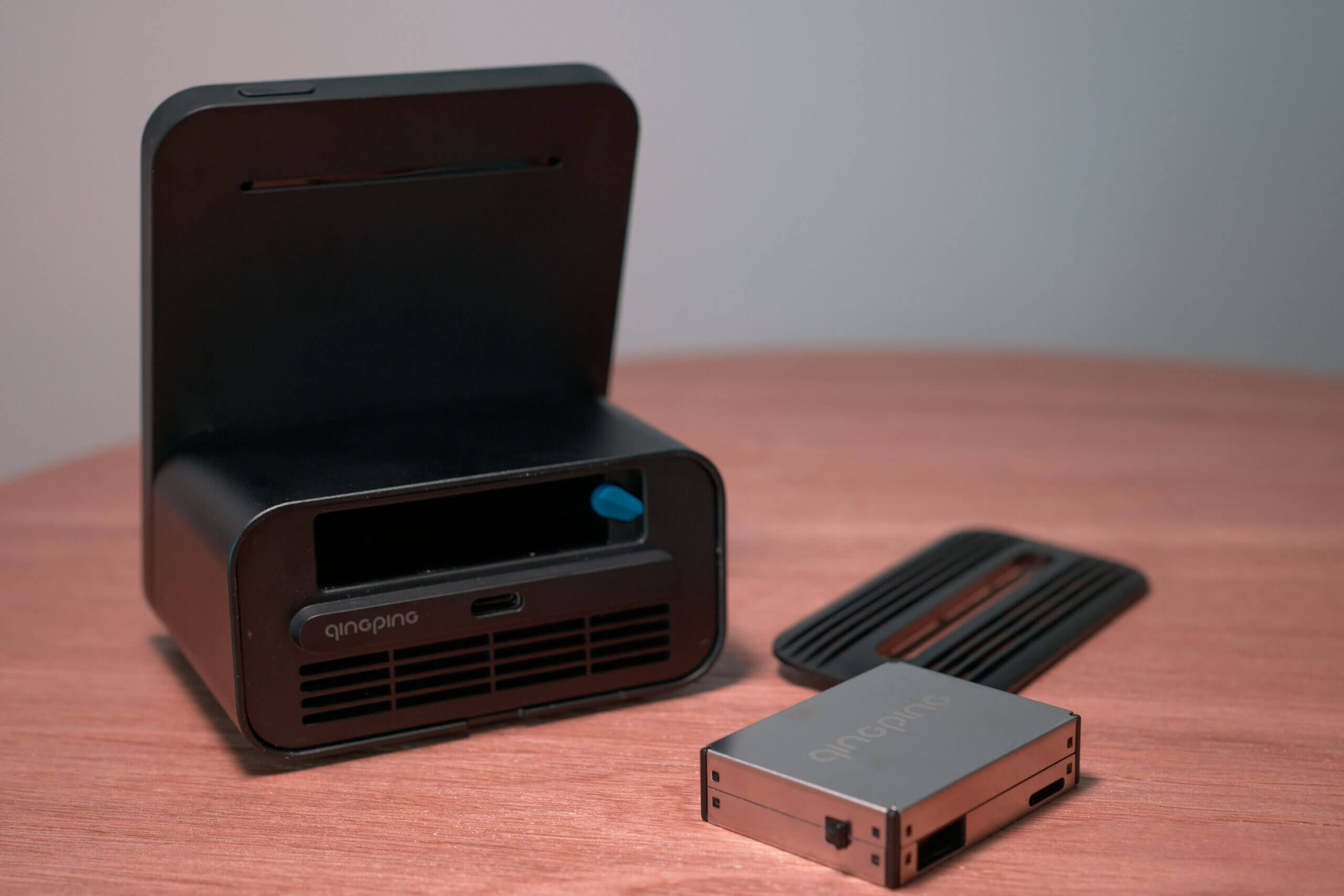

Both monitors measure PM2.5, PM10, carbon dioxide (CO2), temperature and humidity, so the core readings are the same. The Gen 2 adds a VOC sensor (volatile organic compounds, which are gases from things like cooking, cleaning products and perfume) and a noise sensor, and those two extras are the only measurements the Lite doesn’t have.
The table below lines up the main specs of the Gen 2 and the Lite.
| Qingping Air Quality Monitor Gen 2 | Qingping Air Monitor Lite | |
|---|---|---|
| Measures | PM2.5, PM10, CO2, tVOC, noise, temperature, humidity | PM2.5, PM10, CO2, temperature, humidity |
| Particle sensor | GrandWay (user-replaceable module) | GrandWay |
| CO2 sensor | Sensirion SCD40 | SenseAir S8 or Sensirion |
| VOC sensor | Sensirion SGP40 (VOC Index) | None |
| Display | 4-inch touchscreen, 254 ppi | Small LED display, one reading at a time, with a touch bar |
| Battery | A few hours | Around eight hours of screen time |
| Charging | USB-C | USB-C |
| Apps and smart home | Qingping+ or Qingping IoT | Qingping+, Apple HomeKit or Mi Home |
| Data export | Yes, in 15-minute intervals | Yes, in 15-minute intervals |
| Price | Around $149 | Around $90-99 |
The Gen 2’s VOC sensor reports Sensirion’s VOC Index rather than a true concentration, which means it’s most useful for spotting changes such as cooking or cleaning rather than measuring exact levels. When I reviewed the Lite, the missing VOC sensor was actually my biggest wish, as I would have preferred tVOC over PM10. PM10 readings from low-cost sensors are estimated from the same particle sensor on both monitors, so I wouldn’t rely on them on either device.
BreatheSafeAir is a one-person publication. Every share and every subscriber is important to me.
I don’t have a marketing budget or a team behind me. Just a lot of test equipment and a genuine interest in helping you make sense of your air quality. If you find this useful, subscribing to my newsletter is the best free way to support the work. You’ll get information on what I’m currently testing, findings that don’t make it into the full reviews, and the kind of detail you only get from someone who thoroughly tests these devices.
What My Testing Showed
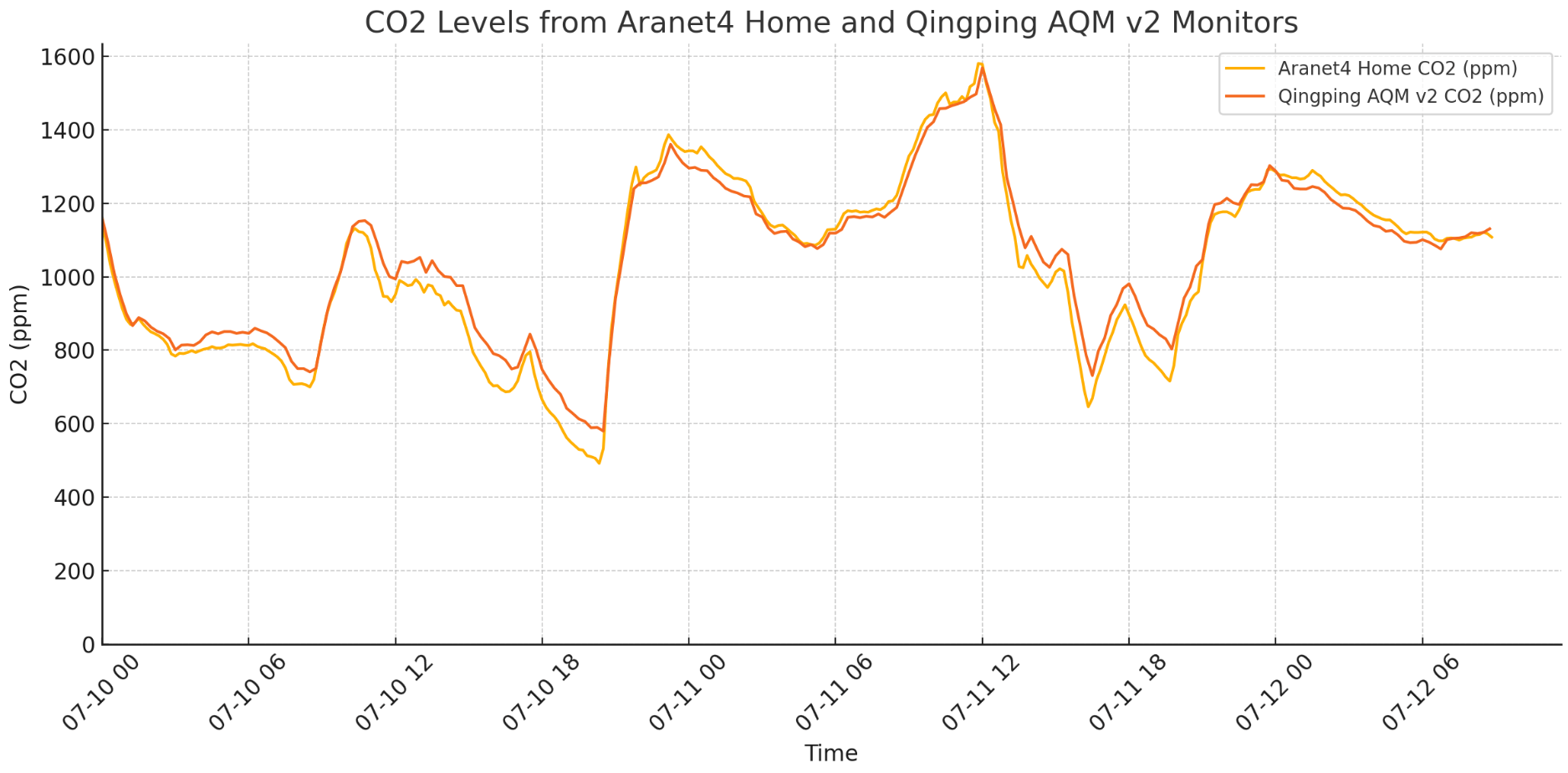
One thing to be clear about first is that I tested the Gen 2 and the Lite at different times rather than side by side. I tested the Lite in 2022 and the Gen 2 later, so please read the results below as two separate sets of findings rather than a head-to-head accuracy test.
For CO2, the Gen 2 read similarly to my Aranet4 Home, which is generally regarded as the most accurate consumer CO2 monitor. There were some deviations, but they stayed within the stated accuracy of both devices. For particles, my own comparison ran into problems, so I relied on AQMD’s testing of the first-generation monitor instead, which uses the same particle sensor and correlated well with reference-grade monitors.
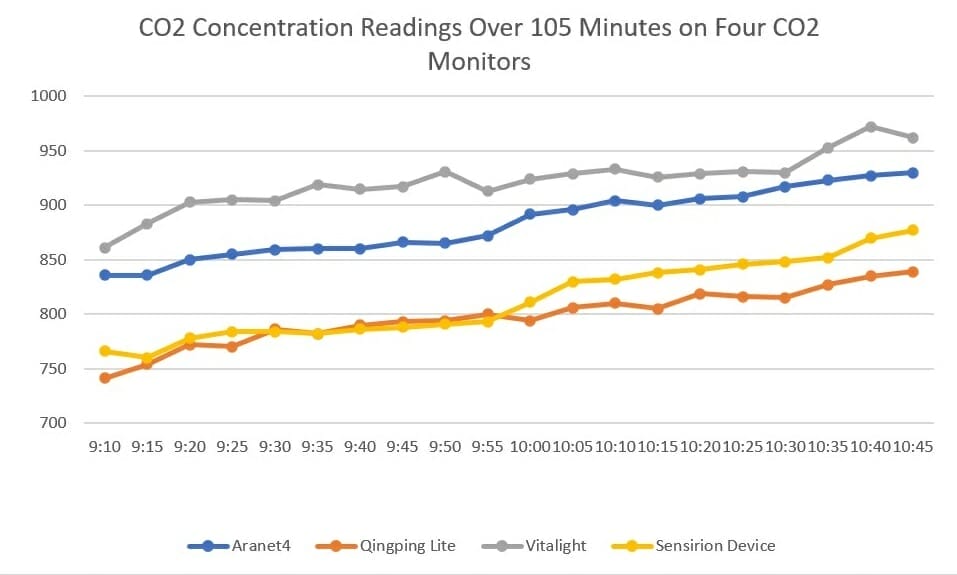
The Lite’s CO2 readings followed the same trends as my Aranet4 but sat around 100 ppm (parts per million) lower in a large room, with gaps of up to 200 ppm above 1,000 ppm in a small room. A difference like this is within the Lite’s specified accuracy of ±15%, so it doesn’t mean the sensor is faulty, and both readings would lead you to the same decision about opening a window.
For PM2.5, SmartAir’s 16-day test in Beijing found that the Lite tracked the government monitor with an R-value of 0.87 (a measure of how closely two sets of readings move together, where 1 is a perfect match), although it read lower than the reference. Its temperature also read 0.5-1°C high and its humidity a few percent low against my Aranet4, which is easy to adjust for once you know about it.
Overall, both monitors are accurate enough to rely on for PM2.5 and CO2 trends, and neither should be trusted for PM10.
Display & Design
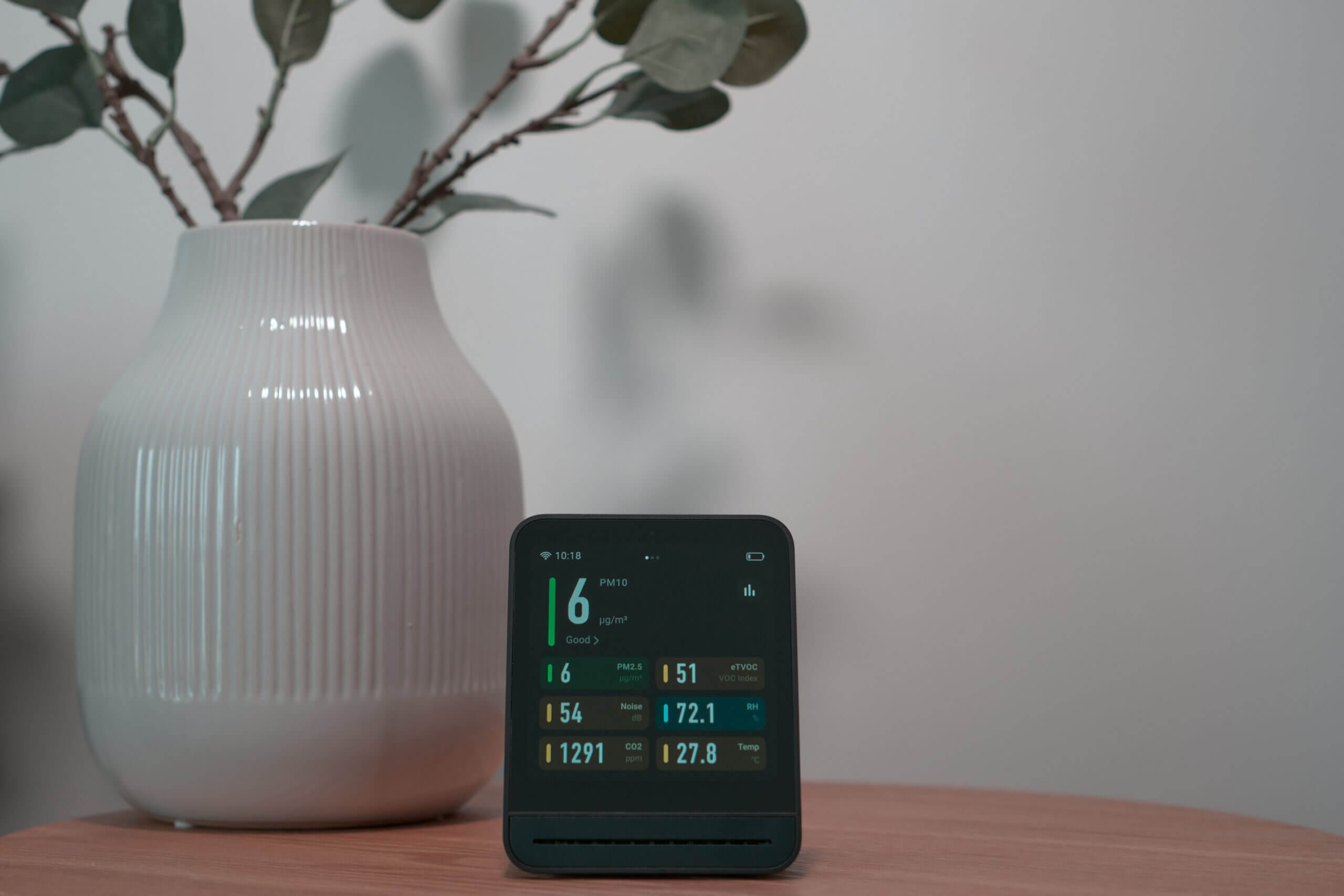
This is where the two monitors differ most. The Gen 2’s 4-inch touchscreen shows every reading at once, and tapping any of them explains what it means, what causes it and which standard the thresholds come from. It also shows 24-hour and 30-day graphs on the device itself, lets you set alarms for any reading at any threshold, and even works as an alarm clock.
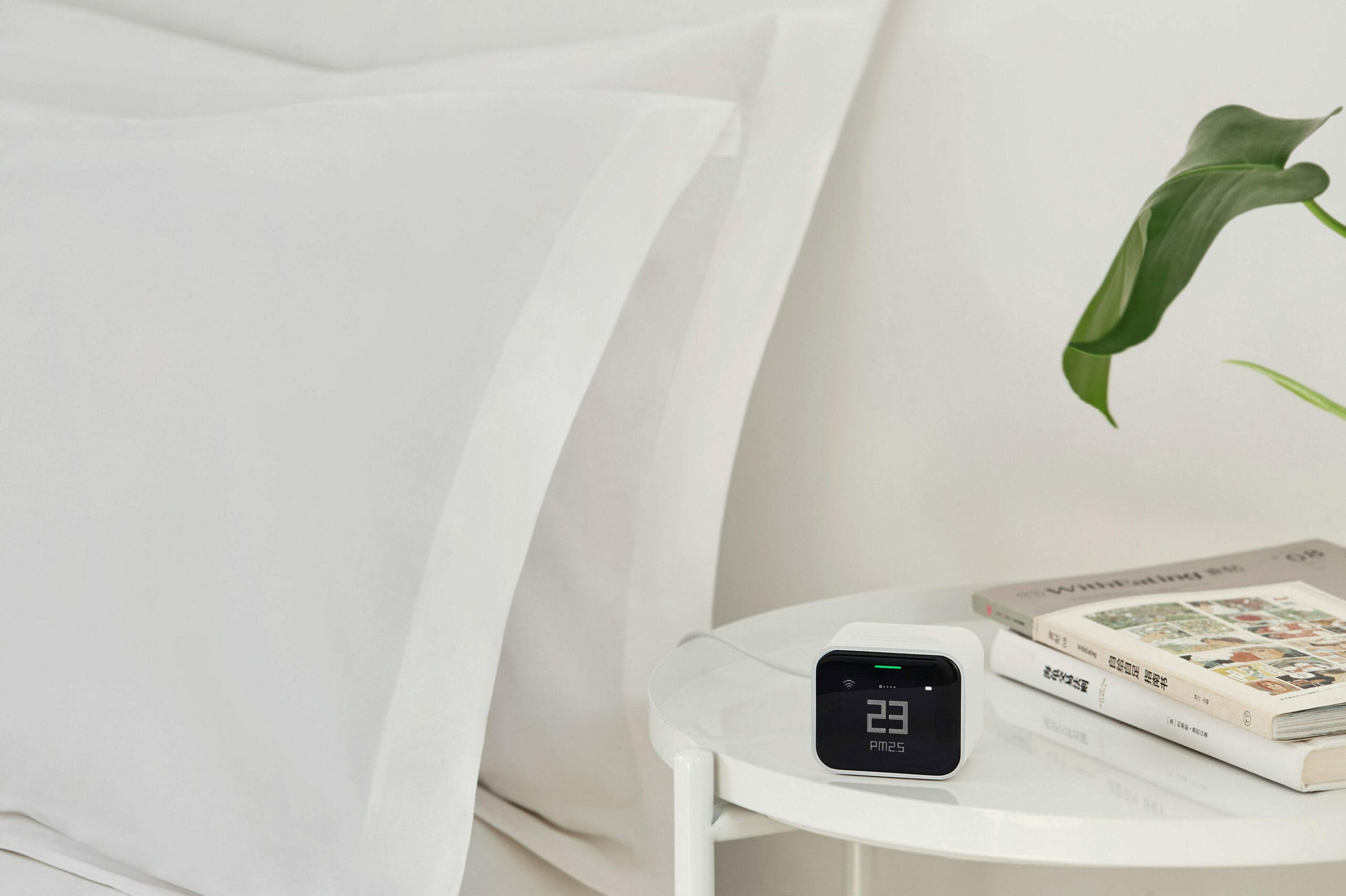
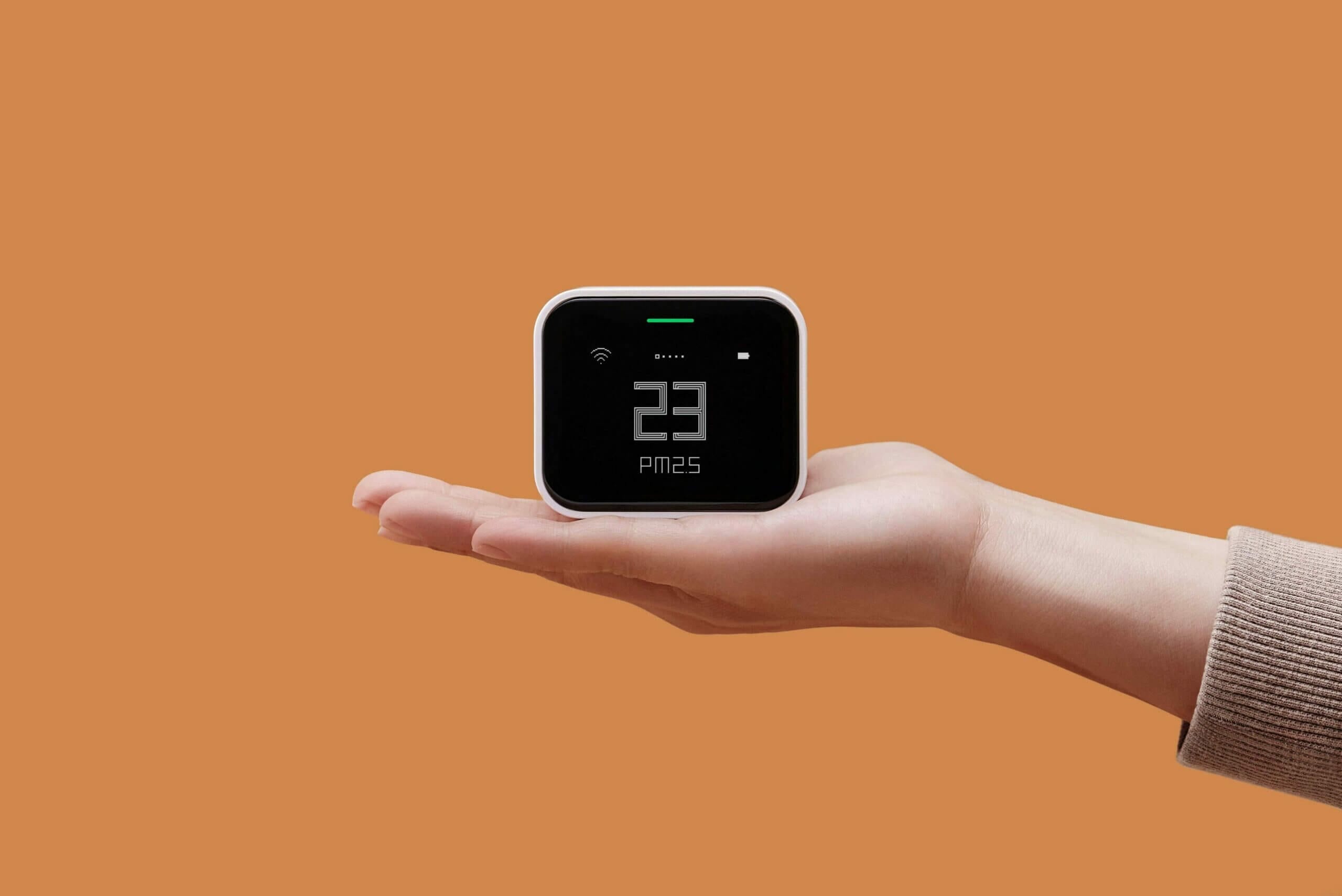
The Lite shows a single reading at a time on a small LED display, and you swipe a touch-sensitive bar on top to move between them. The bar is responsive and the colour strip makes each reading easy to judge at a glance, but checking everything means swiping through five screens.
The Lite is also far smaller (an iPhone 14 Pro held in front of it hides it completely), and its battery lasts around eight hours, compared with only a few hours on the Gen 2. Neither is really a portable monitor, but the Lite is easier to carry between rooms. On the other hand, the Gen 2 lets you replace its particle sensor yourself, which is the part most likely to fail, and Qingping told me a replacement would cost around $25.
Connectivity & Smart Home
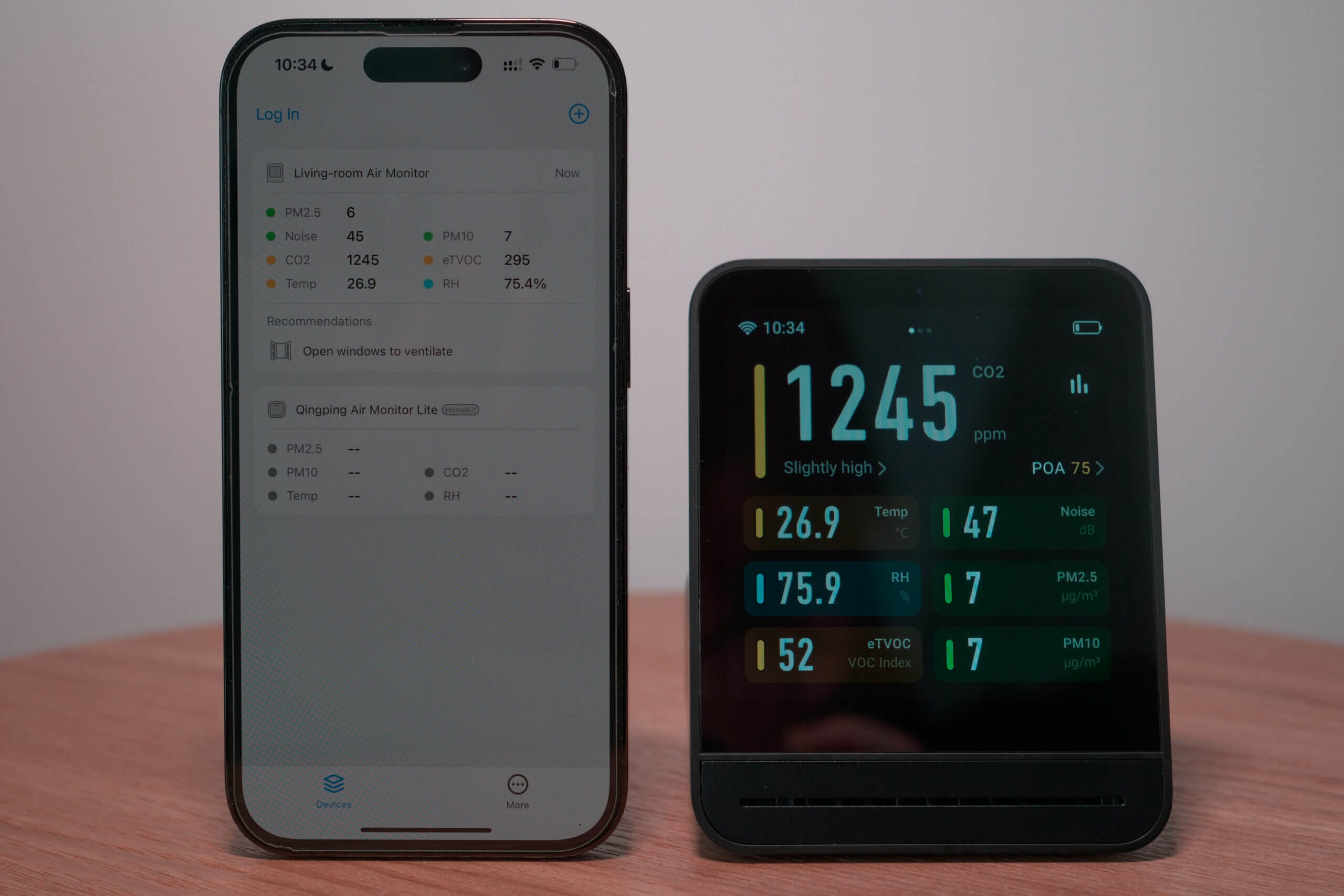
Both monitors connect over Wi-Fi to Qingping’s own Qingping+ app, which lets you skip creating an account and export your data, although only in 15-minute intervals on either device. For offices and classrooms where several people need to see the same readings, the Gen 2 also works with Qingping IoT, the team version of the app.
The Lite is the one to look at if you use Apple HomeKit, since it’s the only one of the two I’ve tested with it, and it also works with Mi Home. Pairing it with HomeKit took me four or five attempts, but once it was connected, I could use it to automate other devices such as air purifiers.
The Gen 2 makes up for its simpler app by putting almost every setting, including CO2 calibration, on the device itself. The Lite does the opposite, with most of its settings, including resetting the CO2 sensor, kept in the app.
Pricing

The Gen 2 sells for around $149, while the Lite has typically cost $90-99, so the Gen 2 costs around $50 more. For that money, you get the touchscreen, the VOC and noise sensors, on-device graphs and alarms, and a replaceable particle sensor. What you give up with the Lite is mostly convenience and VOC readings, since the PM2.5 and CO2 readings that matter most are available on both.
It’s also worth knowing that the first-generation Qingping Air Quality Monitor sits in between at around $129. I’ve reviewed it too, and it shares most of the Gen 2’s strengths with a smaller 3.1-inch screen.
Conclusion – Is the Qingping Gen 2 or Lite Better?
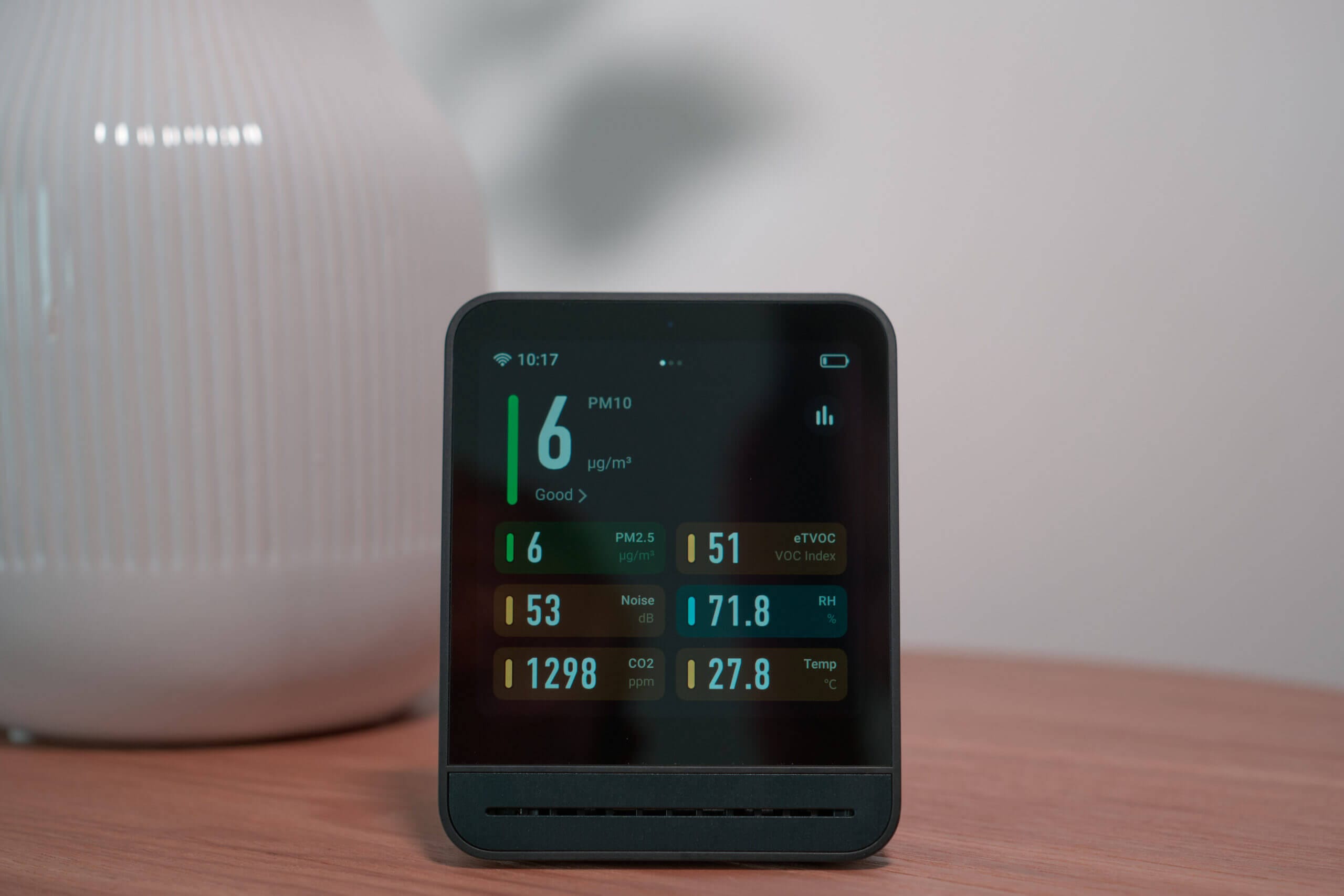
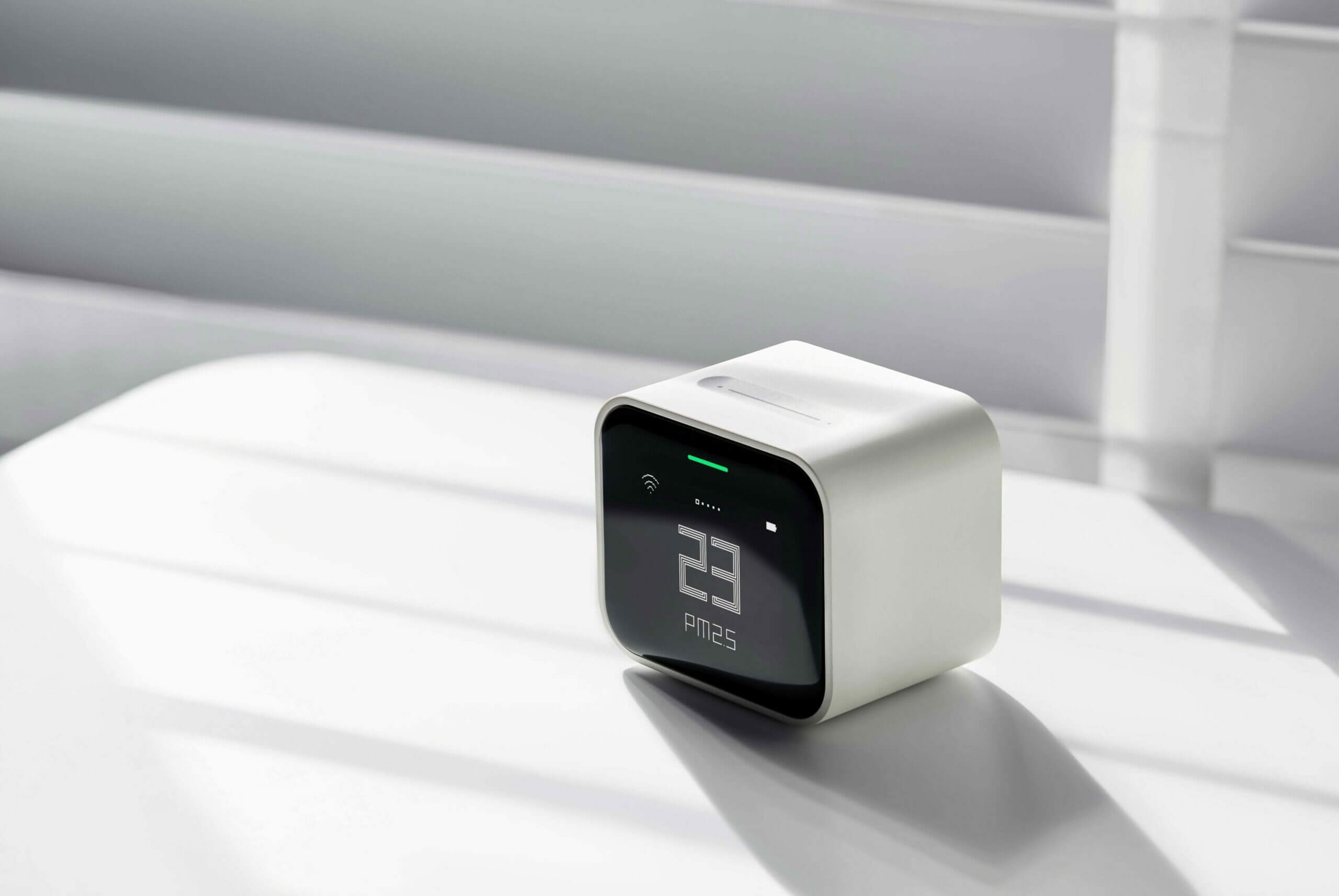
For most people, and especially anyone buying their first air quality monitor, the Gen 2 is the better choice. Its touchscreen explains every reading as you go, it adds VOC and noise sensors, and it’s perhaps the best standalone monitor I’ve tested.
That said, there are still a few situations where the Lite makes more sense. If you want connected PM2.5 and CO2 monitoring for under $100, if you use Apple HomeKit, or if you mostly check your readings in the app rather than on the device, it gives you the measurements that matter most for a lot less money.
If you prefer glanceable data or want to track VOCs, spend the extra on the Gen 2. If you only need to know when to open a window or turn on a purifier, the Lite will do that job just as well.
Whichever one you choose, recalibrate the CO2 sensor outdoors every few months to keep its readings from drifting.
Qingping Gen 2 vs Lite FAQ
Do the Qingping Gen 2 and Lite measure the same things?
Mostly. Both measure PM2.5, PM10, CO2, temperature and humidity, while only the Gen 2 measures VOCs and noise.
Which Qingping monitor has the better screen?
The Gen 2. It has a 4-inch touchscreen that shows every reading at once, while the Lite shows one reading at a time on a small LED display.
Does the Qingping Air Monitor Lite work with Apple HomeKit?
Yes. The Lite works with Apple HomeKit and Mi Home as well as the Qingping+ app, although it took me a few attempts to pair it with HomeKit.
Which has the better battery life?
The Lite, at around eight hours of screen time, against only a few hours on the Gen 2. Neither is designed to be a portable monitor.
Is the Qingping Gen 2 worth the extra money over the Lite?
For first-time buyers and anyone who wants VOC readings or a glanceable screen, yes. If you mostly use the app, the Lite covers the readings that matter most for around $50 less.


Comments
No comments yet.