

I’ve now reviewed both generations of Qingping’s touchscreen air quality monitor. I tested the original Qingping Air Monitor in 2022, and when Qingping released the second generation, I reviewed that too. Since the two look almost identical at first glance, the Qingping Gen 1 vs Gen 2 question comes down to a handful of upgrades, and whether those upgrades are worth around $20 more.
The quick answer is that first-time buyers should get the Gen 2, since its bigger screen, on-device explanations and replaceable PM sensor make it the better long-term monitor. If you already own a Gen 1, though, I wouldn't upgrade, because the CO2 and PM2.5 readings you'll rely on most are just as useful on the older model.
Before going further, it’s worth knowing that my two reviews were written years apart, so the accuracy results for each come from separate tests rather than a side-by-side comparison. For that reason, this comparison leads with the specs and design changes, and I report the results from each review separately.
If you want the full detail on either device, you can find my Qingping Air Monitor review and my Qingping Air Quality Monitor Gen 2 review here. In this article, I will compare the two on their sensors and accuracy, screen and design, software and pricing, before giving my recommendation on which one to buy.

I independently review air quality monitors with a focus on accuracy. I’ve tested well over 50 devices, compared some of them against reference instruments, and rely on peer-reviewed research and third-party studies wherever possible.
I don’t accept sponsored posts or paid reviews, and I don’t run ads on BreatheSafeAir. When I receive a free product, the company has no say in what I write. Affiliate links don’t influence my views and never increase the price you pay.
I’m constantly learning about how these sensors work – from opening them up, discussing with researchers in the field and examining the hardware inside. That ongoing learning process helps me write reviews that are grounded in how the technology actually behaves, not just what the spec sheet says.
You can read my full Disclaimers & Ethics page for complete details. And as with any review, even mine, I always encourage checking multiple independent sources before making a decision.
This post contains affiliate links. For more information, please refer to my affiliate disclaimer. I was sent a product for review, but the article is not sponsored. All opinions expressed in this post are my honest thoughts. I only recommend products that I genuinely believe in.
Informational Purposes: Information on this blog is for informational purposes only. Readers are encouraged to confirm the information herein with other sources. This website assumes no responsibility for the accuracy of the information, and information is subject to change without notice. Products mentioned on this website are not medical devices and do not guarantee protection.
If you notice any errors or inconsistencies in this article, please contact me so I can update the information accordingly.
Contents
What Changed Between Generations


Qingping kept the overall formula the same, so most of what made the first generation good carries straight over. The upgrades that matter most are the bigger screen and the replaceable PM sensor, while PM10 and noise readings, an alarm clock and newer Sensirion sensors round out the list (some of which are less useful than they sound). Here’s how the two generations compare on paper.
| Qingping Air Monitor (Gen 1) | Qingping Air Quality Monitor Gen 2 | |
|---|---|---|
| Price | $129 (when I reviewed it) | Around $150 |
| Measures | PM2.5, CO2, tVOC, temperature, humidity | PM2.5, PM10, CO2, tVOC, noise, temperature, humidity |
| Screen | 3.1-inch touchscreen, 720 x 720 | 4-inch touchscreen, 720 x 720 |
| PM sensor | GrandWay, built in | GrandWay, replaceable module ($25) |
| CO2 sensor | Senseair or Sensirion | Sensirion SCD40 |
| VOC sensor | Sensirion SGP30 | Sensirion SGP40 (VOC Index) |
| Battery | 1800 mAh, lasts a few hours | Internal, lasts a few hours |
| Charging | USB-C | USB-C |
| Alarm clock | No | Yes |
| Apps | Qingping+ | Qingping+ or Qingping IoT |
| My score | 3.5 / 5 | 3.5 / 5 |
BreatheSafeAir is a one-person publication. Every share and every subscriber is important to me.
I don’t have a marketing budget or a team behind me. Just a lot of test equipment and a genuine interest in helping you make sense of your air quality. If you find this useful, subscribing to my newsletter is the best free way to support the work. You’ll get information on what I’m currently testing, findings that don’t make it into the full reviews, and the kind of detail you only get from someone who thoroughly tests these devices.
Sensors & Accuracy
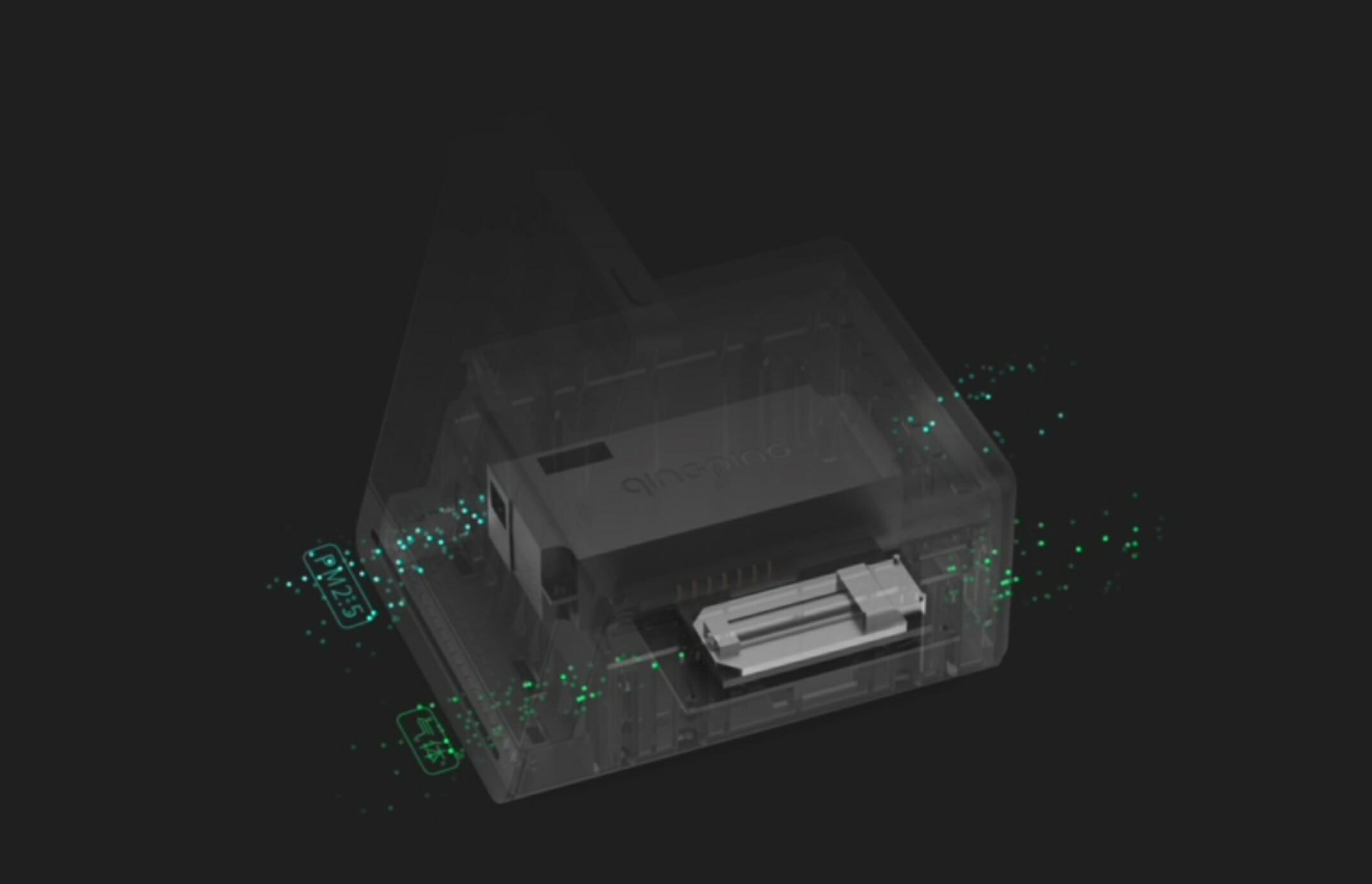
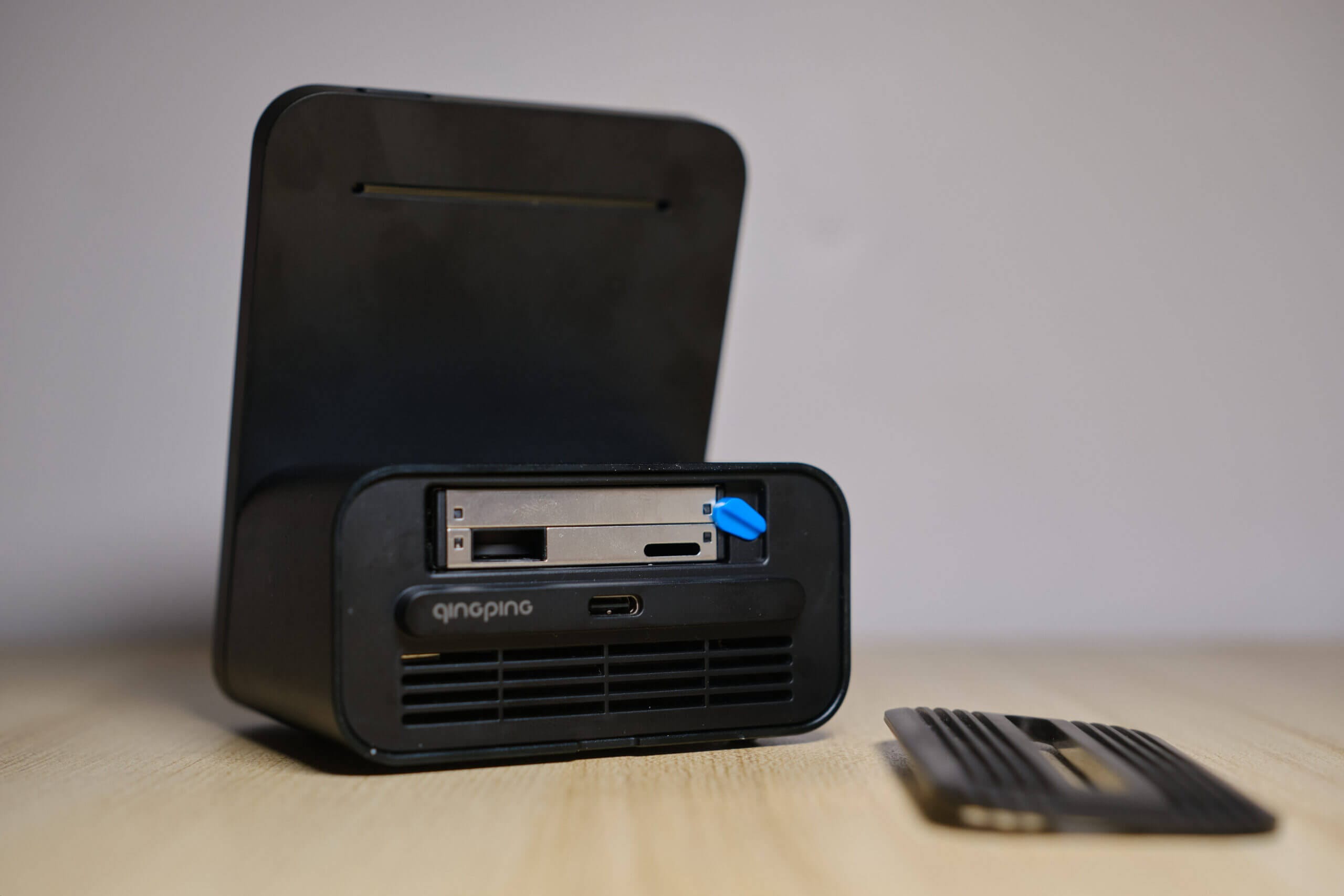
Both generations use a PM2.5 sensor from GrandWay, and as far as I can tell it’s the same sensor in both. The Gen 2 moves it into a module you can pull out from behind a removable backplate, which matters because PM sensors rely on a fan and tend to be the first part of a monitor to fail. I was told replacement modules would sell for $25.
The CO2 and VOC sensors have both changed. The Gen 1 uses either a Senseair or a Sensirion CO2 sensor (Qingping used both), while the Gen 2 uses the Sensirion SCD40, which Sensirion itself highlights as the CO2 sensor inside the Air Monitor 2. The VOC sensor moves from the Sensirion SGP30 to the SGP40. Like most modern low-cost VOC sensors, the SGP40 reports an index (a reading relative to the sensor’s own recent history, with 100 as its baseline) rather than a true concentration, so it’s best used to spot changes such as cooking or cleaning.
For the original monitor, Qingping specifies PM2.5 to within ±10 µg/m³ up to 100 µg/m³ and ±10% above that, CO2 to within ±15%, and temperature to within ±0.8°C. Independent results backed this up. In SmartAir’s outdoor testing in Beijing, the Gen 1’s PM2.5 readings had an R value of 0.86 against a government monitor (1 would be a perfect match), although it tended to read lower than the reference. AQMD’s AQ-SPEC programme has also tested the original monitor, finding that it correlated well with reference-grade PM2.5 monitors. It performed a bit worse than PurpleAir’s monitors but much better than more expensive monitors such as the AirVisual Pro.
My own CO2 testing for each generation was against an Aranet4 Home. With the Gen 1, the two devices had an R value of 0.92 and usually read within 75 ppm (parts per million) of each other, although one 12-hour period showed the Qingping reading 100-150 ppm lower. With the Gen 2, the readings were similar and the deviations stayed within the stated accuracy of both devices. A small difference like this is expected between two good CO2 sensors and doesn’t mean either one is wrong, so in practice I’d call the two generations equally capable for CO2.
The one sensor upgrade I wouldn’t pay for is PM10. The Gen 2 doesn’t add a new sensor for it, as the same particle sensor simply has PM10 switched on, and PM10 from low-cost sensors is an estimate that’s often well off the mark. Noise is a more genuine addition, and Qingping told me the monitor only measures sound energy and doesn’t record, store or upload any audio.
Screen & Design
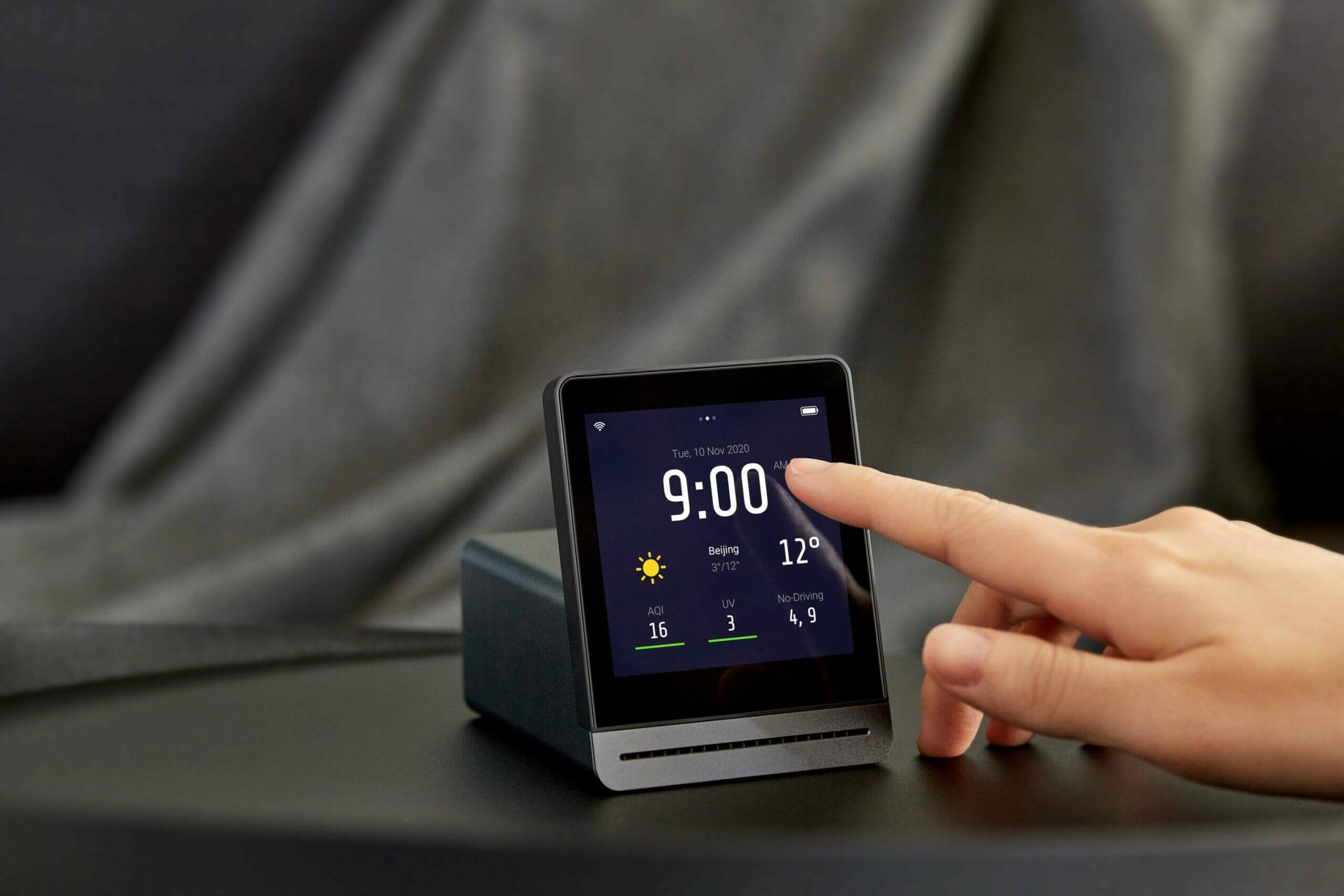
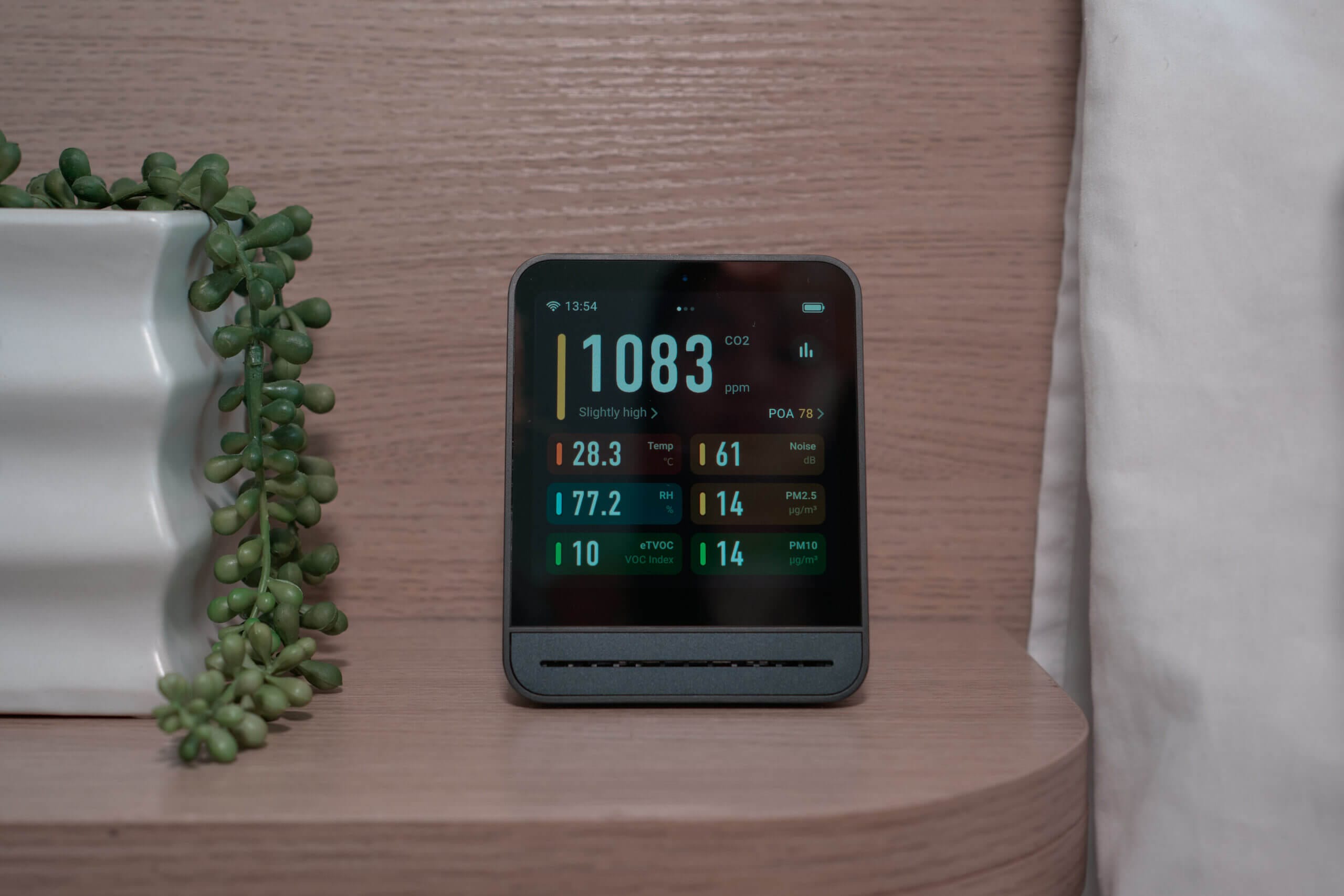
The screen is where the Gen 2 feels like a new device. It grows from 3.1 inches to 4 inches, and while that sounds like a small change on paper, it’s hard to overstate how much easier the bigger screen is to read and use. Interestingly, both screens have the same 720 x 720 resolution, which means the Gen 1’s smaller screen is sharper per inch (about 330 pixels per inch against the Gen 2’s 254). In practice, both look crisp, and I would take the bigger screen.
My two reviews disagree slightly on viewing angles. I found the Gen 1’s viewing angles decent and never struggled to read it, but when I reviewed the Gen 2, its screen appeared to have much better viewing angles than the first generation.
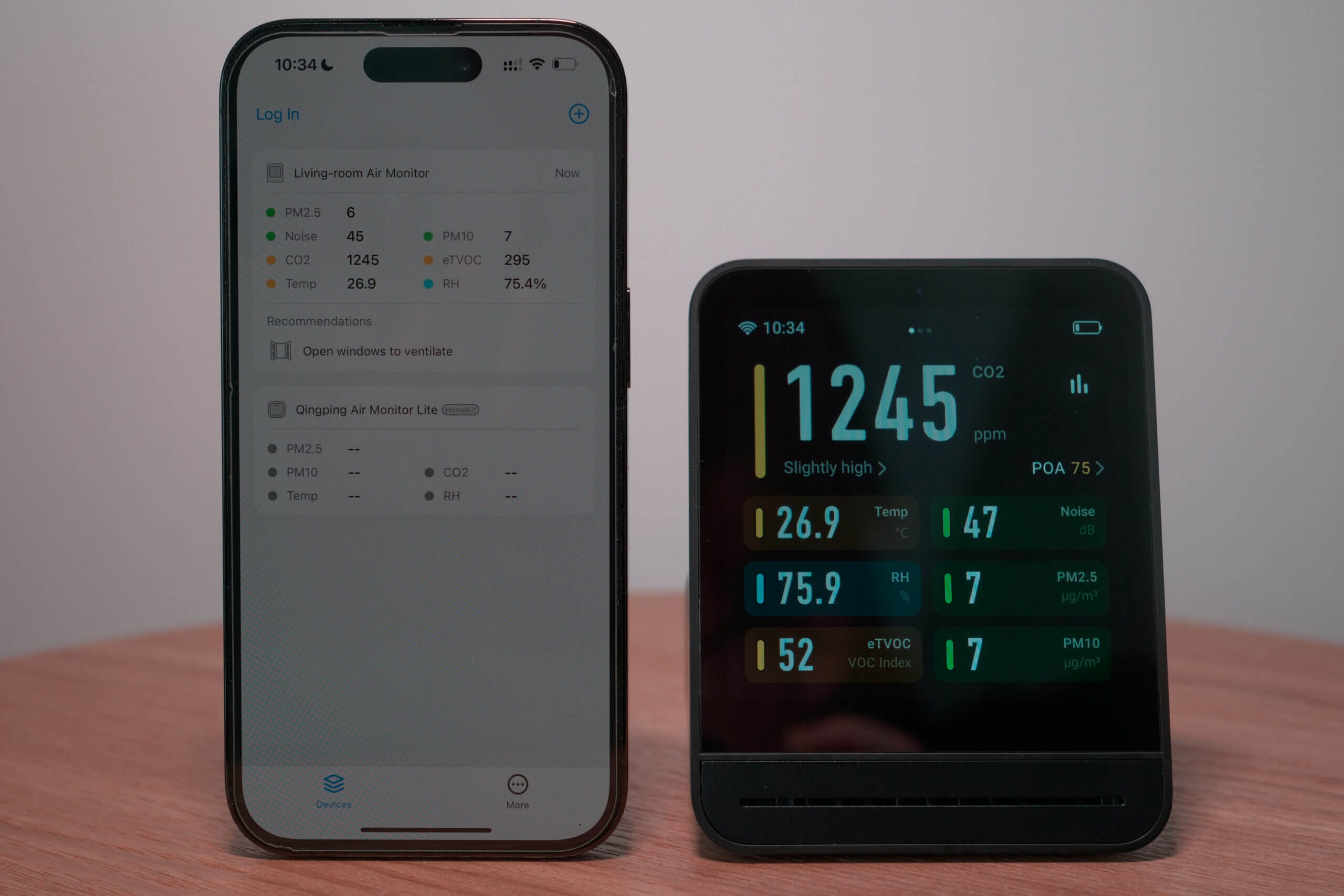
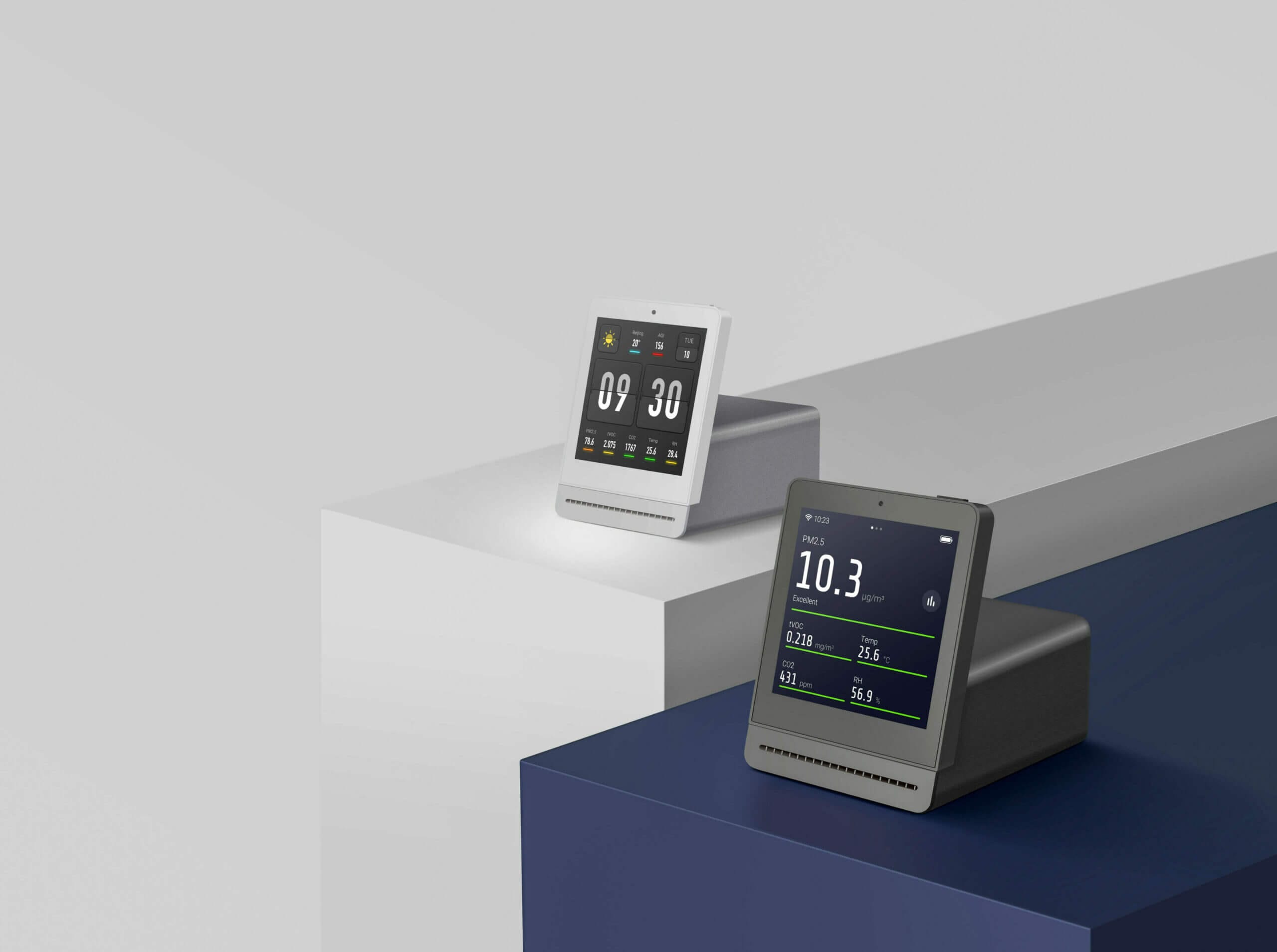
The rest of the design is very familiar. Both monitors are shaped like a capital L, with the sensors, mainboard and a small battery tucked into a chamber behind the screen, and both have a light sensor above the screen that looks a lot like a camera (it isn’t one). Both charge over USB-C, and both have an internal battery that lasts only a few hours, which is enough to carry the monitor between rooms or ride out a power cut but not enough to make either one portable. The Gen 2 also comes in white as well as black.
Software, Alerts & Apps
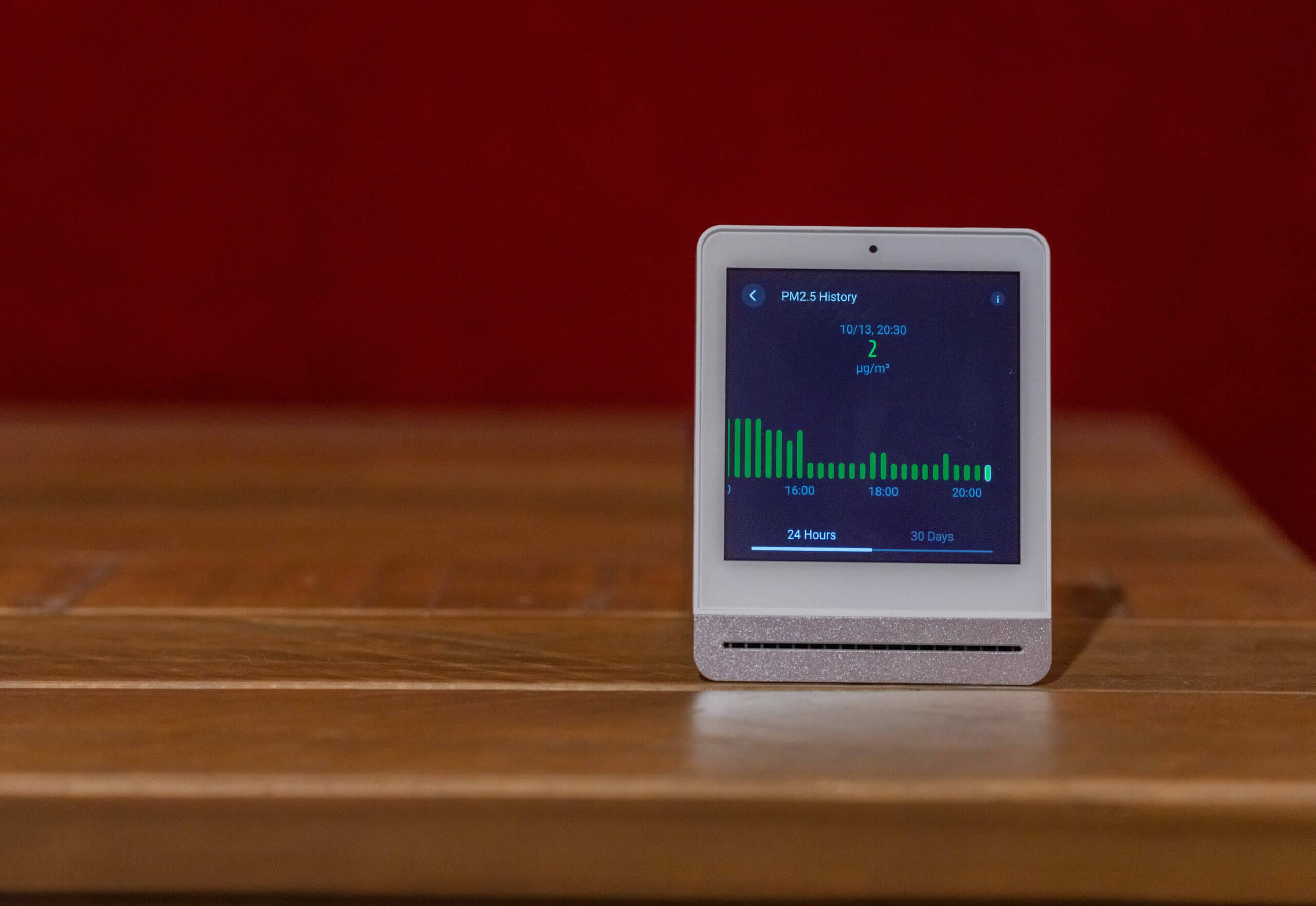
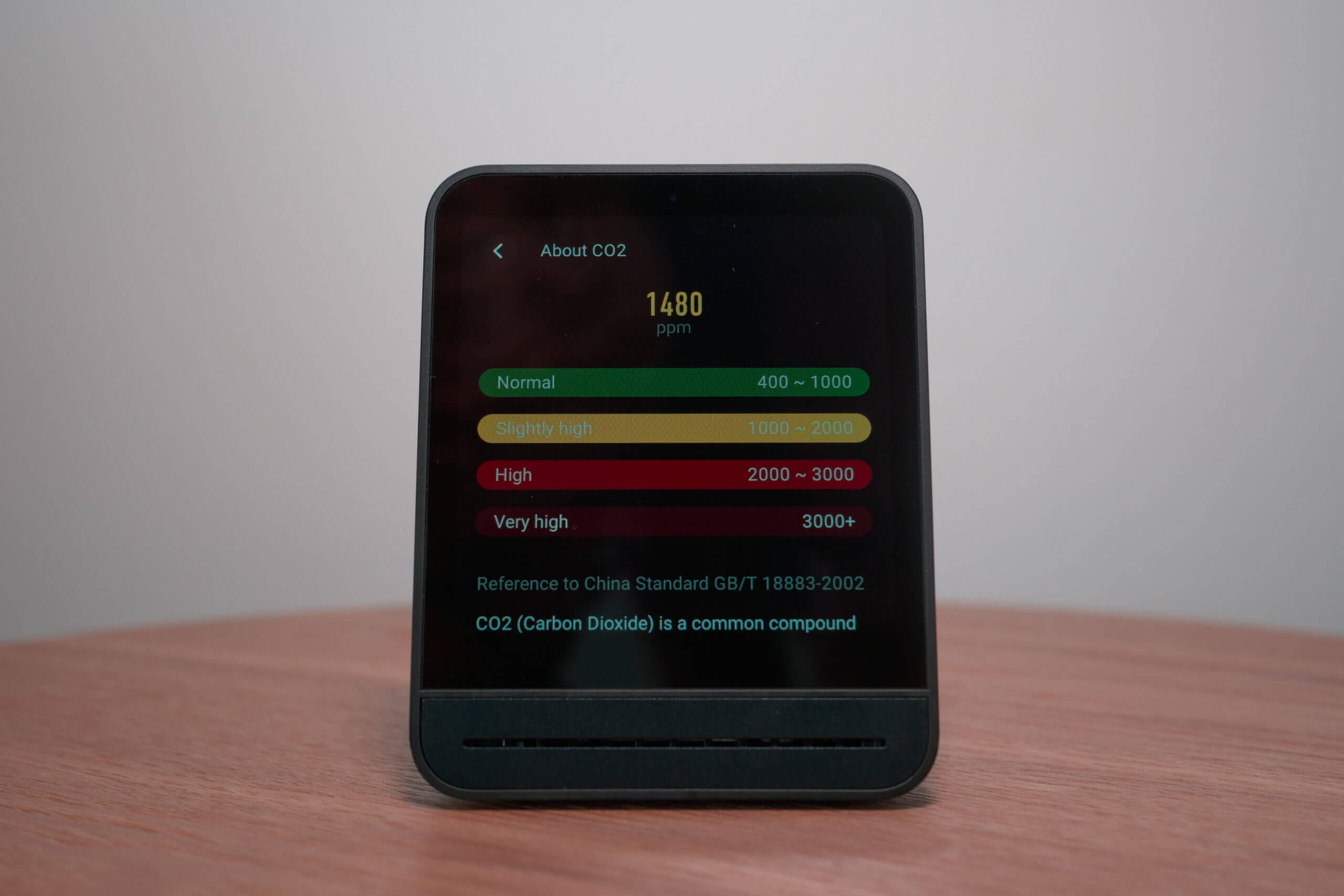
The on-device software was already a strength of the Gen 1, with a fast touchscreen, two home screens (one focused on your readings, the other more like a clock with the weather) and a full settings menu on the device. The Gen 2 builds on all of this. You can tap an information button on any reading to learn what it means, what causes it and which standard the thresholds come from, and you can switch PM2.5 between the US EPA and Chinese standards. CO2 is still graded against the more lenient Chinese standard (GB/T 18883-2002), but the absolute ppm reading is always there.
The Gen 2 also adds fully customisable over-limit alerts for every reading, with your own thresholds, and an alarm clock that the Gen 1 never had. Calibration, updates and Wi-Fi setup can all be done on the device itself, and when a community member reported some bugs, Qingping fixed them within two weeks.
The apps are much closer. Both generations work with the Qingping+ app, which lets you skip creating an account, pairs with a code shown on the monitor, and keeps history in 15-minute steps. The Gen 2 can also use the Qingping IoT app, which is designed for offices or classrooms where several people need to see the data. Both apps are fast and simple to use, but they have very few settings, so most of the real control lives on the monitor. For smart home users, the Gen 1’s integrations were limited, with Mi Home the only platform I recognised.
Pricing
When I reviewed it, the Gen 1 sold for $129, while the Gen 2 sells for around $150, which is about $20 more. For a bigger screen, a replaceable PM sensor and the extra software features, that’s a fair premium if you’re buying new.
The replaceable PM sensor is also worth thinking about over a few years. The Gen 1’s PM sensor isn’t designed to be replaced, whereas a Gen 2 owner whose PM sensor fails can swap in a $25 module and keep using the monitor. On the other hand, as the Gen 2 replaces it, the Gen 1 may well turn up cheaper on sale or second-hand, and at a big enough discount, it’s still a very good monitor.
Conclusion – Is the Qingping Gen 1 or Gen 2 Better?

For anyone buying a Qingping monitor for the first time, the Gen 2 is the better choice. The bigger screen makes it easier to use every day, the on-device explanations make it the monitor I would now recommend to someone new to air quality monitoring, and the replaceable PM sensor should help it last longer. It’s perhaps the best standalone air quality monitor I’ve tested to date.
However, if you already own a Gen 1, I wouldn’t upgrade. The two share nearly all of the same strengths, the CO2 and PM2.5 readings are equally useful, and the PM10 reading is the least trustworthy part of the upgrade. The Gen 1 is also still worth buying if you can find it well below the price of the Gen 2 and you don’t need the bigger screen, noise readings or the alarm clock.
Whichever generation you choose, leave the monitor by an open window for a while every so often and run the CO2 calibration from the device settings, which keeps the CO2 baseline honest.
Qingping Gen 1 vs Gen 2 FAQ
What is the difference between the Qingping Gen 1 and Gen 2?
The Gen 2 has a bigger 4-inch screen (up from 3.1 inches), a replaceable PM sensor, PM10 and noise readings, an alarm clock and newer Sensirion CO2 and VOC sensors. The overall design and the PM2.5 sensor are the same.
Should I upgrade from the Gen 1 to the Gen 2?
No. The two share nearly all of the same strengths, so the Gen 2 is a better buy for new owners but not worth replacing a working Gen 1.
Is the Qingping Gen 2 more accurate than the Gen 1?
Not meaningfully. Both use the same PM2.5 sensor, and in my testing both read CO2 close to an Aranet4 Home.
Does the Qingping Gen 1 measure PM10?
No. The Gen 2 shows PM10, but it’s estimated by the same particle sensor, and low-cost PM10 readings are often well off the mark.
How much more does the Qingping Gen 2 cost?
Around $20 more. The Gen 1 sold for $129 when I reviewed it, and the Gen 2 sells for around $150.


Comments
No comments yet.