

Earlier this year, I bought the Xiaomi Smart Air Purifier 4 Lite for our master bedroom, at the same time as the Mijia Smart Air Purifier 6 for our living area. Later in the year, Levoit sent me the Vital 200S-P for review, and once testing was over, it took the 4 Lite’s place in the bedroom and has stayed there ever since. That wasn’t the plan, so for me, Levoit Vital 200S-P vs Xiaomi 4 Lite isn’t a hypothetical question.
In short, the Vital 200S-P is the better bedroom purifier, moving around 11% more air and coping far better with pets and wall placement. The 4 Lite still wins on its PM2.5 sensor and running costs, which come in around $29 a year lower by my estimate.
Both went through exactly the same test in the same spare bedroom, so this comparison is built on measurements taken in the same conditions rather than two spec sheets. I’ve also lived with each of them in our bedroom, which is where most of the differences that decided it for me showed up.
My full reviews of the Levoit Vital 200S-P and the Xiaomi 4 Lite go into more depth on each device. Here, I’ll start with why the Vital ended up replacing the Lite, then work through performance, noise, design, sensors and cost.

I independently test air purifiers in the same sealed 29.4 m³ room at home. I fill it with incense smoke, switch the purifier on remotely and measure how quickly it clears the air, three runs at each speed, then record its noise from one metre and its power draw, so every result can be compared directly with the next.
I don’t accept sponsored posts or paid reviews, and I don’t run ads on BreatheSafeAir. When I receive a free product, the company has no say in what I write. Affiliate links don’t influence my views and never increase the price you pay.
Where a brand’s claims come from a lab test, I say which standard it used and how it differs from my own setup, and where I can’t measure something myself, such as filter certification, I lean on third-party results and name the source. You can read exactly how I score purifiers on my methodology page.
You can read my full Disclaimers & Ethics page for complete details. And as with any review, even mine, I always encourage checking multiple independent sources before making a decision.
This post contains affiliate links. For more information, please refer to my affiliate disclaimer. I bought the Xiaomi Smart Air Purifier 4 Lite myself, and Levoit sent me the Vital 200S-P for review, but this article is not sponsored. All opinions expressed in this post are my honest thoughts. I only recommend products that I genuinely believe in.
Informational Purposes: Information on this blog is for informational purposes only. Readers are encouraged to confirm the information herein with other sources. This website assumes no responsibility for the accuracy of the information, and information is subject to change without notice. Products mentioned on this website are not medical devices and do not guarantee protection.
If you notice any errors or inconsistencies in this article, please contact me so I can update the information accordingly.
Contents
Why the Vital Replaced the 4 Lite

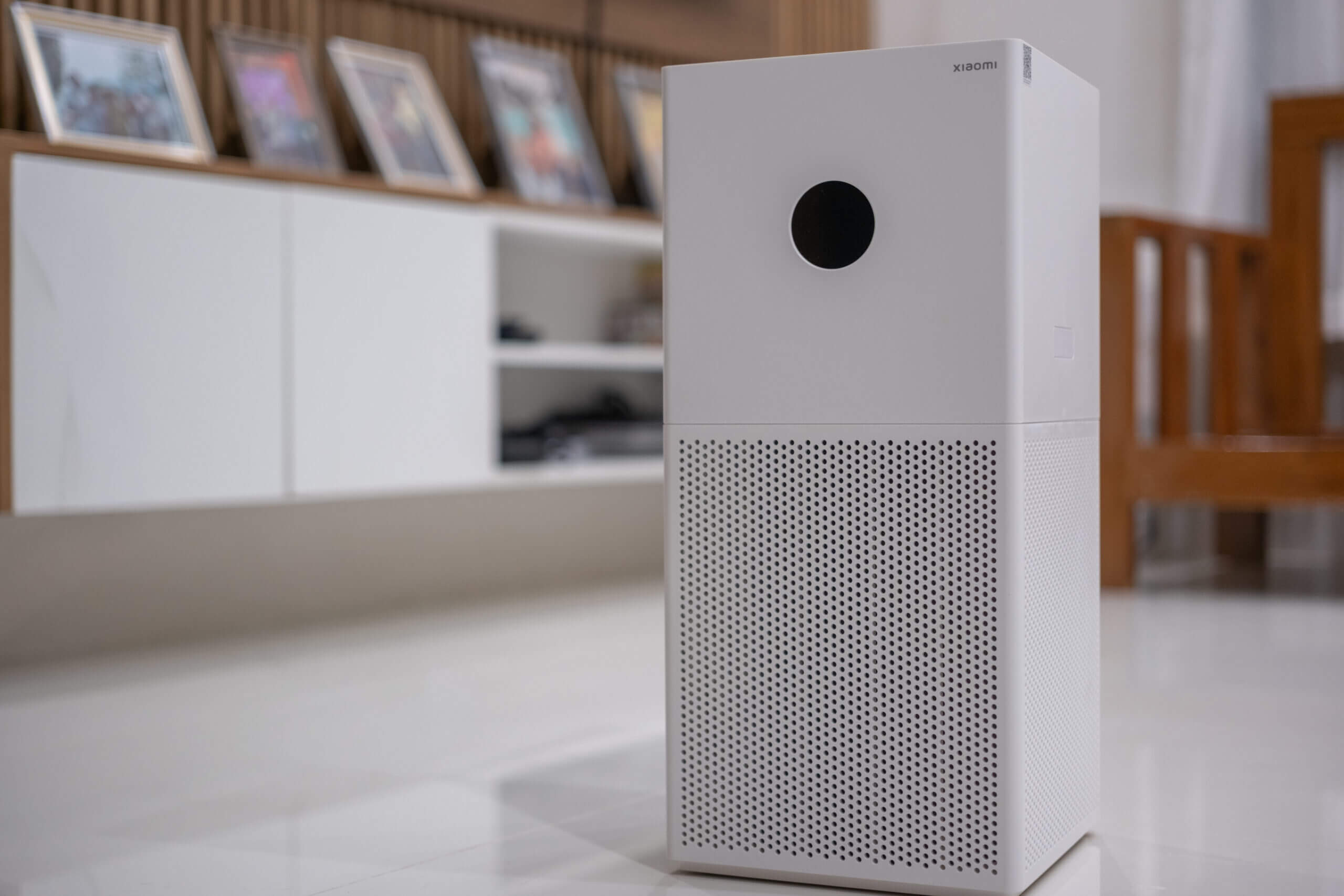
There wasn’t one big reason, but four smaller ones that added up. The first is placement. Our bedroom doesn’t have room for a purifier standing in the middle of the floor, so whatever lives there has to sit against a wall. The Vital 200S-P only pulls air in through its front panel and pushes it out of the top, so it loses nothing when it’s backed up against a wall. The 4 Lite draws air in through the mesh around its whole lower half, so a wall blocks part of its intake.
The second is fur. We have six cats, and my Xiaomi purifiers turn into hairballs within a few weeks. The Vital’s U-shaped vent pulls larger hair through rather than letting it plaster itself across the front, and its nylon pre-filter rinses clean under the tap, which keeps fur off the expensive main filter. On the 4 Lite, the net-like pre-filter is part of the filter itself rather than a separate washable layer.
The third is noise at the speed we actually use. The Vital measured 43 dBA at speed 2 against 44 dBA for the 4 Lite at half speed, which is a small gap on paper, and the Vital has run at speed 2 near the foot of our bed for many nights without bothering me. Finally, it simply moves more air (387 m³/h against 350 at max speed), although it also costs more to keep running.
BreatheSafeAir is a one-person publication. Every share and every subscriber is important to me.
I don’t have a marketing budget or a team behind me. Just a lot of test equipment and a genuine interest in helping you make sense of your air quality. If you find this useful, subscribing to my newsletter is the best free way to support the work. You’ll get information on what I’m currently testing, findings that don’t make it into the full reviews, and the kind of detail you only get from someone who thoroughly tests these devices.
Performance
| Series | Runs | Measured CADR | To 50% | To 90% | To 99% |
|---|---|---|---|---|---|
| Levoit Vital 200S-P, max speed | 3 | 387 m³/h | 3:29 | 10:02 | 19:31 |
| Xiaomi 4 Lite, max speed | 3 | 350 m³/h | 3:56 | 11:36 | 21:02 |
Measured CADR is the median of 3 runs, fitted to the exponential part of each decay curve in a 29.4 m³ room. A real room isn't a sealed test chamber, so my figures won't line up exactly with a lab result, and a difference here doesn't mean the manufacturer is wrong.
29.4 m³ · AirGradient ONE I-9PSL (factory calibrated) · Download levoit vital 200s-p, max speed data (CSV) · Download xiaomi 4 lite, max speed data (CSV) · Download no purifier, room alone data (CSV)
I tested both in my 29.4 m³ spare bedroom by burning incense to around 500 µg/m³, switching the purifier on remotely and timing how long the room took to fall below 5 µg/m³. The readings came from an AirGradient ONE in the room rather than either purifier’s own sensor, with three runs at each speed.
At max speed, the Vital cleared the room in 19:31 against 21:02 for the 4 Lite. That works out to a measured CADR (clean air delivery rate, or how much clean air a purifier delivers each hour) of 387 m³/h for the Vital and 350 m³/h for the 4 Lite.
Levoit claims 425 m³/h for the Vital, backed by AHAM Verifide certification, and Xiaomi claims 360 m³/h for the 4 Lite. That puts the Vital around 9% under its rating and the 4 Lite around 3% under. Neither result means a claim is wrong. My spare bedroom has furniture, gaps and surfaces for particles to settle on, which a sealed test chamber doesn’t, and incense skews towards smaller particles than the dust and smoke used in official testing.
What stands out about this pair is how steady the gap is. At half speed, the Vital measured 172 m³/h against 155 m³/h for the 4 Lite, so it stays around 11% ahead at both speeds, and the room took 42:48 to clean against 45:03. That’s unusual in my testing. In most of my other comparisons, the gap between two purifiers grew or shrank a lot once both were turned down. If you mostly leave your purifier at half speed, that makes this choice simpler, as you get the same advantage you’d see at max.
| Series | Runs | Measured CADR | To 50% | To 90% | To 99% |
|---|---|---|---|---|---|
| Levoit Vital 200S-P, half speed | 3 | 172 m³/h | 7:25 | 22:28 | 42:48 |
| Xiaomi 4 Lite, half speed | 3 | 155 m³/h | 8:17 | 23:54 | 45:03 |
Measured CADR is the median of 3 runs, fitted to the exponential part of each decay curve in a 29.4 m³ room. A real room isn't a sealed test chamber, so my figures won't line up exactly with a lab result, and a difference here doesn't mean the manufacturer is wrong.
29.4 m³ · AirGradient ONE I-9PSL (factory calibrated) · Download levoit vital 200s-p, half speed data (CSV) · Download xiaomi 4 lite, half speed data (CSV) · Download no purifier, room alone data (CSV)
Sleep mode is where the two really part ways. The Vital still cleaned the room in sleep mode, taking 86 minutes, while the 4 Lite’s sleep mode barely beat leaving the room alone. Neither auto mode is one I’d rely on, but for different reasons. The 4 Lite’s thresholds are too lenient, and it couldn’t bring the room down to 1 µg/m³ even after 40 minutes, while the Vital’s sensor invents pollution that isn’t there.
Noise
Sleep is left out: both units read within a couple of dBA of the room's own noise floor at their lowest setting, which measures the room rather than the purifier.
The two are within 2 dBA of each other at both speeds, just in opposite directions. The 4 Lite is the quieter of the two at max speed (58 against 60 dBA), while the Vital is quieter at half speed (43 against 44 dBA). Flat out, both carry across a room, and I wouldn’t want to sleep beside either of them at that speed.
Sleep mode is where I’d expect the bigger difference, as Levoit quotes 23 dB for the Vital and Xiaomi quotes 33.4 dBA for the 4 Lite’s night mode. I can’t check either figure, since my test room’s noise floor sits at 37 to 38 dBA. What I can say is that the Vital in sleep mode is quiet enough that I lose track of whether it’s running.
Design & Pet Hair

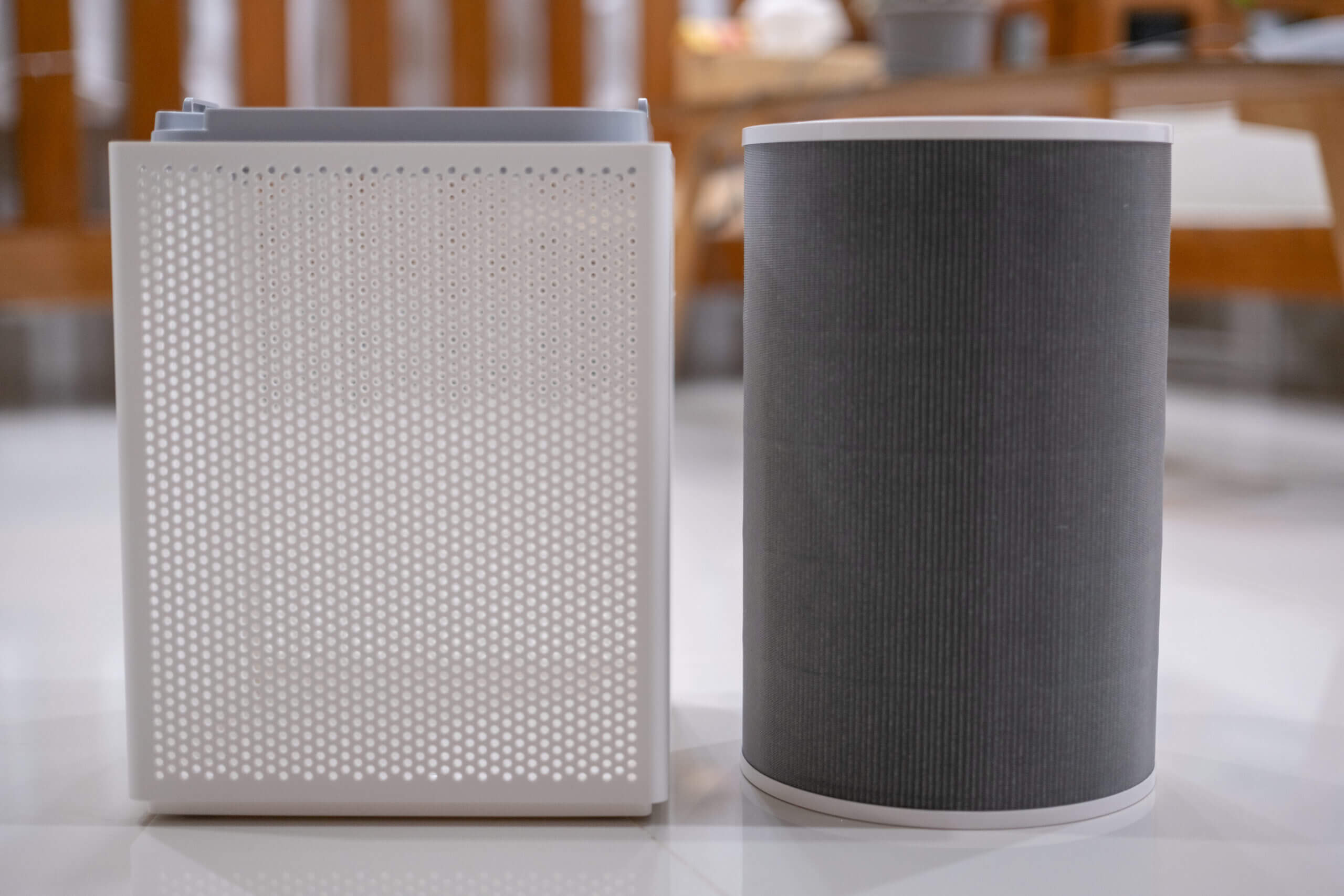
The two are built around very different shapes. The Vital is a wide, chunky rectangle (50.2 x 39.6 x 21.7 cm and about 6 kg) with handles moulded into the top of its U-shaped vent, which makes it the easiest of our purifiers to move around the house. Its power cable also detaches, so a chewed cord is a cheap replacement rather than a dead purifier. The 4 Lite is a square tower that splits in half when you press the buttons on either side, with its cylindrical filter in the bottom half. If you need to move a purifier between rooms, the handles and detachable cable make the Vital the easier one to live with.
Changing filters is quick on both. The Vital’s front panel pulls off and the filter lifts out in under a minute, while the 4 Lite’s filter swaps in around 30 seconds once you’ve split the device. The 4 Lite’s fan is the harder part to keep clean, since you can’t get to it without removing four screws.
Both keep their controls on top, which matters in a house with cats. Ours sleep on the Vital, and I’ve come back to find it locked, unlocked and, on one occasion, switched off mid-afternoon. The 4 Lite’s top buttons have an unresponsive feel that took me a while to get used to. The Vital also has a light sensor that dims its panel when the room goes dark, which I grew to appreciate in a bedroom, while the 4 Lite has a button to adjust its screen brightness.

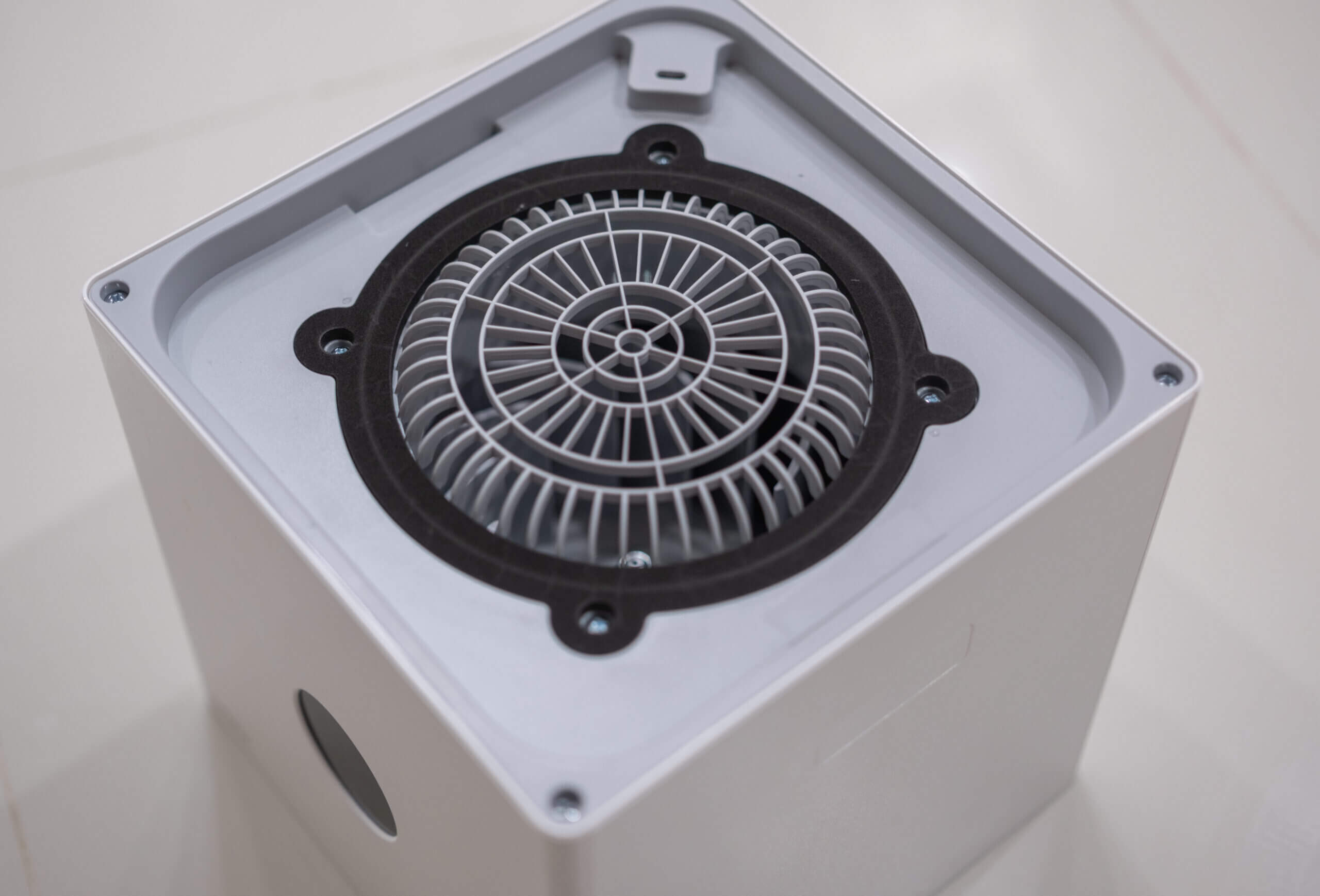
Both are purely mechanical, with no UV lamp or ioniser on either, which I see as a plus since those extras add little next to the filter and bring ozone questions with them. Both filters also include activated carbon for odours, with the Vital’s holding 250 g of pelleted coconut-shell carbon.
Sensors & Smart Features

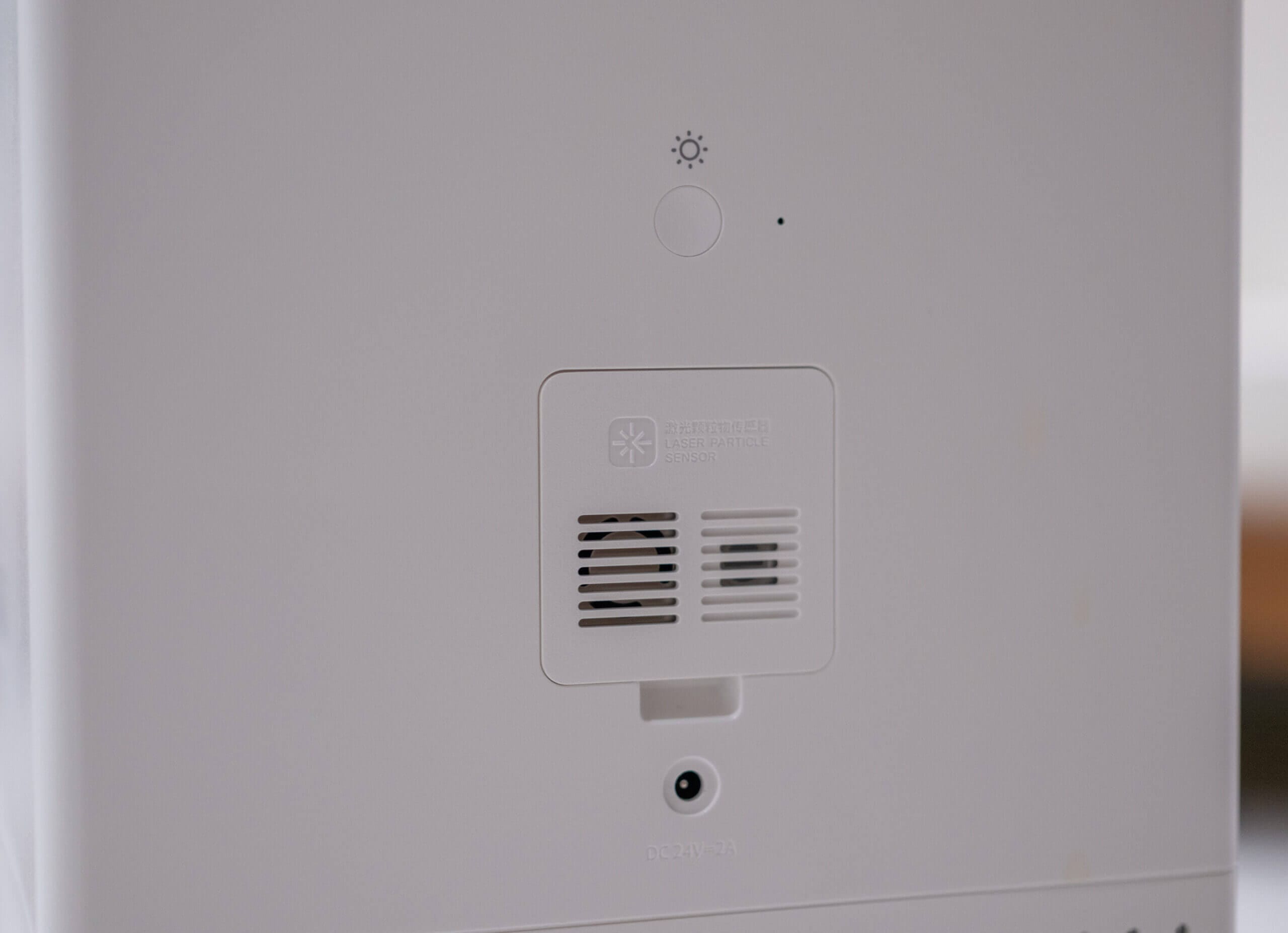
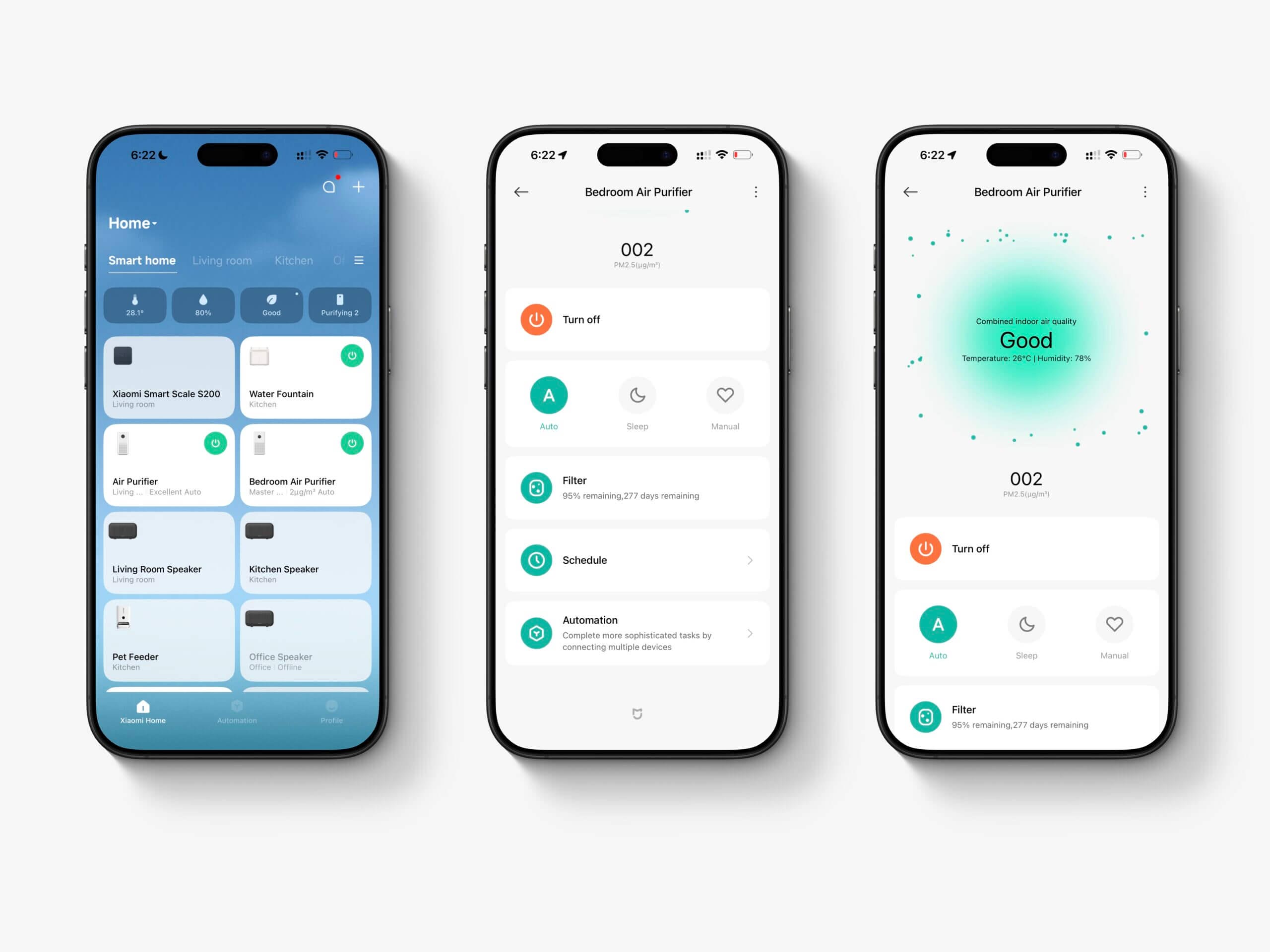
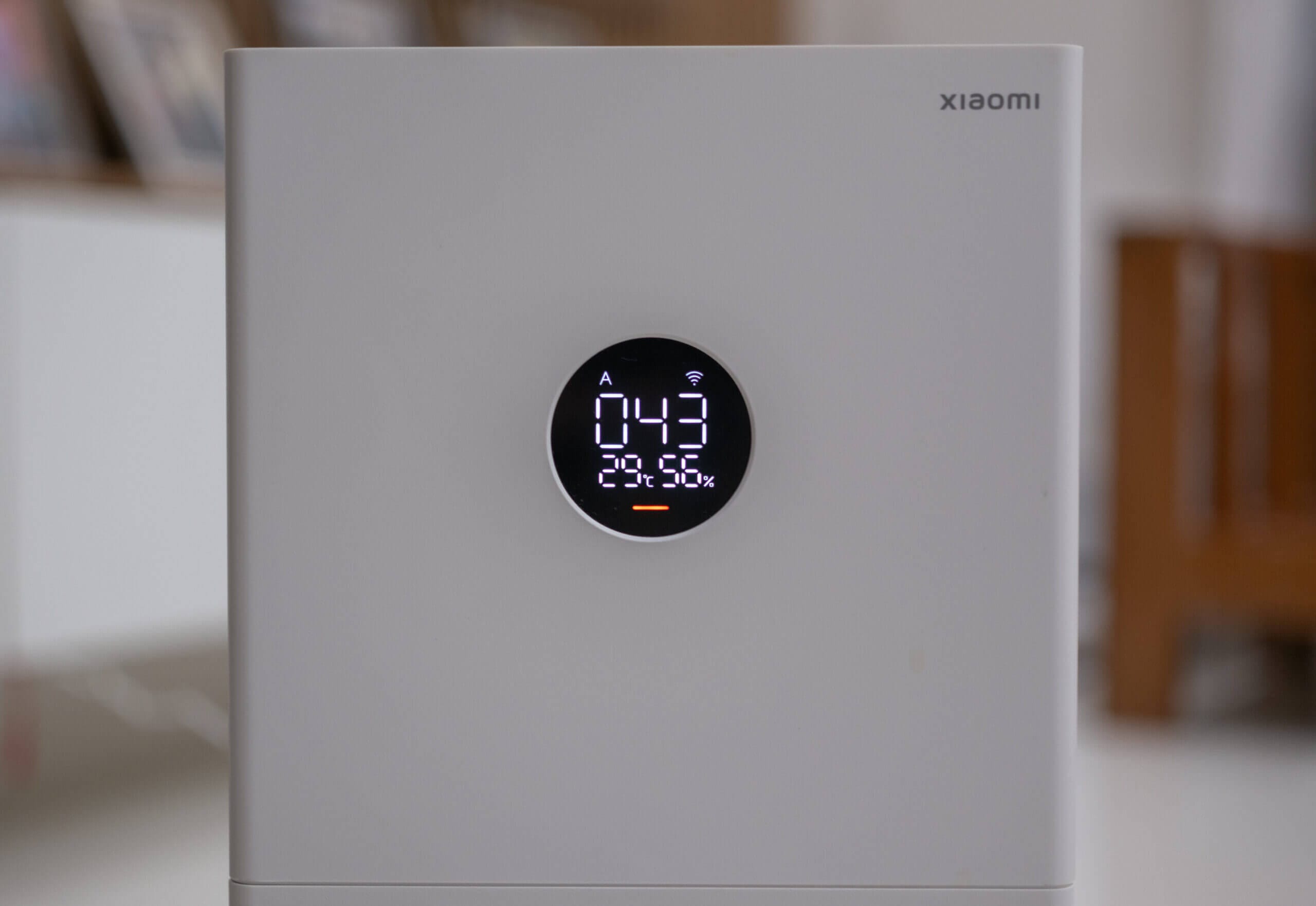
The sensor is the one area where the 4 Lite is clearly ahead. Its laser particle sensor shows PM2.5 in µg/m³ on the screen, along with temperature and humidity, and in my side-by-side testing it tracked my calibrated AirGradient ONE monitors reasonably well, reading slightly high with the odd short spike.
The Vital uses an infrared sensor, and the app only gives you a colour and a description rather than a number. When I pulled the raw values through Home Assistant, it read above 600 µg/m³ during spikes where my monitors showed 100 to 150, regularly showed around 20 µg/m³ when the room was under 5, and logged spikes above 400 µg/m³ that never happened. I automate it from my dedicated monitors through Home Assistant instead, and I’d recommend the same to anyone running both.
On the app side, the Vital pulls ahead. VeSync lets me run a multi-stage night routine (a higher-speed burst for 30 minutes, then level 1 for an hour, then sleep mode until morning), Alexa can set individual fan speeds by voice, and the Home Assistant integration is built in, although it relies on VeSync’s cloud. With the 4 Lite, Alexa can only switch between modes, setting a specific speed means opening the Mi Home app, and the app doesn’t keep any historical data.

Pricing & Running Costs
Prices are official retail in a Western market: US where the device is sold there, Europe where it is not. Other regions differ, sometimes sharply.
Pricing depends a lot on where you buy. In the US, the Vital lists at $189 and is often on sale for $169.99. The 4 Lite isn’t sold there, so the charts in this section use its European price of around $199. Here in the Philippines, where I bought mine, the 4 Lite usually sells for around ₱7,500 (about $115).
On those Western prices, the Vital is the cheaper purifier to buy and the better deal per unit of cleaning power, at $0.49 per m³/h against $0.57. It’s the more expensive one to own, though. Its $40 filter on a six-month cycle comes to $80 a year against $50 for the 4 Lite’s $25 filters, so the Vital costs about $90 a year to run against $61. Over five years, that turns a $10 saving at checkout into a $134 difference the other way ($640 against $506). If you plan to keep a purifier for years, that running cost matters more than the price you pay up front.
Electricity assumes half speed, twelve hours a day, at $0.29/kWh. Filters use the most conservative manufacturer interval, which for both is six months. Prices are official retail in a Western market: US where the device is sold there, Europe where it is not. Other regions differ, sometimes sharply.
Electricity barely changes that picture, but it does show an interesting split. At half speed, the Vital delivers about 21.5 m³/h of clean air for every watt (172 m³/h from 8 W) against 17.2 for the 4 Lite (155 m³/h from 9 W), so it’s the more efficient purifier at the speed it actually runs in our bedroom. Flat out, the order flips, with the 4 Lite at 10.9 m³/h per watt against 9.2 for the Vital (350 m³/h from 32 W against 387 m³/h from 42 W).
Conclusion – Is the Vital 200S-P or the 4 Lite Better?

For our bedroom, the Vital 200S-P is the better purifier, and the reasons are mostly practical. It sits against a wall without losing airflow, it copes with six cats far better, it’s a touch quieter at the speed we use, and it moves around 11% more air at both max and half speed. Add the better app and full voice control, and it’s the one I would choose for a bedroom.
However, the 4 Lite is the better choice in a few situations. Its sensor is far more trustworthy, so it doubles as a basic air quality readout, and it’s cheaper to own, at around $29 a year less to run on my assumptions. In the Philippines and much of Southeast Asia, where it sells for around $115, it’s also well below the Vital’s US price.
If you have pets or need to place the purifier against a wall, I’d spend the extra on the Vital. If you’d rather have a reliable PM2.5 reading and the lower running cost, the 4 Lite is still a solid choice. Whichever you choose, set a fixed speed or automate it from a dedicated monitor rather than relying on auto mode.
Levoit Vital 200S-P vs Xiaomi 4 Lite FAQ
Is the Levoit Vital 200S-P more powerful than the Xiaomi 4 Lite?
Yes. In my testing, the Vital measured 387 m³/h at max speed against 350 m³/h for the 4 Lite, and it stayed around 11% ahead at half speed too (172 against 155 m³/h).
Which is quieter, the Vital 200S-P or the 4 Lite?
It depends on the speed. The Vital is quieter at half speed (43 against 44 dBA), while the 4 Lite is quieter at max speed (58 against 60 dBA).
Which is cheaper to run?
The 4 Lite. On my assumptions it costs about $61 a year to run against $90 for the Vital, mostly because its filters cost $25 against $40.
Which is better for a home with pets?
The Vital 200S-P. Its washable pre-filter and U-shaped vent keep fur off the main filter, while my Xiaomi purifiers turn into hairballs within a few weeks in a house with six cats.
Which has the more accurate PM2.5 sensor?
The 4 Lite. Its laser sensor tracked my calibrated AirGradient ONE monitors reasonably well, while the Vital’s infrared sensor overreported heavily and logged spikes that never happened.


Comments
No comments yet.