

The Mijia Smart Air Purifier 6 and the Levoit Vital 200S-P are two of the mid-range purifiers I’ve tested most thoroughly, and they’re also the two that do the heavy lifting in our own home. The Mijia 6 runs in our combined kitchen and living area, while the Vital 200S-P replaced the Xiaomi 4 Lite in our master bedroom. They cost a similar amount and they’re aimed at similar rooms, but they go about the job in very different ways, which makes Mijia 6 vs Levoit Vital 200S-P a more interesting comparison than it first looks.
I bought the Mijia 6 myself here in the Philippines and have used it for around seven months. Levoit sent me the Vital 200S-P for review, and after a month of testing, it has stayed in our bedroom ever since. More importantly, both went through exactly the same test in the same room, so I can compare them directly rather than relying on two different spec sheets.
If you want the full detail on either device, you can find my Mijia Smart Air Purifier 6 review and my Levoit Vital 200S-P review here. It’s also worth knowing that the Vital 200S-P and the plain Vital 200S are the same machine (Levoit confirmed this to me), so everything below applies to both. In this article, I will compare the two on performance, noise, sensors, design and cost before giving my recommendation on which one to buy.

I independently review air quality monitors with a focus on accuracy. I’ve tested well over 50 devices, compared some of them against reference instruments, and rely on peer-reviewed research and third-party studies wherever possible.
I don’t accept sponsored posts or paid reviews, and I don’t run ads on BreatheSafeAir. When I receive a free product, the company has no say in what I write. Affiliate links don’t influence my views and never increase the price you pay.
I’m constantly learning about how these sensors work – from opening them up, discussing with researchers in the field and examining the hardware inside. That ongoing learning process helps me write reviews that are grounded in how the technology actually behaves, not just what the spec sheet says.
You can read my full Disclaimers & Ethics page for complete details. And as with any review, even mine, I always encourage checking multiple independent sources before making a decision.
This post contains affiliate links. For more information, please refer to my affiliate disclaimer. I bought the Mijia Smart Air Purifier 6 myself, and Levoit sent me the Vital 200S-P for review, but this article is not sponsored. All opinions expressed in this post are my honest thoughts. I only recommend products that I genuinely believe in.
Informational Purposes: Information on this blog is for informational purposes only. Readers are encouraged to confirm the information herein with other sources. This website assumes no responsibility for the accuracy of the information, and information is subject to change without notice. Products mentioned on this website are not medical devices and do not guarantee protection.
If you notice any errors or inconsistencies in this article, please contact me so I can update the information accordingly.
Contents
Performance

Cleaning power is where these two devices differ most, so that’s where I want to start. Xiaomi rates the Mijia 6 at a CADR (clean air delivery rate – how much clean air the purifier produces each hour) of 443 m³/h. Levoit rates the Vital 200S-P at 425 m³/h, which is 250 CFM for smoke on its AHAM Verifide certificate. The two figures aren’t measured the same way, though. Levoit’s comes from AHAM, an independent body testing in a chamber to a published standard, while Xiaomi’s comes from its own testing through third-party labs in China and Korea, under a different standard.
To see how they actually perform, I tested both in my 29.4 m³ spare bedroom. I burned incense until PM2.5 reached around 500 µg/m³, remotely triggered the purifier so I wasn’t in the room, and timed how long it took for the concentration to fall below 5 µg/m³. I ran each speed three times, and every reading came from the same AirGradient ONE I-9PSL sitting in the room with the purifier.
| Series | Runs | Measured CADR | To 50% | To 90% | To 99% |
|---|---|---|---|---|---|
| Mijia 6, max speed | 3 | 453 m³/h | 2:45 | 8:30 | 15:26 |
| Levoit Vital 200S-P, max speed | 3 | 387 m³/h | 3:29 | 10:02 | 19:31 |
Measured CADR is the median of 3 runs, fitted to the exponential part of each decay curve in a 29.4 m³ room. A real room isn't a sealed test chamber, so my figures won't line up exactly with a lab result, and a difference here doesn't mean the manufacturer is wrong.
29.4 m³ · AirGradient ONE I-9PSL (factory calibrated) · Download mijia 6, max speed data (CSV) · Download levoit vital 200s-p, max speed data (CSV) · Download no purifier, room alone data (CSV)
At max speed, the Mijia 6 brought the room below 5 µg/m³ in 15:26, while the Vital 200S-P needed 19:31. That works out to 453 m³/h of measured clean air delivery for the Mijia 6 against 387 m³/h for the Vital 200S-P, so the Mijia moves around 17% more air flat out. If you only look at how long it took to remove 90% of the pollution, the gap is 8:30 against 10:02.
Interestingly, the Mijia 6 came in slightly above its claim while the Vital 200S-P landed around 9% under. A small difference either way is expected and doesn’t mean either claim is false, especially since the two claims come from different standards. Incense also skews towards smaller particles than the dust and smoke used in chamber testing, and my spare bedroom is a real room with furniture and gaps rather than a sealed chamber.
The bigger difference shows up at half speed, which is the setting both of these devices spend most of their lives on in our home. Here, the Mijia 6 measured 301 m³/h against the Vital 200S-P’s 172 m³/h, and they took 24:09 and 42:48 respectively to clean the room. In other words, at the speed you’ll actually leave them running, the Mijia 6 moves around 75% more air, and it cleans the room almost twice as fast.
| Series | Runs | Measured CADR | To 50% | To 90% | To 99% |
|---|---|---|---|---|---|
| Mijia 6, half speed | 3 | 301 m³/h | 4:36 | 13:24 | 24:09 |
| Levoit Vital 200S-P, half speed | 3 | 172 m³/h | 7:25 | 22:28 | 42:48 |
Measured CADR is the median of 3 runs, fitted to the exponential part of each decay curve in a 29.4 m³ room. A real room isn't a sealed test chamber, so my figures won't line up exactly with a lab result, and a difference here doesn't mean the manufacturer is wrong.
29.4 m³ · AirGradient ONE I-9PSL (factory calibrated) · Download mijia 6, half speed data (CSV) · Download levoit vital 200s-p, half speed data (CSV) · Download no purifier, room alone data (CSV)
The Mijia 6 also uses a UV lamp and an ioniser on top of its mechanical filter, while the Vital 200S-P is purely mechanical. I keep both of the Mijia’s extras switched off, since the filter does the real work and both can raise ozone concerns, so all of the results above come from the filters alone.
BreatheSafeAir is a one-person publication. Every share and every subscriber is important to me.
I don’t have a marketing budget or a team behind me. Just a lot of test equipment and a genuine interest in helping you make sense of your air quality. If you find this useful, subscribing to my newsletter is the best free way to support the work. You’ll get information on what I’m currently testing, findings that don’t make it into the full reviews, and the kind of detail you only get from someone who thoroughly tests these devices.
Noise
Sleep is left out: both units read within a couple of dBA of the room's own noise floor at their lowest setting, which measures the room rather than the purifier.
That extra airflow at half speed does come at a small cost in noise. I measured both purifiers at max and half speed, and at max speed there’s almost nothing between them, with the Mijia 6 at 59 dBA and the Vital 200S-P at 60 dBA. At half speed, though, the Vital 200S-P is the quieter of the two at 43 dBA against the Mijia’s 46 dBA.
Three decibels doesn’t sound like much written down, but the decibel scale is logarithmic, so it’s a more noticeable difference than the number suggests. I’ve had the Vital 200S-P running at speed 2 near the foot of our bed for many nights without it bothering me. In sleep mode, both are quiet enough that I can’t separate them from my room’s own noise floor (Levoit quotes 23 dBA and Xiaomi 32 dBA).
Putting the two sections together, the trade-off is fairly clear. At the settings I actually leave them on, the Mijia 6 cleans around 75% more air for 3 dBA more noise.
Sensors & Smart Features
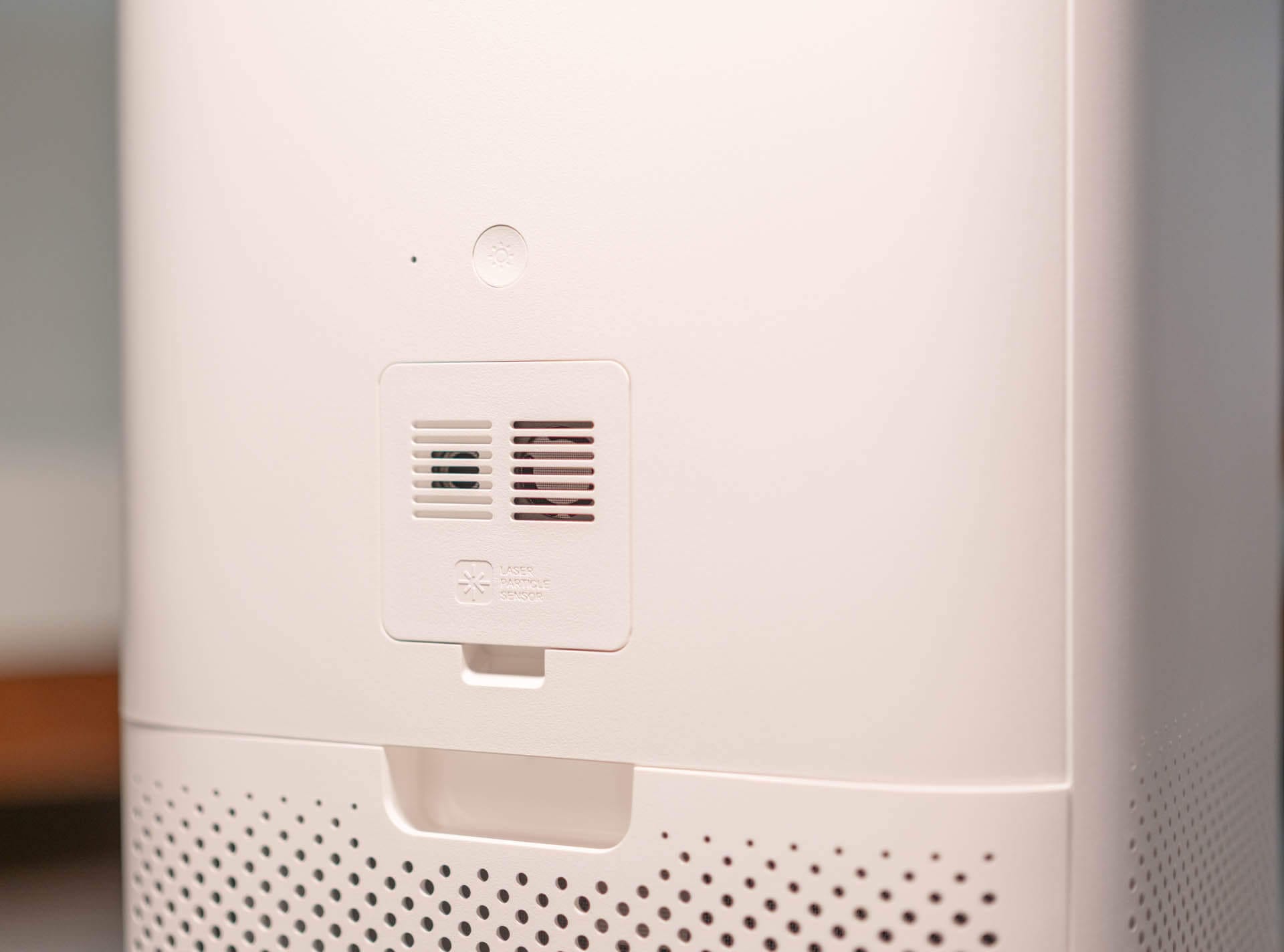

The sensor and the app are where the Vital 200S-P and the Mijia 6 swap places, and the differences here are just as large as in performance. Where the Mijia 6 uses a laser particle sensor, the Vital 200S-P opts for an infrared sensor, which is generally far less accurate.
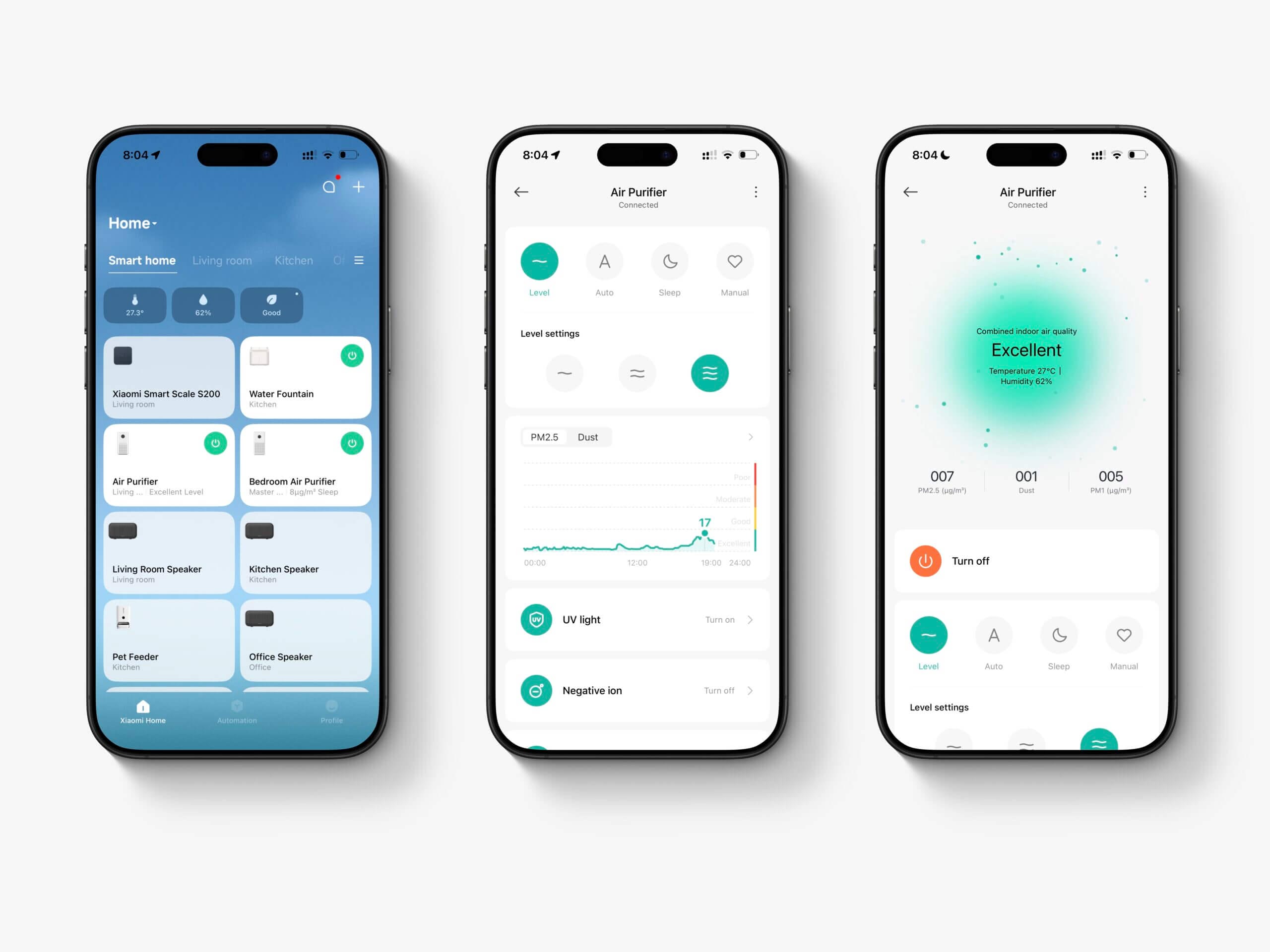
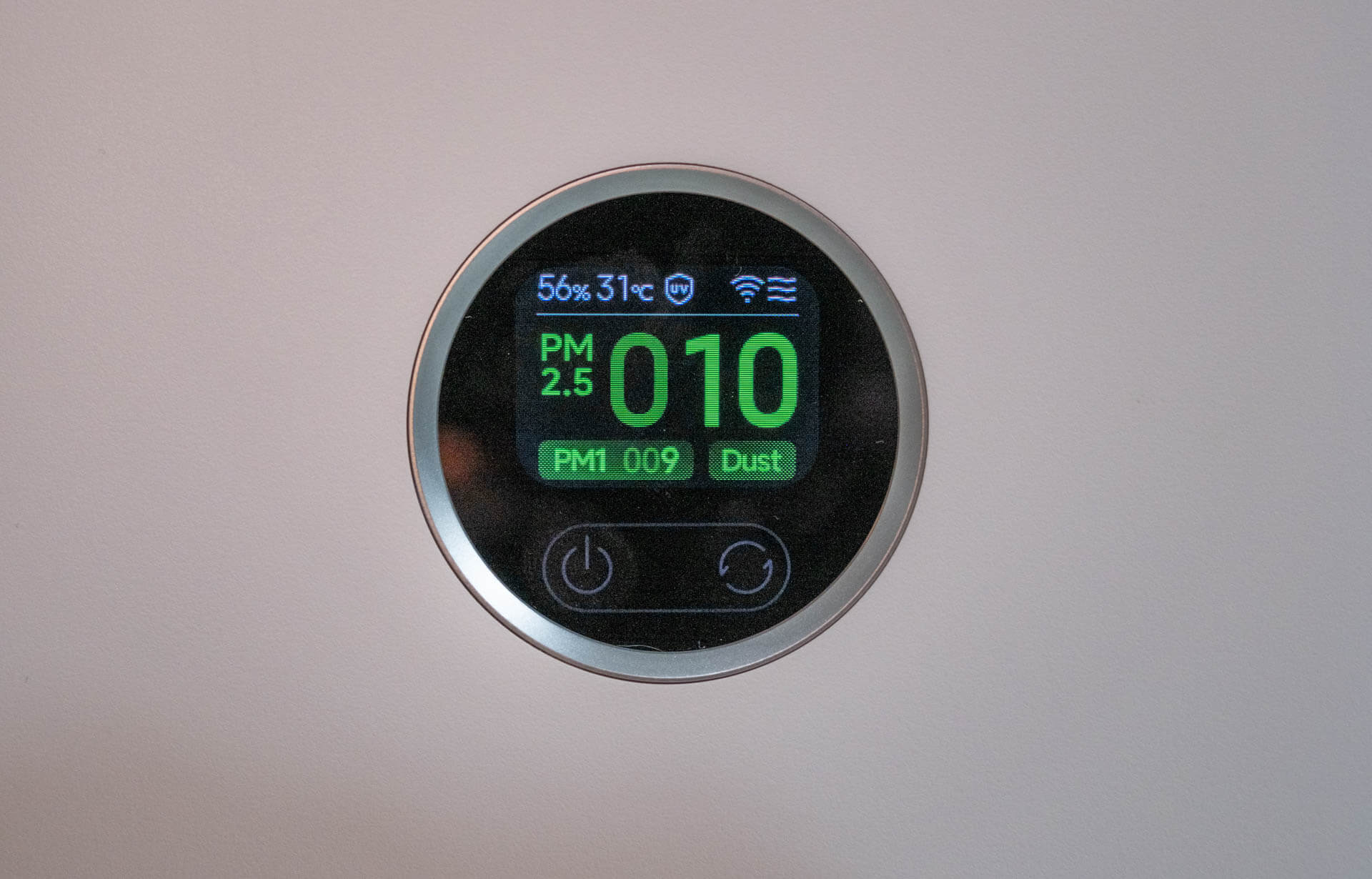
The Mijia 6 shows PM1, PM2.5 and PM10 along with temperature and humidity on its front display, and keeps a history in the Mi Home app. In my side-by-side testing it tracked trends well against my calibrated AirGradient ONE monitors. It does read high at higher concentrations (425 µg/m³ against the AirGradient’s 277 in one incense test) and occasionally spikes for a few readings, but it’s good enough to be useful.
The Vital 200S-P’s sensor is much worse. The app only gives you a colour rather than a number, and when I pulled the raw values through Home Assistant, the Levoit read above 600 µg/m³ while my monitors read 100 to 150. Worse, it regularly reports spikes that never happened, including one above 400 µg/m³ while a monitor right next to it showed 20.

As a result, I wouldn’t use auto mode on either device, but for different reasons. The Mijia 6’s thresholds are published but too lenient, with anything up to 20 µg/m³ treated as “Excellent” and run at sleep speed, and you can’t adjust them. Levoit wouldn’t share the Vital’s thresholds at all, and with a sensor that invents pollution, it wouldn’t matter if they did.
On the other hand, the Vital 200S-P has the far better app and smart home support. VeSync lets you build multi-stage schedules (mine runs a 30-minute burst when sleep mode starts, then level 1 for an hour, then sleep mode until morning), the Vital is supported by Home Assistant’s built-in VeSync integration, and Alexa can set individual fan speeds. With the Mijia 6, Alexa is limited to a few modes, and you need the Mi Home app for custom speeds, automations or to switch off the UV lamp and ioniser. If you have dedicated air quality monitors, automating either purifier from those is the best option.

Design & Size
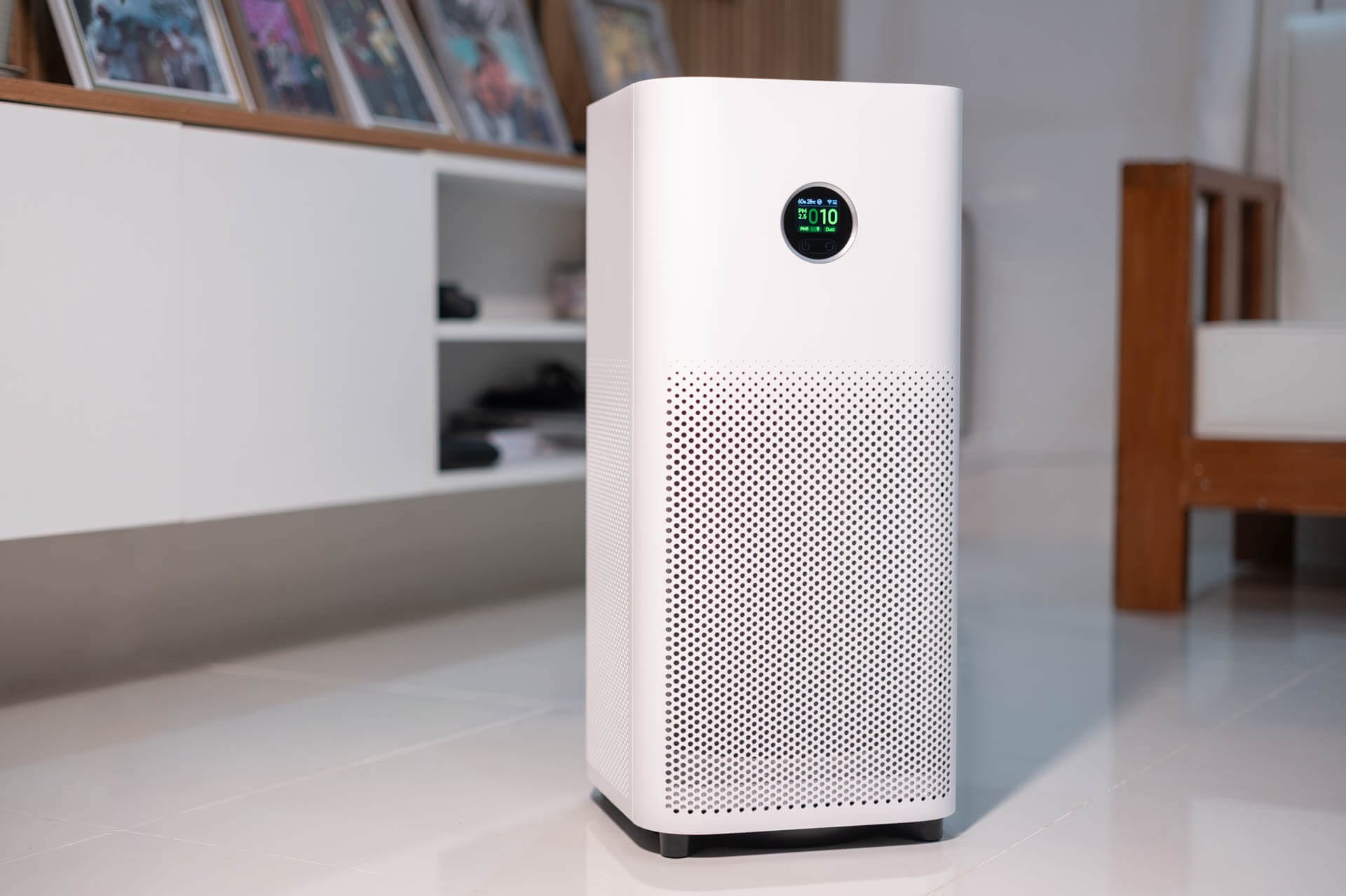

The two devices also take very different approaches to their design, and this matters more than you might expect for where you can put them. The Mijia 6 is a cylinder (250 x 250 x 555mm) that pulls air in from all sides around its base, so it works best away from walls and furniture. The Vital 200S-P is a chunky rectangle (50.2 x 39.6 x 21.7cm, about 6kg) that only pulls air in from the front, which means you can push it against a wall without losing airflow. Our bedroom has no space for a purifier in the middle of the floor, so this was one of the main reasons the Vital 200S-P ended up there.
The Vital 200S-P is also the better choice for pets. Its washable nylon pre-filter and U-shaped vent catch fur before it reaches the main filter, and I just rinse the pre-filter under the tap. With six cats in our house, my Xiaomi purifiers turn into hairballs within a few weeks, while the Levoit stays presentable for much longer.


Both are easy to live with otherwise. Filter changes are simple on each (the Vital’s front panel pulls off, and the Mijia’s filter slides out of the back), the Vital has moulded handles and a detachable power cable, and its control panel dims automatically when the room goes dark. The Mijia 6 has a front display showing all of its readings, and its build quality is a big step up from Xiaomi’s cheaper 4 Lite. One small annoyance with the Vital is that its controls sit on top, and our cats regularly lock, unlock or switch it off by sleeping there.
Pricing & Running Costs
Prices are official retail in a Western market: US where the device is sold there, Europe where it is not. Other regions differ, sometimes sharply.
Pricing is where this comparison depends most on where you live. The Vital 200S-P lists at $189, though it’s often on sale for $169.99. The Mijia 6 isn’t sold in the US at all. In Europe it lists at €199.99 (about $231), and here in the Philippines I can buy it for around ₱10,500 (about $170). To keep both devices on the same basis, the charts in this section use the Vital’s US price and the Mijia’s European price.
Looking at price against measured CADR, the two devices end up almost level. At those Western prices, you pay around $0.51 per m³/h of clean air for the Mijia 6 and $0.49 for the Vital 200S-P. That changes quickly with sales and region, though. At the Vital’s $169.99 sale price it drops to $0.44, and at the price I pay locally, the Mijia 6 works out to around $0.38.
Prices are official retail in a Western market: US where the device is sold there, Europe where it is not. Other regions differ, sometimes sharply.
Running costs are close as well, and they’re mostly down to filters. A Mijia 6 filter costs around $37 here (₱2,200) and $30-60 on Amazon in the US, while a Vital 200S-RF filter costs around $40. Both are rated for 6-12 months, but with pets I plan around six. Electricity barely registers, as both draw 8-9 W at half speed (33 W and 42 W at max). On the chart’s assumptions, the Mijia 6 costs about $85 a year to run and the Vital 200S-P about $90.
Electricity assumes half speed, twelve hours a day, at $0.29/kWh. Filters use the most conservative manufacturer interval, which for both is six months. Prices are official retail in a Western market: US where the device is sold there, Europe where it is not. Other regions differ, sometimes sharply.
Conclusion – Is the Mijia 6 or Levoit Vital 200S-P Better?

If raw cleaning power is your priority, the Mijia 6 is the better purifier. It moves 17% more air at max speed and around 75% more at half speed, it has the better sensor, and it’s very well priced in Southeast Asia. For a living area, an apartment or any room where you want the most cleaning at a reasonable volume, it’s the one I would buy.
However, the Vital 200S-P is the better device to live with in a few situations. If the purifier has to sit against a wall, if you have pets, if you want it as quiet as possible at its everyday speed, or if you want a good app with proper smart home support, the Vital 200S-P makes more sense. It’s also the realistic choice in the US, where the Mijia 6 isn’t sold.
That’s also how they’re split in our home. The Mijia 6 handles the open kitchen and living area, where airflow matters most, and the Vital 200S-P sits against the wall in our bedroom, where quiet operation and the pre-filter matter more.
Whichever one you choose, set the speed manually or automate it from a dedicated air quality monitor rather than relying on auto mode, as neither device’s auto mode will keep a room properly clean.
Mijia 6 vs Levoit Vital 200S-P FAQ
Is the Mijia 6 more powerful than the Levoit Vital 200S-P?
Yes. In my testing, the Mijia 6 delivered 453 m³/h at max speed against the Vital 200S-P’s 387 m³/h, and 301 m³/h against 172 m³/h at half speed.
Which is quieter, the Mijia 6 or the Vital 200S-P?
The Vital 200S-P at its everyday speed. I measured 43 dBA against the Mijia’s 46 dBA at half speed, while at max speed they were almost identical at 60 and 59 dBA.
Can I buy the Mijia 6 in the US?
No. The Mijia 6 isn’t sold in the US. In Europe it lists at €199.99, while here in the Philippines I bought mine for around ₱10,000.
Which is better if I have pets?
The Vital 200S-P. Its washable pre-filter and U-shaped vent catch fur before it reaches the main filter, which keeps the expensive filter working for longer.
Should I use auto mode on either purifier?
No. The Mijia 6’s thresholds are too lenient and can’t be changed, and the Vital 200S-P’s sensor overreports and logs spikes that never happened.


