

The Mijia Smart Air Purifier 6 and the Xiaomi Smart Air Purifier 4 Lite were the first two purifiers I bought for our home, and I’ve now used both for around seven months. For most of that time, the Mijia 6 ran in our combined kitchen and living area while the 4 Lite looked after our master bedroom (the Lite has since been replaced there by a Levoit Vital 200S-P). That means I’ve lived with both side by side, not just tested them.
The two devices sit next to each other in Xiaomi’s lineup. The 4 Lite is the smaller, cheaper model designed for bedrooms and small living areas, while the Mijia 6 is the newer baseline model aimed at medium to large rooms. They share the same Mi Home app and a very similar look, so the Mijia 6 vs Xiaomi 4 Lite question really comes down to whether the step up is worth the extra money.
If you want the full detail on either device, you can find my Mijia Smart Air Purifier 6 review and my Xiaomi Smart Air Purifier 4 Lite review here. In this article, I will compare the two on performance, noise, sensors, design and cost before giving my recommendation on which one to buy.

I independently review air quality monitors with a focus on accuracy. I’ve tested well over 50 devices, compared some of them against reference instruments, and rely on peer-reviewed research and third-party studies wherever possible.
I don’t accept sponsored posts or paid reviews, and I don’t run ads on BreatheSafeAir. When I receive a free product, the company has no say in what I write. Affiliate links don’t influence my views and never increase the price you pay.
I’m constantly learning about how these sensors work – from opening them up, discussing with researchers in the field and examining the hardware inside. That ongoing learning process helps me write reviews that are grounded in how the technology actually behaves, not just what the spec sheet says.
You can read my full Disclaimers & Ethics page for complete details. And as with any review, even mine, I always encourage checking multiple independent sources before making a decision.
This post contains affiliate links. For more information, please refer to my affiliate disclaimer. I was NOT sent a product for review; I purchased this product myself. All opinions expressed in this post are my honest thoughts. I only recommend products that I believe in.
Informational Purposes: Information on this blog is for informational purposes only. Readers are encouraged to confirm the information herein with other sources. This website assumes no responsibility for the accuracy of the information, which is subject to change without notice. Products mentioned on this website are not medical devices and do not guarantee protection.
If you notice any errors or inconsistencies in this article, please contact me so I can update the information accordingly.
Contents
Performance

The biggest difference between these two devices is how much air they can clean, so that’s where I want to start. Xiaomi rates the Mijia 6 at a CADR (clean air delivery rate – how much clean air the purifier produces each hour) of 443 m³/h for rooms of 29-50 m². The 4 Lite is rated at 360 m³/h for rooms of 25-43 m², which makes the Mijia 6 around 23% more powerful on paper.
To see how they actually perform, I tested both in my 29.4 m³ spare bedroom. I burned incense until PM2.5 reached around 500 µg/m³, remotely triggered the purifier so I wasn’t in the room, and timed how long it took for the concentration to fall below 5 µg/m³. I ran max and half speed three times each, and every reading came from the same AirGradient ONE I-9PSL sitting in the room with the purifier.
| Series | Runs | Measured CADR | To 50% | To 90% | To 99% |
|---|---|---|---|---|---|
| Mijia 6, max speed | 3 | 453 m³/h | 2:45 | 8:30 | 15:26 |
| Xiaomi 4 Lite, max speed | 3 | 350 m³/h | 3:56 | 11:36 | 21:02 |
Measured CADR is the median of 3 runs, fitted to the exponential part of each decay curve in a 29.4 m³ room. A real room isn't a sealed test chamber, so my figures won't line up exactly with a lab result, and a difference here doesn't mean the manufacturer is wrong.
29.4 m³ · AirGradient ONE I-9PSL (factory calibrated) · Download mijia 6, max speed data (CSV) · Download xiaomi 4 lite, max speed data (CSV) · Download no purifier, room alone data (CSV)
At max speed, the Mijia 6 brought the room below 5 µg/m³ in 15:26, while the 4 Lite needed 21:02. That works out to 453 m³/h of measured clean air delivery for the Mijia 6 against 350 m³/h for the 4 Lite, so the Mijia 6 moves around 29% more air flat out. If you only look at how long it took to remove 90% of the pollution, the gap is 8:30 against 11:36.
The Mijia 6 is also the only one of the two to beat its own claim (453 against 443), while the 4 Lite came in slightly under (350 against 360). Small differences like these are expected, since my spare bedroom is a real room with furniture and gaps rather than a sealed test chamber, so neither result means Xiaomi’s claims are false. Both are close enough that I’d call Xiaomi’s numbers honest.
Interestingly, the gap gets much bigger at half speed rather than smaller. Here, the Mijia 6 measured 301 m³/h against the 4 Lite’s 155 m³/h, which is almost double. In practice, the Mijia 6 cleaned the room in 24:09 at half speed, while the 4 Lite took 45:03.
| Series | Runs | Measured CADR | To 50% | To 90% | To 99% |
|---|---|---|---|---|---|
| Mijia 6, half speed | 3 | 301 m³/h | 4:36 | 13:24 | 24:09 |
| Xiaomi 4 Lite, half speed | 3 | 155 m³/h | 8:17 | 23:54 | 45:03 |
Measured CADR is the median of 3 runs, fitted to the exponential part of each decay curve in a 29.4 m³ room. A real room isn't a sealed test chamber, so my figures won't line up exactly with a lab result, and a difference here doesn't mean the manufacturer is wrong.
29.4 m³ · AirGradient ONE I-9PSL (factory calibrated) · Download mijia 6, half speed data (CSV) · Download xiaomi 4 lite, half speed data (CSV) · Download no purifier, room alone data (CSV)
This matters because half speed is the setting most people leave a purifier on. In fact, the Mijia 6 at half speed delivered 86% of what the 4 Lite manages at full speed (301 against 350 m³/h) and cleaned the room only about three minutes slower, while being 12 dBA quieter. If you want strong cleaning without listening to a fan at full tilt, this is the biggest reason to step up.
Unfortunately, the automatic modes are weak on both devices. Neither lets you change its auto thresholds, and on the Mijia 6, Xiaomi’s documentation shows the fan only running at sleep speed for anything up to 20 µg/m³. In my testing, the 4 Lite’s auto mode couldn’t bring the room down to 1 µg/m³ even after 40 minutes. On either device, I would recommend setting the speed yourself or building your own automations.
BreatheSafeAir is a one-person publication. Every share and every subscriber is important to me.
I don’t have a marketing budget or a team behind me. Just a lot of test equipment and a genuine interest in helping you make sense of your air quality. If you find this useful, subscribing to my newsletter is the best free way to support the work. You’ll get information on what I’m currently testing, findings that don’t make it into the full reviews, and the kind of detail you only get from someone who thoroughly tests these devices.
Noise
Sleep is left out: both units read within a couple of dBA of the room's own noise floor at their lowest setting, which measures the room rather than the purifier.
Since these devices will likely spend their time in a room you live or sleep in, noise matters almost as much as speed. I measured both at max and half speed, and there’s very little between them. At max speed, the Mijia 6 reads 59 dBA against the 4 Lite’s 58 dBA. At half speed, the 4 Lite is slightly quieter at 44 dBA against the Mijia 6’s 46 dBA.
Differences of 1-2 dBA won’t decide a purchase. Xiaomi quotes 32 dBA for the Mijia 6’s sleep mode and 33.4 dBA for the 4 Lite’s night mode, but my room’s own noise floor sits above both figures, so I can’t confirm either. What I can say is that the Mijia 6’s half speed (roughly Level 2 in the app) is the sweet spot I settled on during the day, and its sleep mode is barely audible at night.
Sensors & Smart Features
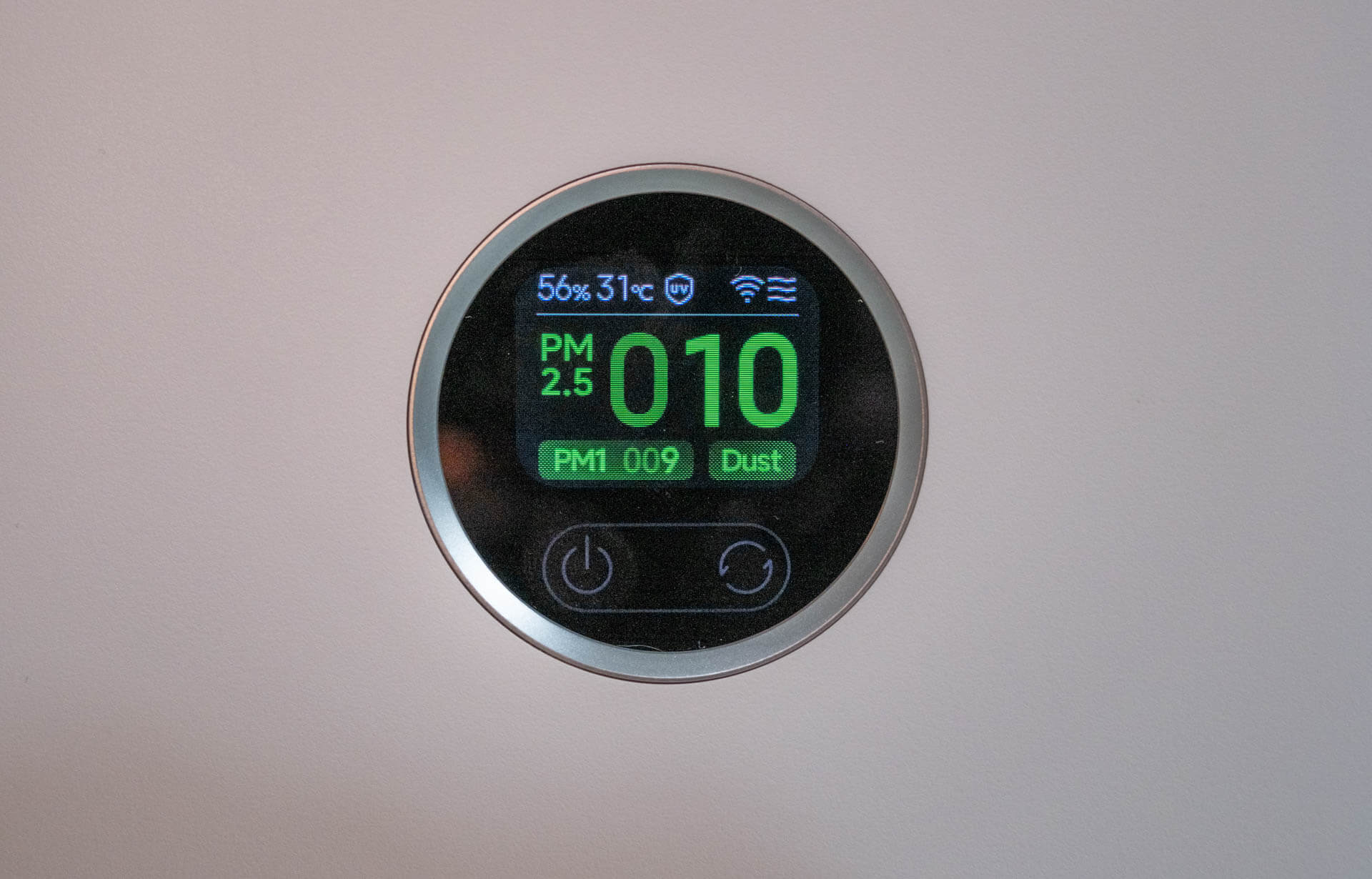
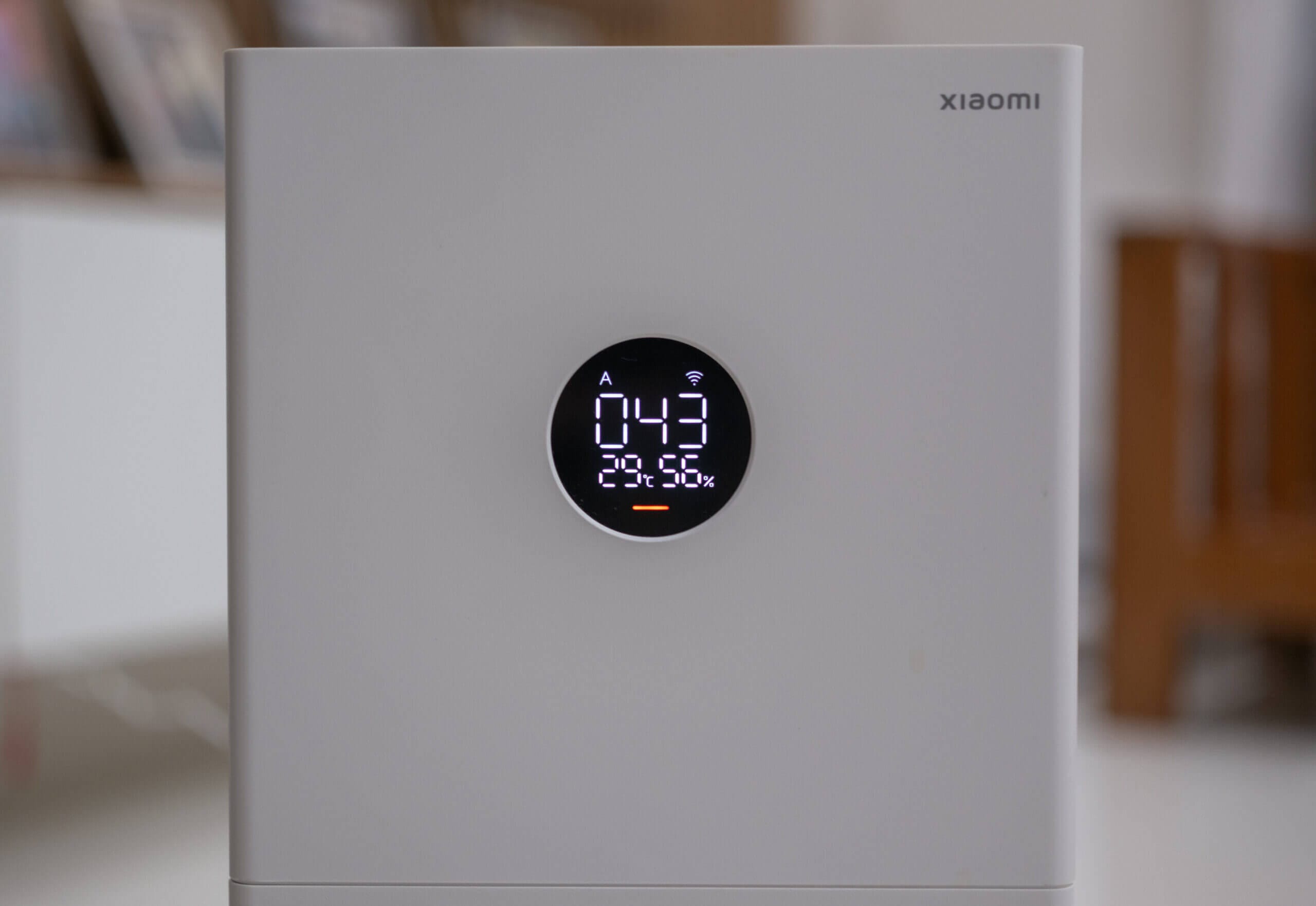
Both devices use a laser particle sensor, and both share the same strengths and quirks. In my side-by-side testing, both tracked trends well against my calibrated AirGradient ONE monitors, both generally read slightly higher, and both occasionally spiked for a few readings without any real change in the room.
The difference shows up at high concentrations. In one incense test, the Mijia 6 reported 425 µg/m³ while the 4 Lite reported 301 µg/m³ and the AirGradient ONE reported 277 µg/m³. At lower levels the three were much closer (10, 7 and 6 µg/m³ respectively). As I mentioned in both reviews, this isn’t a big issue, because at those concentrations the purifier should be running at max speed anyway.
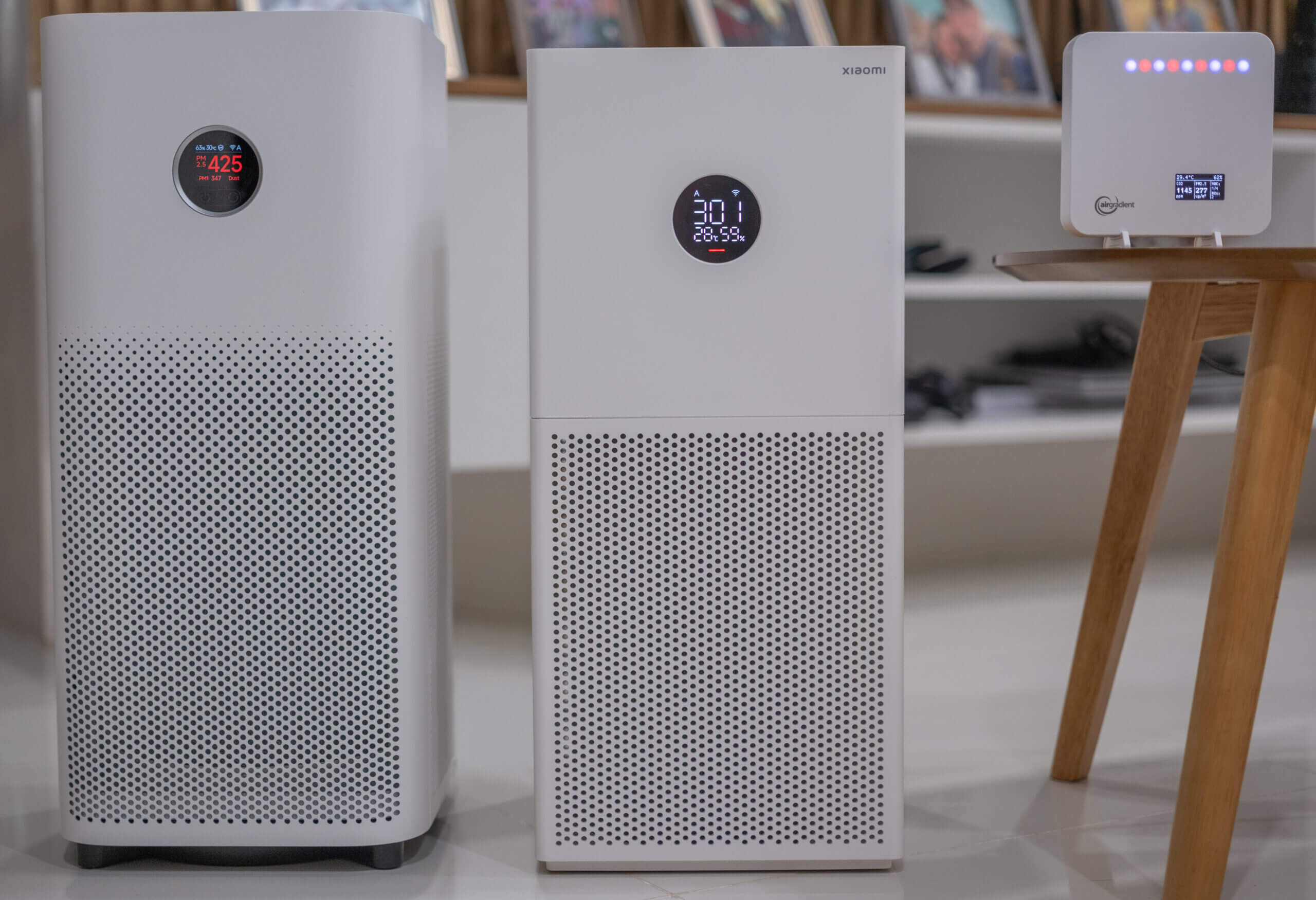
The Mijia Smart Air Purifier 6 reports 425 µg/m³, while the 4 Lite reports 301 µg/m³ and the AirGradient ONE reports 277 µg/m³.
Where the Mijia 6 pulls ahead is in what it shows you. Its display shows PM1, PM2.5, PM10 (which Xiaomi calls “dust”), temperature and humidity, and the Mi Home app keeps historical data for all of them. The 4 Lite only shows PM2.5, temperature and humidity, and its app shows live readings with no history at all. If you don’t own a dedicated air quality monitor, that history is a handy extra.
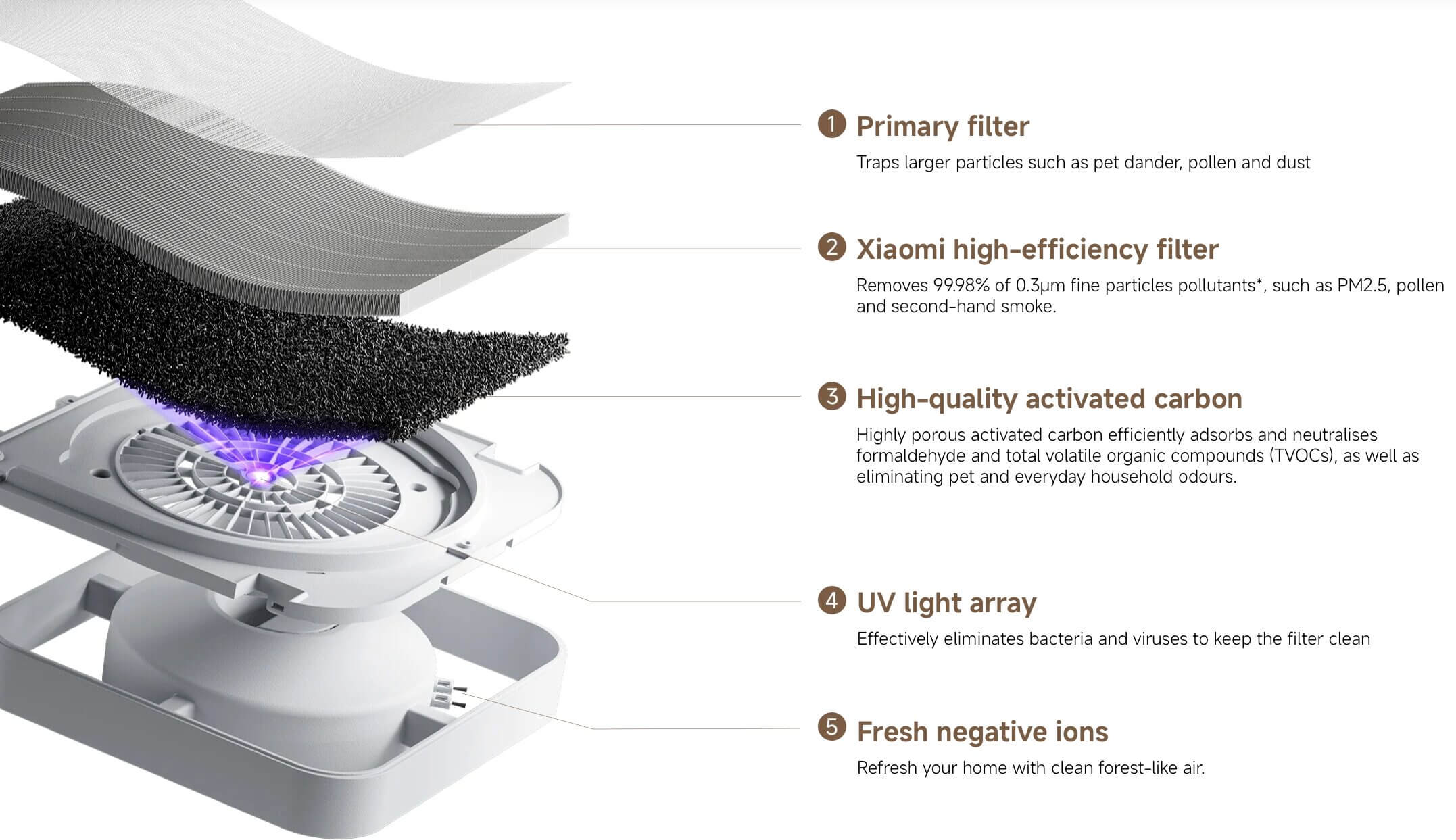
The Mijia 6 also adds a UV lamp and an ioniser. I keep both turned off, as both can produce ozone and I don’t believe they add much to filtration performance (the mechanical filter does the heavy lifting). The 4 Lite has neither, which makes it the simpler choice if you’d rather avoid these features altogether.
Beyond that, the smart features are very similar. Both can trigger automations from their PM2.5 reading, both need the Mi Home app to set a custom fan speed, and both have frustratingly limited Alexa support. With either device, I can switch between modes by voice but can’t ask for a specific speed, which is something I wish Xiaomi would fix.
Design & Size
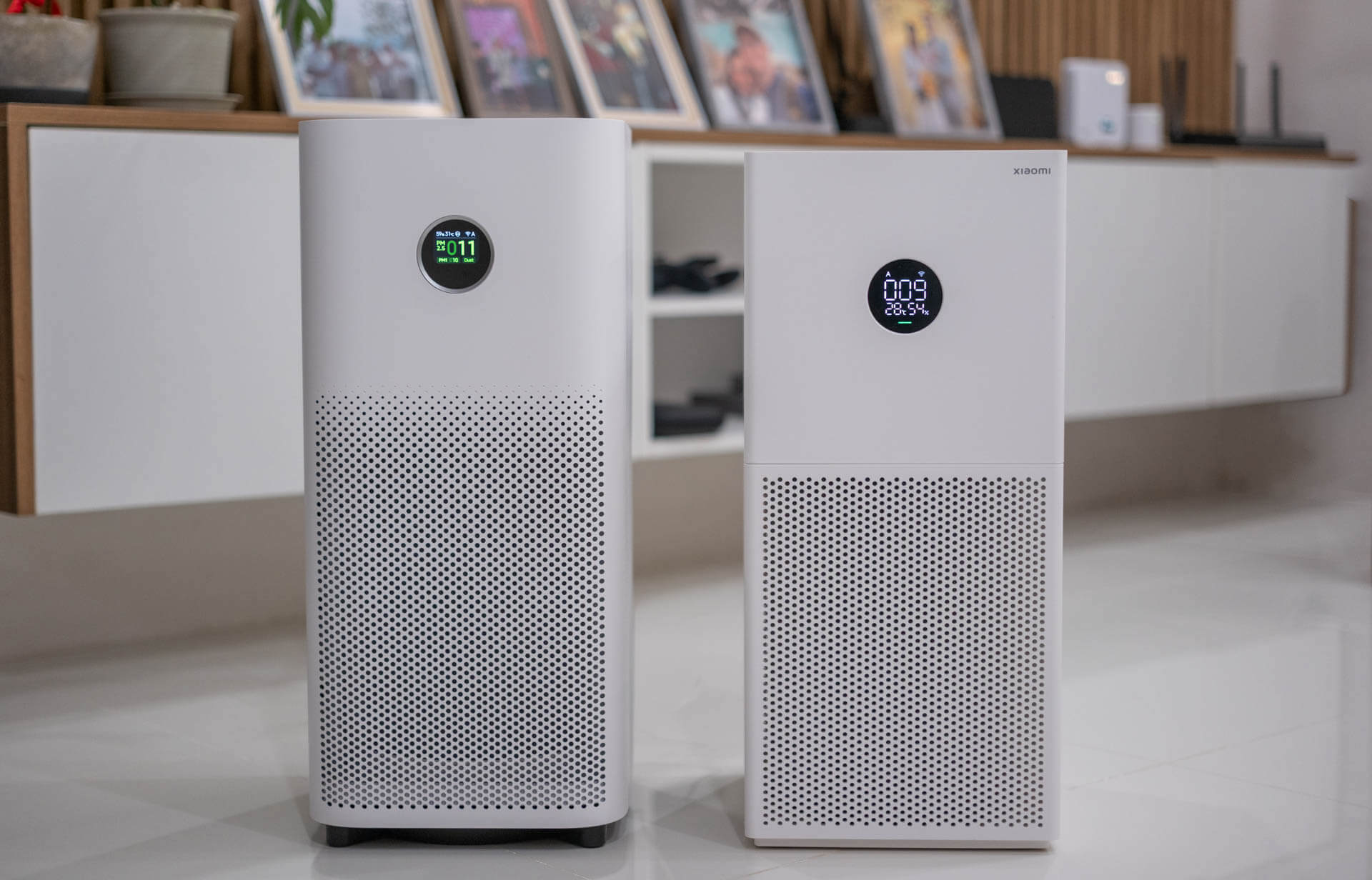
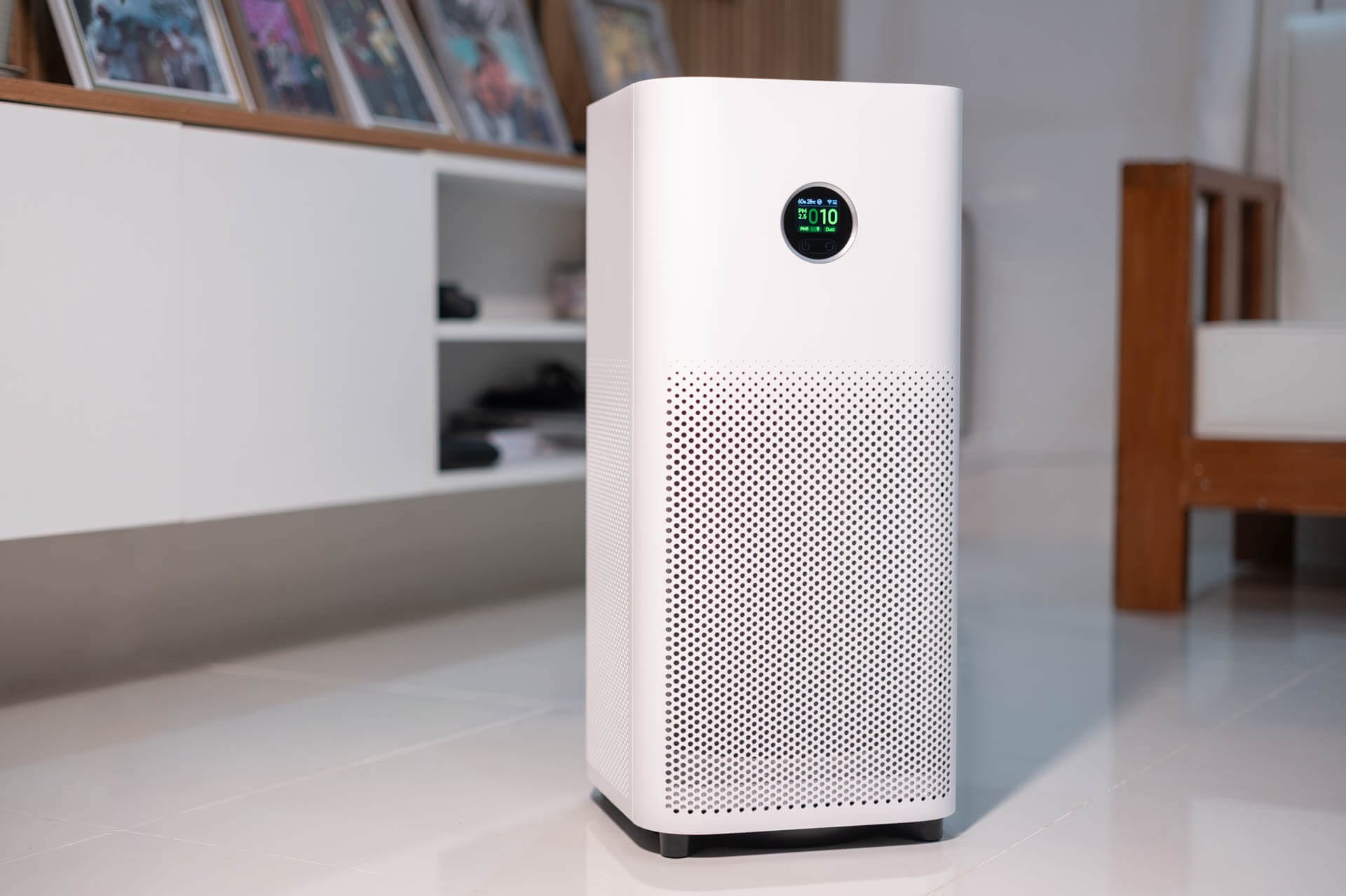
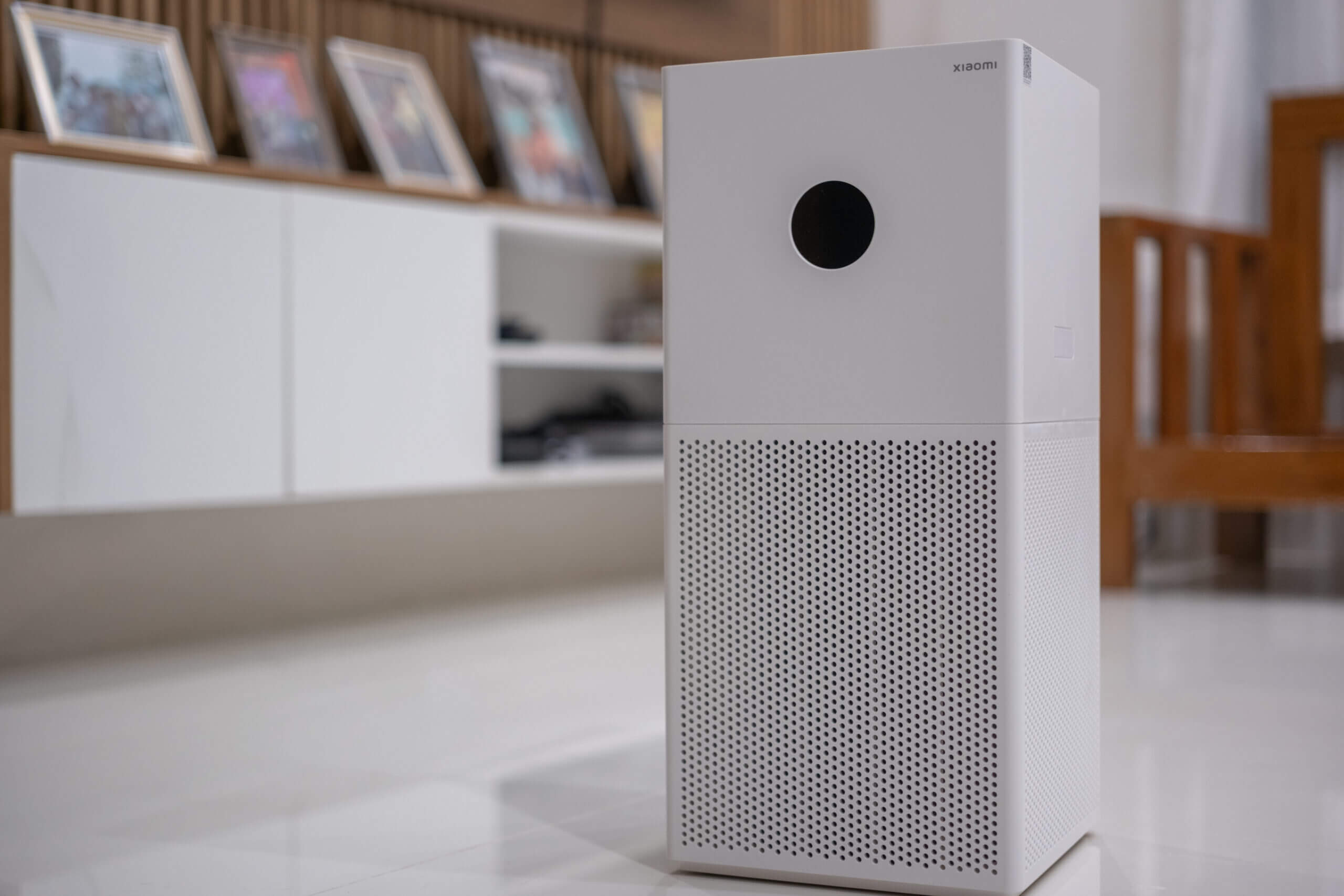
Mijia Smart Air Purifier 6 (left) and 4 Lite (right).
The two devices are almost the same size. According to Xiaomi, the 4 Lite measures 240 x 240 x 533.5mm and the Mijia 6 measures 250 x 250 x 555mm, so either will fit in the same spot. However, the Mijia 6 feels like a night and day improvement in build quality over the 4 Lite, even allowing for the difference in price.
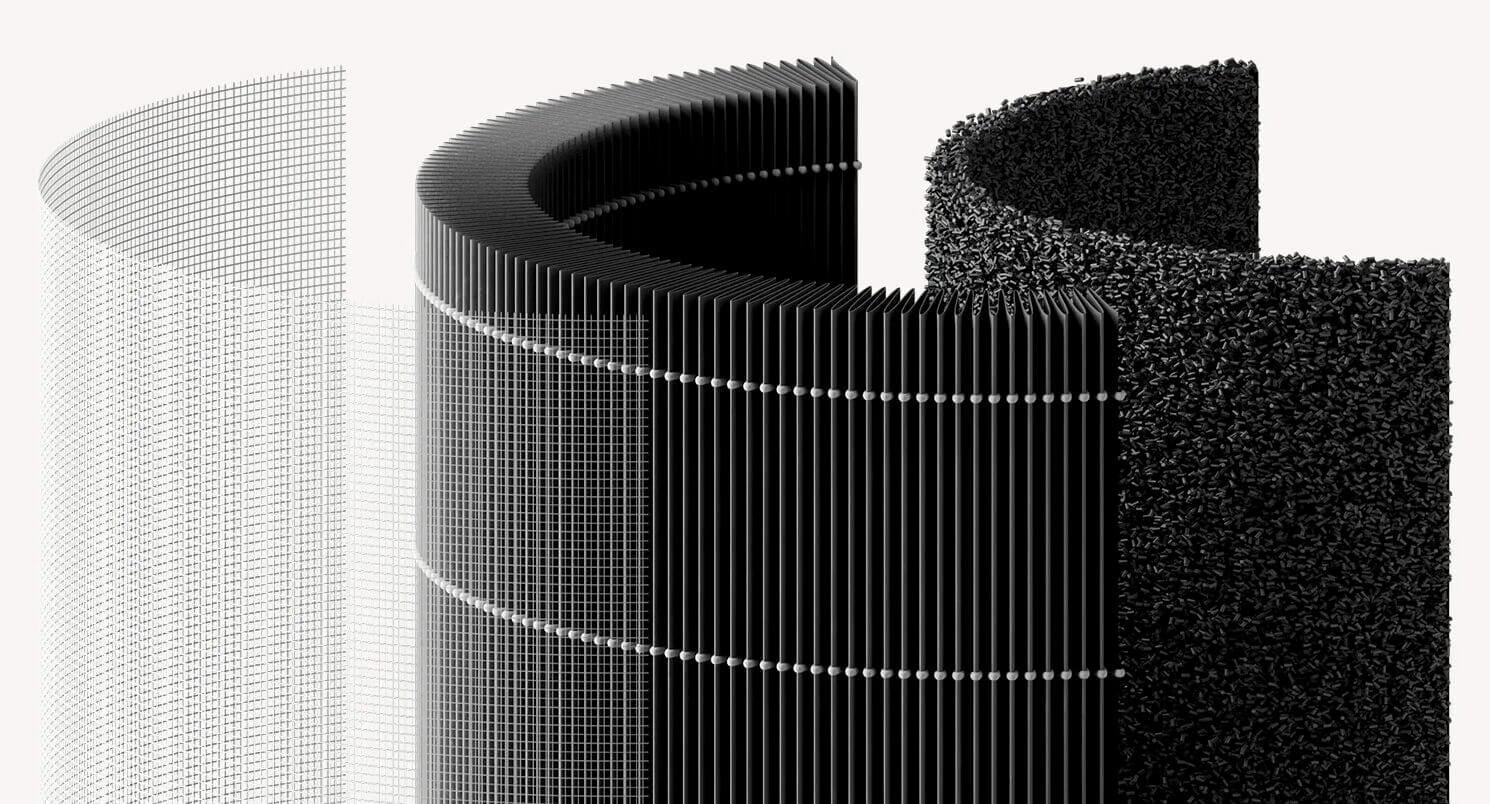
The filters are where the two differ most in day-to-day use. The Mijia 6’s filter slides out from a panel on the back using a loop, and it’s the same filter used by the Smart Air Purifier 4, which makes replacements easier to find. On the 4 Lite, you have to split the device in half by pressing two buttons on its sides, and its filter is unique to the 4 Lite. Unlike the 4 Lite’s, the Mijia 6’s filter also has an RFID tag at the bottom.
Cleaning is easier on the Mijia 6 as well. Pushing down a panel on top exposes a screw that lets you remove the top of the device, whereas the 4 Lite’s fan can only be reached by removing four screws from the inside. The 4 Lite’s buttons on top also have a slightly unresponsive feel, while the Mijia 6 uses two touch buttons below its front display.
Pricing & Running Costs
Prices are official retail in a Western market: US where the device is sold there, Europe where it is not. Other regions differ, sometimes sharply.
Price is where this comparison gets complicated, because it depends heavily on where you live. Here in the Philippines, the Mijia 6 now sells for about ₱10,500 (around $170) and the 4 Lite usually sells for around ₱7,500 (around $115). Neither device is officially sold in the US, so the charts in this section use European pricing instead, which puts the Mijia 6 at €199.99 (roughly $231) and the 4 Lite nearer $199.
Looking at price against measured CADR, the answer flips depending on where you buy. At European prices, the Mijia 6 is the better value at around $0.51 per m³/h of clean air, against $0.57 for the 4 Lite. Here in the Philippines, where the gap between the two is wider, the 4 Lite is slightly better value at around ₱21 per m³/h against ₱23 for the Mijia 6.
Prices are official retail in a Western market: US where the device is sold there, Europe where it is not. Other regions differ, sometimes sharply.
Running costs favour the 4 Lite. Both devices draw 9 W at half speed (33 W and 32 W at max), so electricity costs are the same, and the difference comes down to filters. A Mijia 6 filter costs around $37 (₱2,200) here, against ₱1,000-1,400 ($17-25) for a 4 Lite filter. Xiaomi recommends replacing either every 6-12 months, though six months is the figure I’d plan around if you have pets. On the chart’s assumptions, the Mijia 6 costs about $85 a year to run against $61 for the 4 Lite.
Electricity assumes half speed, twelve hours a day, at $0.29/kWh. Filters use the most conservative manufacturer interval, which for both is six months. Prices are official retail in a Western market: US where the device is sold there, Europe where it is not. Other regions differ, sometimes sharply.
Conclusion – Is the Mijia 6 or 4 Lite Better?
For a living area, a large room or a small apartment, the Mijia 6 is the better purifier. It moves around 29% more air at max speed and almost twice as much at half speed, it’s better built, and it keeps a history of its readings in the app. In our home, it’s the device that handles our combined kitchen and living area, and it does most of the heavy lifting.
However, the 4 Lite still makes a lot of sense for a master bedroom, a studio apartment or a small living area. It’s cheaper to buy and about $24 a year cheaper to run, and it has no UV lamp or ioniser if you’d rather avoid them. If you need to cover two separate rooms, a pair of 4 Lites may also serve you better than a single Mijia 6.
The deciding factor is price, and it varies a lot by region. In Europe, the Mijia 6 costs only around 16% more than the 4 Lite while cleaning far more air at half speed, which makes it easy to recommend. Here in the Philippines, the gap is closer to 40%, so the 4 Lite is the better buy unless the room is large or you want the quieter half-speed performance.
Whichever one you choose, set the speed manually or through automations rather than relying on auto mode, as neither device’s auto mode is aggressive enough to keep a room clean.
Mijia 6 vs Xiaomi 4 Lite FAQ
Is the Mijia 6 more powerful than the 4 Lite?
Yes. In my testing, the Mijia 6 delivered 453 m³/h at max speed against the 4 Lite’s 350 m³/h, and 301 m³/h against 155 m³/h at half speed.
Do the Mijia 6 and 4 Lite use the same filter?
No. The Mijia 6 uses the same filter as the Smart Air Purifier 4, while the 4 Lite uses its own filter that is unique to the 4 Lite.
Which is quieter, the Mijia 6 or the 4 Lite?
They’re almost identical. I measured 59 dBA (Mijia 6) and 58 dBA (4 Lite) at max speed, and 46 dBA and 44 dBA at half speed.
Do both show historical air quality data?
No. Only the Mijia 6 keeps historical PM2.5, temperature and humidity data in the Mi Home app. The 4 Lite only shows live readings.
Which should I choose if I want to avoid ozone?
The 4 Lite, as it has no UV lamp or ioniser. The Mijia 6 has both, but you can turn them off in the Mi Home app, which is what I do.


