

A few weeks ago, I stumbled across something that gave me quite a shock – Aranet had quietly (almost stealthily) launched a new radon monitor. At face value, this probably shouldn’t be all that surprising. After all, Aranet has been fairly consistent about expanding its environmental monitoring lineup. What caught me off guard, though, was the timing: their most recent release wasn’t that long ago, and it was none other than the Aranet Radon Plus.
Things became even more puzzling once I started digging into the product page. While the new Radon One is slightly cheaper than the Radon Plus, the two devices are, at least on paper, remarkably similar. Even more interestingly, this monitor marks the first real departure from Aranet’s design language – a design that has remained largely unchanged since the original Aranet4 Home. Needless to say, I was confused… but also intrigued. Why launch a device that looks so similar to an existing product, yet breaks away from such a well-established design?
Anyway, I’ve now been using the Radon One for about a month, and I have a few thoughts I wanted to share. This won’t be a full traditional review – the device is simply too close to the Aranet Radon Plus to justify a completely standalone article – but I do think it’s worth talking about. With that said, let’s jump right in.
This post contains affiliate links. For more information, please refer to my affiliate disclaimer. I was sent a product for review, but the article is not sponsored. All opinions expressed in this post are my honest thoughts. I only recommend products that I genuinely believe in.
Informational Purposes: Information on this blog is for informational purposes only. Readers are encouraged to confirm the information herein with other sources. This website assumes no responsibility for the accuracy of the information, and information is subject to change without notice. Products mentioned on this website are not medical devices and do not guarantee protection.
If you notice any errors or inconsistencies in this article, please contact me so I can update the information accordingly.
Differences between the Aranet Radon One and Aranet Radon Plus
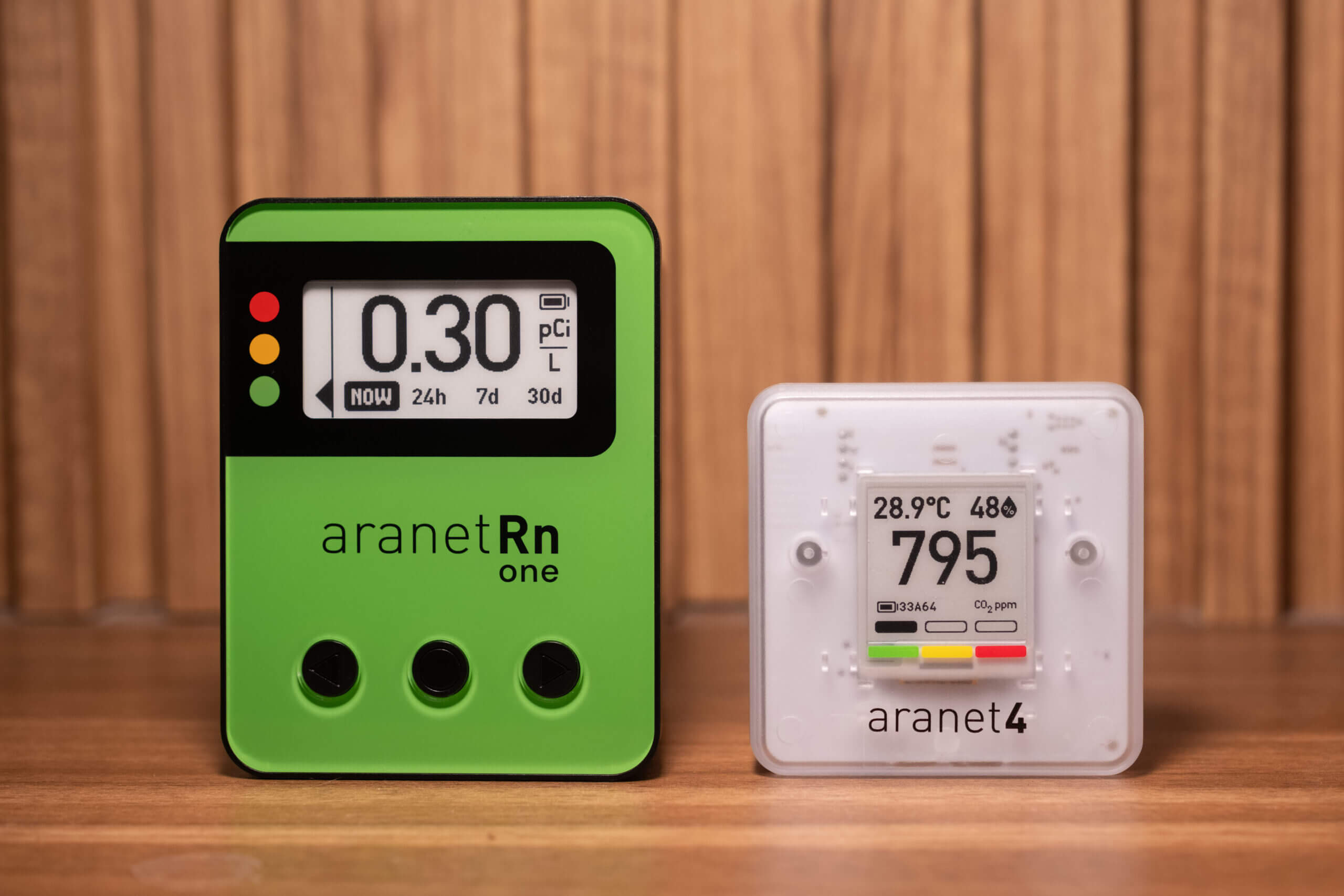
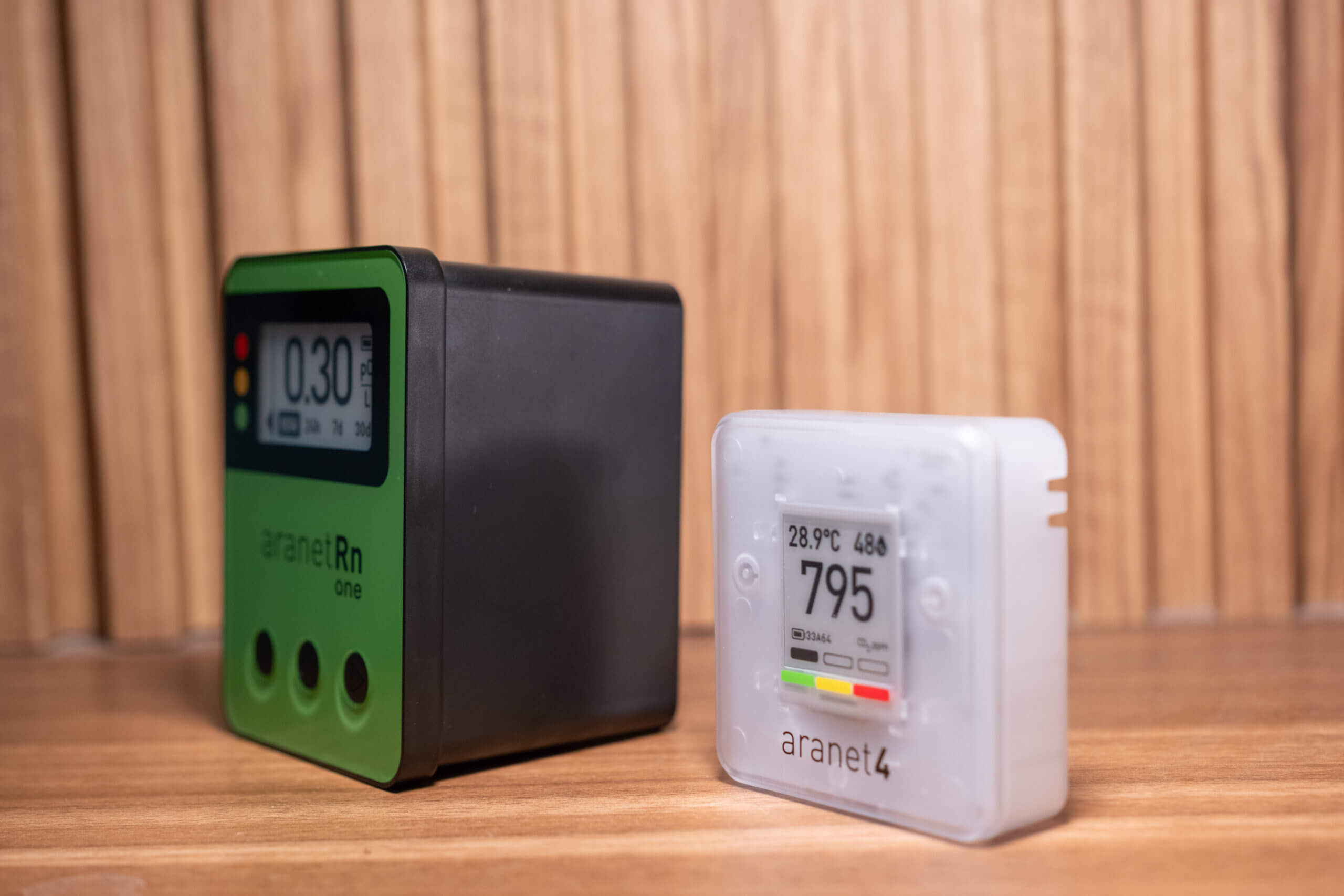
All other Aranet devices follow the design language of the Aranet4 Home (on the right).
When you place the two devices side by side, the first difference is immediately obvious. The Radon One is noticeably taller and significantly larger than the Radon Plus. It’s also the only device in Aranet’s current lineup that features physical navigation buttons.
This design shift is particularly interesting because, as mentioned earlier, it’s the first time Aranet has meaningfully changed the look and interaction model of its monitors. Surprisingly, I don’t think this is a bad thing at all. In fact, from a usability perspective, the Radon One is arguably the better device. While I still slightly prefer the cleaner look of the Radon Plus, the three physical buttons make the Radon One far easier to control directly on the device. If you’re looking for a true standalone monitor that doesn’t rely heavily on an app, this is a big improvement.
Beyond the external design, there are a few internal differences worth noting. Put simply, the Radon One is slightly “weaker” across most specs (which likely explains its lower price) but it still performs more than well enough to be a viable radon monitor. Let’s take a look at the key differences between the two:
| Feature | Radon ONE | Radon Plus HOME |
|---|---|---|
| What it measures | Radon only | Radon + temperature + humidity + pressure |
| Radon range | 0-4,000 Bq/m³ (can display higher, accuracy not guaranteed) | 0-7,900 Bq/m³ (fully specified range) |
| Accuracy (24h / 7d / 30d avg) | ±10% | ±8% |
| Response time (τ) | 60 minutes | 30 minutes |
| Detection efficiency | 1 count/min @ 99 Bq/m³ | 1 count/min @ 84 Bq/m³ |
| Sensor volume | 152 cm³ | 137 cm³ |
| Environmental sensors | None | Temp, RH, pressure |
| Physical size | Larger, rectangular | Smaller, cube-like |
| Battery life (Bluetooth on) | ~3.4 yrs (alkaline) | ~3.3 yrs (alkaline) |
| Battery life (Bluetooth off) | ~5.0 yrs | ~5.1 yrs |
| Target user | Simple radon tracking | More complete indoor monitoring |
The most significant change compared to the Radon Plus is the removal of the additional temperature, humidity, and air pressure sensors. This does make the Radon One a bit less versatile, but in practice, many users already track these parameters with other devices. If you’re specifically shopping for a dedicated radon monitor, you’re unlikely to miss them.
Outside of that, the Radon One also has a lower specified radon measurement range. In practice, this is a complete non-issue. The device is still rated for concentrations between 0-4000 Bq/m³. Considering that action is generally recommended at levels above 300 Bq/m³, and concentrations exceeding 1000 Bq/m³ already represent a serious and immediate health concern, this upper limit is still far higher than most users will ever encounter. In other words, the reduced range doesn’t meaningfully limit real-world use.
The stated accuracy is also marginally worse: ±10% compared to ±8% on the Radon Plus. Again, this difference is minor. Both monitors are easily accurate enough to provide actionable insights, and both are broadly comparable to other well-regarded devices on the market, such as the Corentium Home 2.
That brings me to one important difference that doesn’t show up on the spec sheet. The Aranet Radon One has not yet undergone third-party testing by organizations such as C-NRPP, simply because it’s so new. The Radon Plus, on the other hand, was recently tested and performed well. While I generally trust Aranet – they have a solid track record of producing accurate environmental monitors – this lack of independent validation is still worth keeping in mind for now.
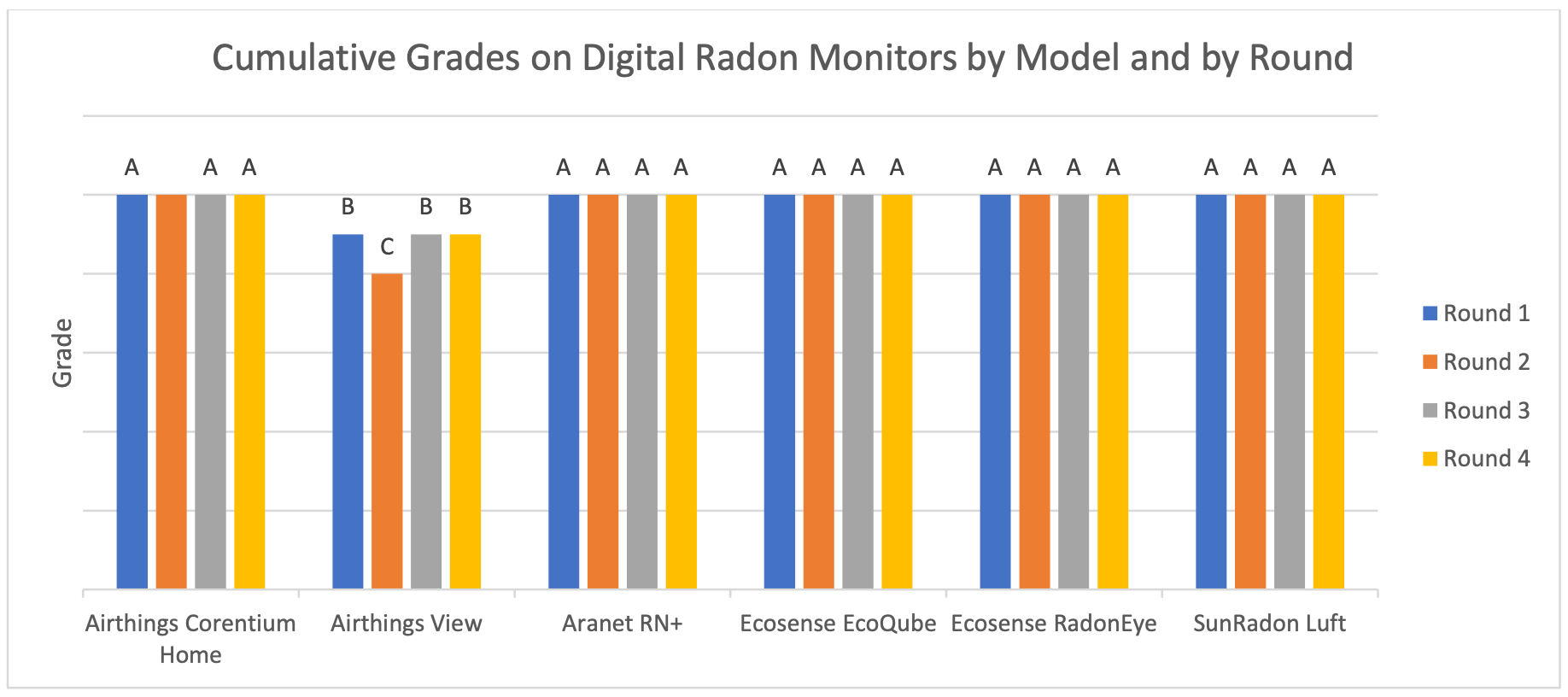
C-NRPP testing featuring the Aranet Radon Plus and some popular competitors.
Beyond that, the Radon Plus does offer faster readings (30 minutes versus 60 minutes) and is around 15% more sensitive. However, given that radon should never be interpreted based on short-term fluctuations – you really want weeks, if not months, of data before drawing conclusions – these differences are also not very significant.
This is an interesting point too, because Aranet advertises the Radon Plus as being the ‘Speed King’ and in the Radon One + Radon Plus bundles they again focus on the Radon Plus’ speed over the Radon One. The reading speed is really they’re highlighting as the key difference, and I find that quite interesting since radon monitoring is all about longer term trends. Anyway, I digress.
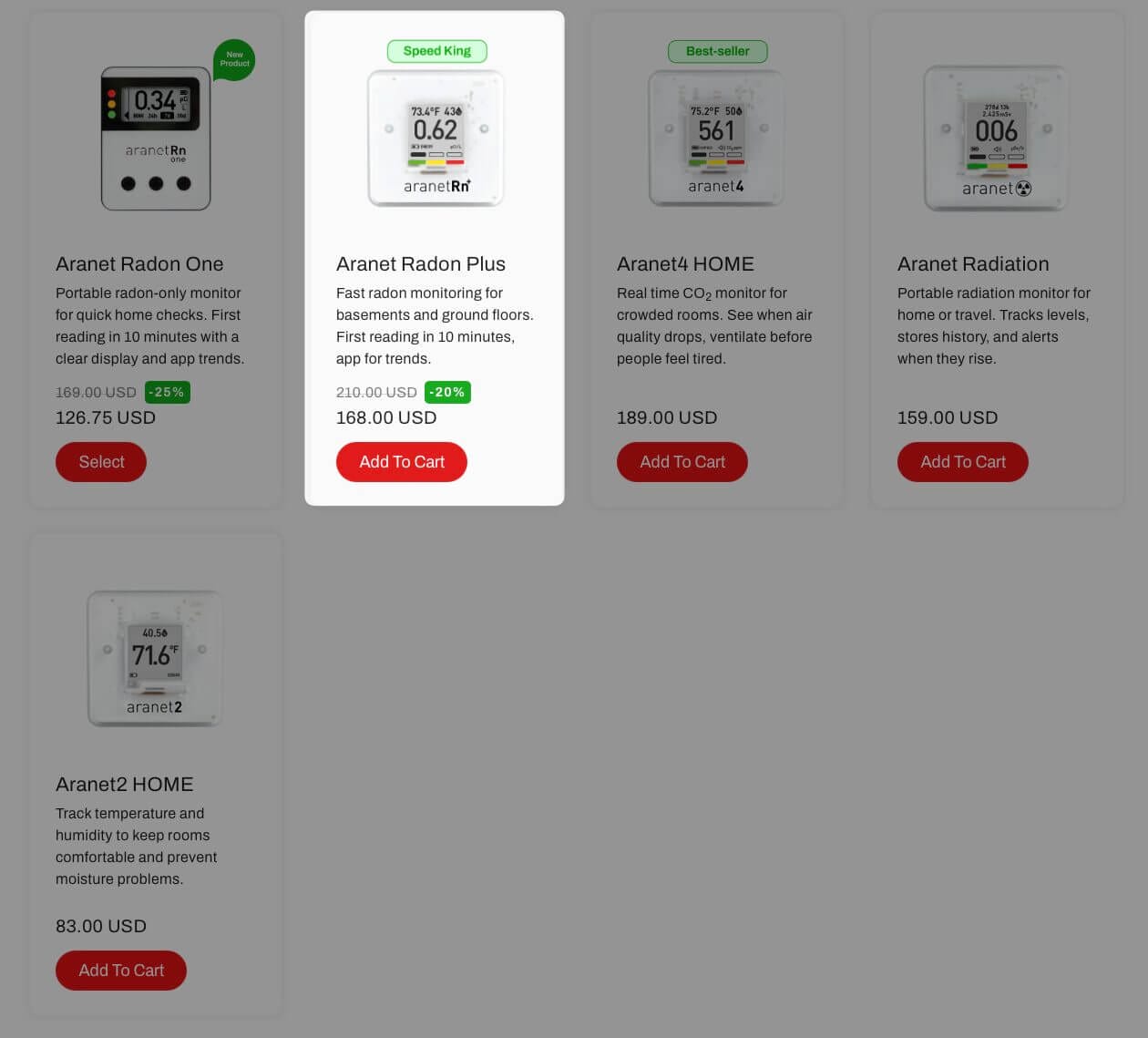
In short, the Aranet Radon Plus remains the more comprehensive and ever-so-slightly more capable device, particularly if you value temperature and humidity data alongside radon measurements. That said, if you already monitor those parameters elsewhere, or simply want to save some money, the Radon One is a very compelling alternative.

BreatheSafeAir is a one-person publication. Every share and every subscriber is important to me.
I don’t have a marketing budget or a team behind me. Just a lot of test equipment and a genuine interest in helping you make sense of your air quality. If you find this useful, subscribing to my newsletter is the best free way to support the work. You’ll get information on what I’m currently testing, findings that don’t make it into the full reviews, and the kind of detail you only get from someone who thoroughly tests these devices.
Similarities between the Aranet Radon One and Aranet Radon Plus
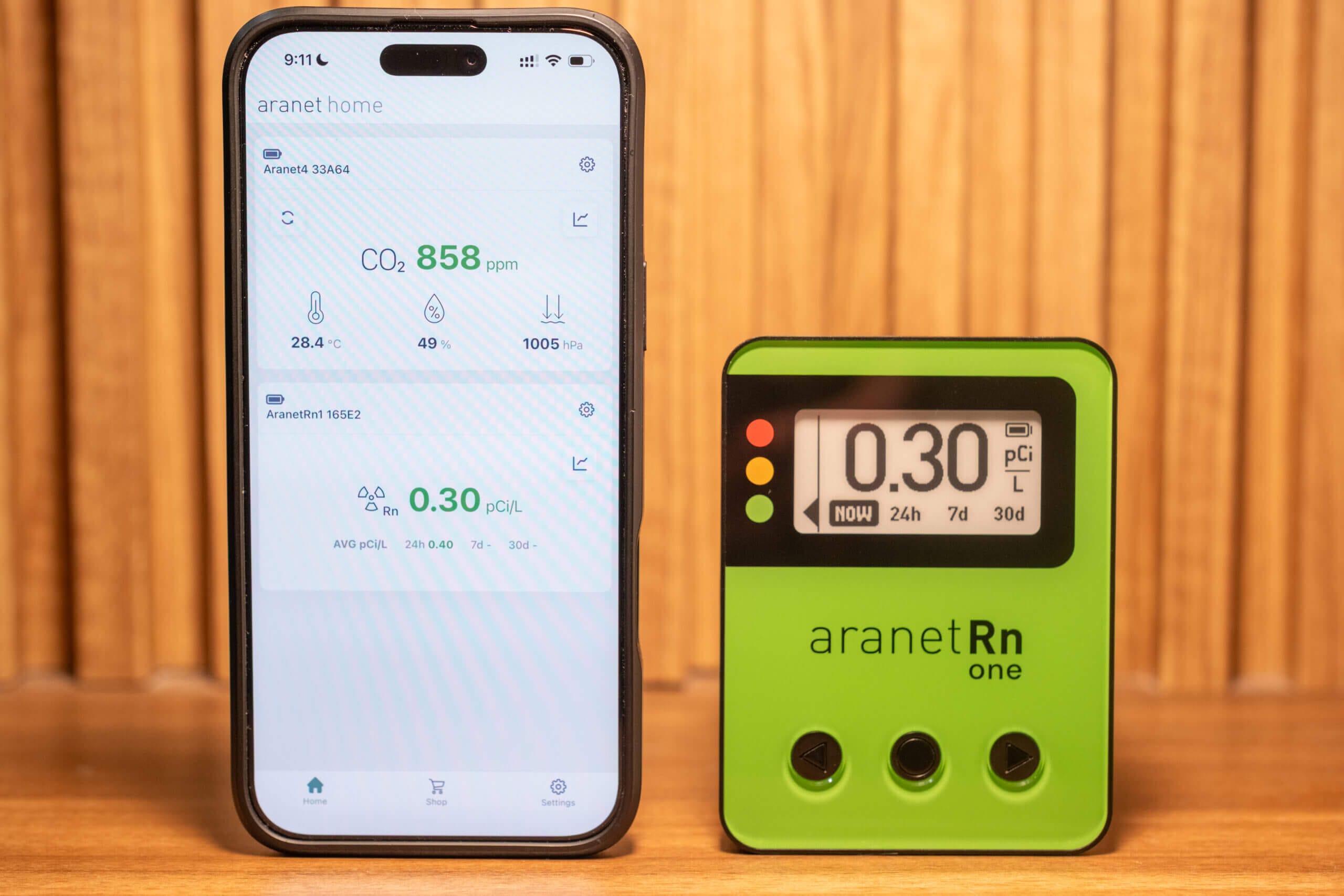
As mentioned earlier, the Aranet Radon One also shares quite a few similarities with the Radon Plus – and, honestly, these similarities are what make the Radon One such an attractive device. Despite costing roughly $40-50 less, the Radon One retains full connectivity. This is often one of the first things manufacturers cut when releasing a cheaper model, but in this case, that didn’t happen (and, frankly, it would be surprising if an IoT-focused company did remove it).
In practical terms, the connectivity is identical to that of the Radon Plus. And in the case of Aranet devices, that’s very good news. The Aranet Home app is still one of my favourites. I’ve been using it for close to four years now, and it has consistently been fast, stable, and intuitive. I genuinely can’t recall encountering any meaningful issues with it, which is more than I can say for many competing platforms. The fact that the Radon One integrates fully into this same ecosystem makes it a much easier device to recommend. If you want to learn more about the app, please read my Aranet Radon Plus review and keep in mind that the in-app experience is identical between these two devices.
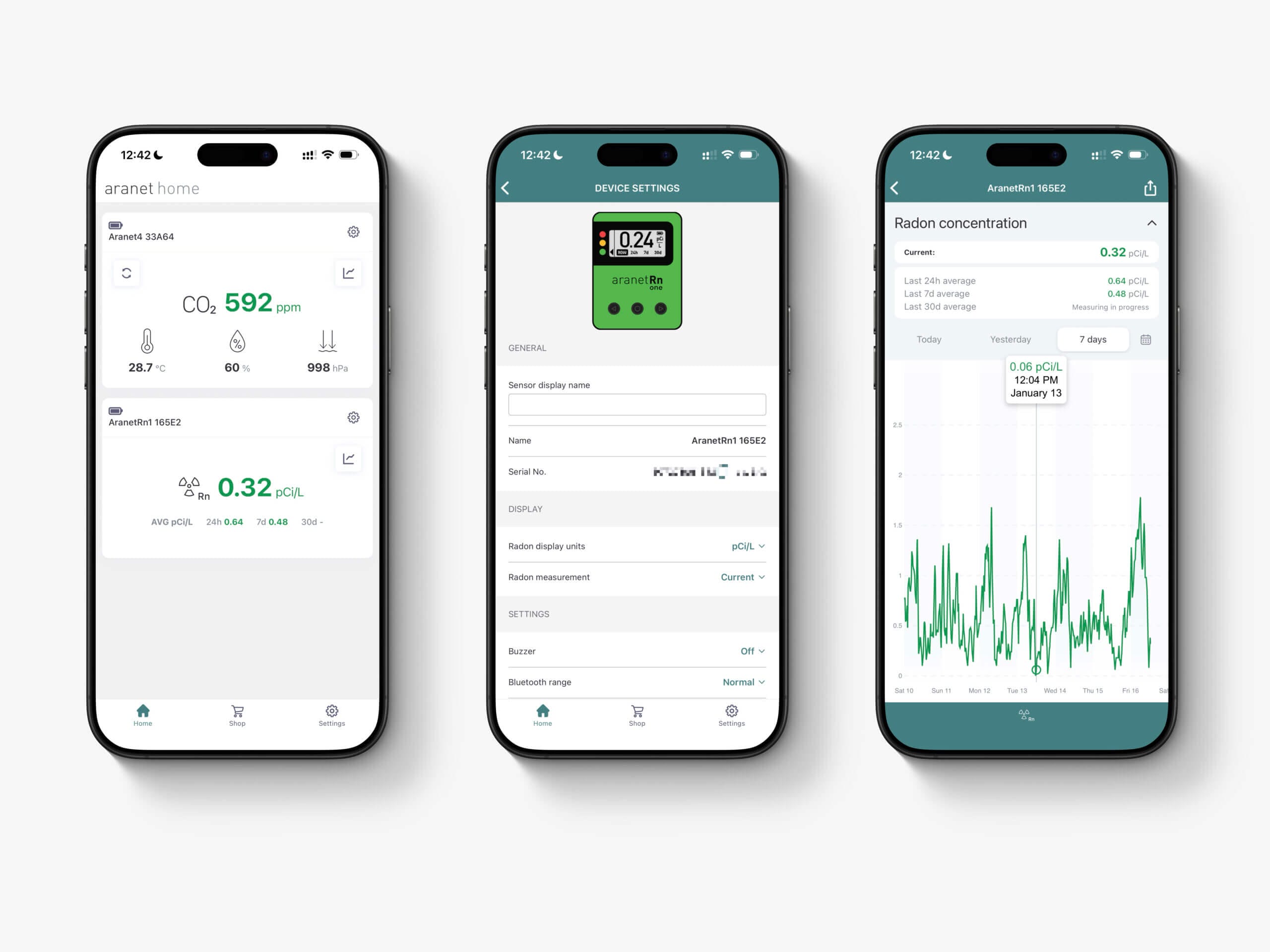
On top of that, the Radon One also inherits the excellent battery life that Aranet devices are known for. While there are small, spec-level differences between the Radon Plus and Radon One, they’re negligible in real-world use. In practice, I don’t think anyone would be able to tell the difference without checking the datasheet.
Which device is best for you?
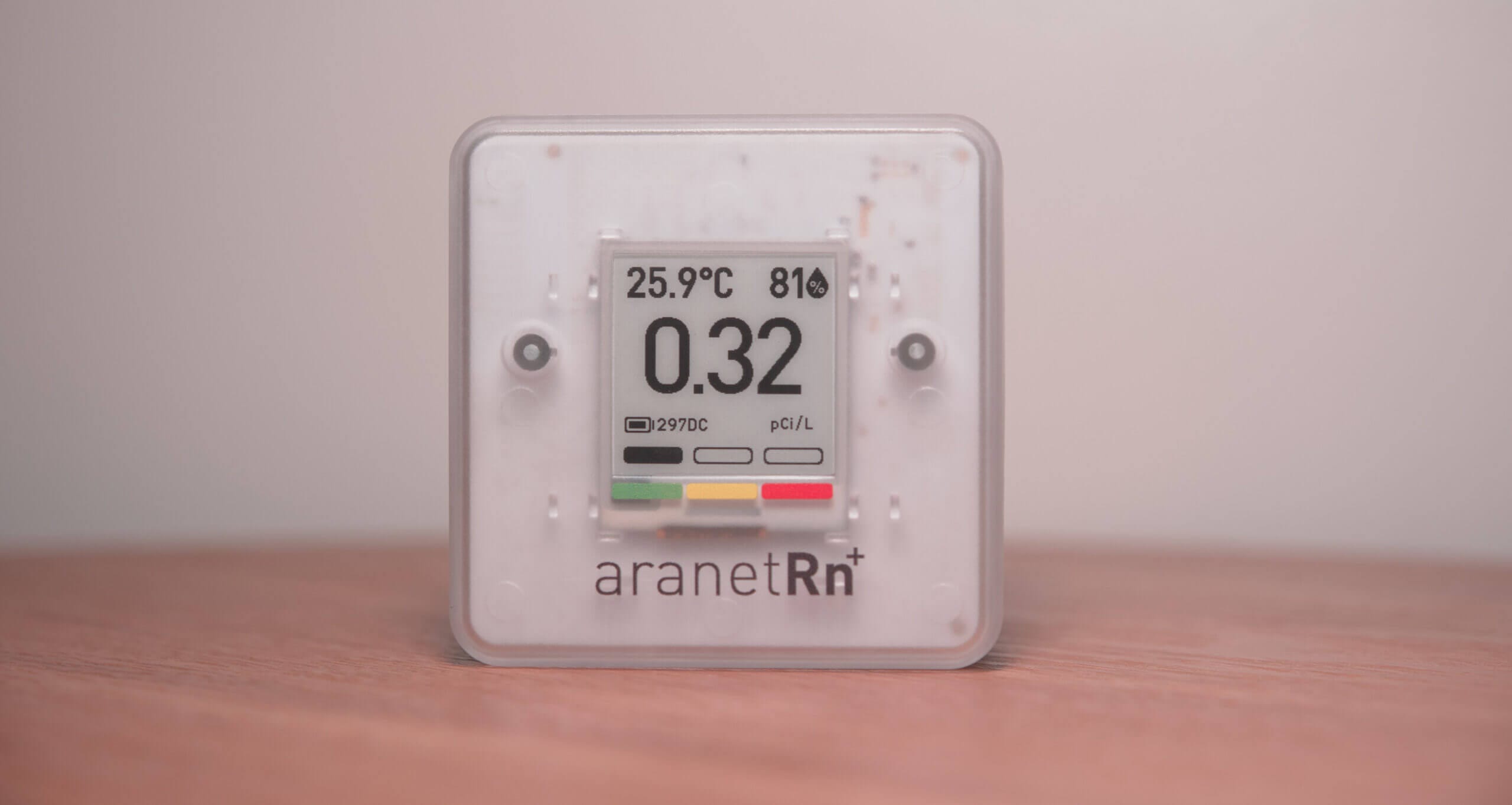
Aranet Radon Plus
That naturally leads to the big question: which monitor is the better fit for you?
I know it’s a bit of a cliché, but the honest answer really is: it depends on your needs. At around $40 cheaper, the Radon One is a strong, more affordable option for most users. It retains nearly all of the core strengths of the Radon Plus, but without the higher price tag.
The deciding factor is whether you want the additional environmental sensors. If you’re looking for a device that monitors temperature, humidity, and air pressure alongside radon, then the Radon Plus is the obvious choice – it’s the only one of the two that offers those readings. That said, if you don’t care about these metrics, or already track them using another device, the Radon One is almost a no-brainer.
There is one other scenario where I think the Radon Plus still has a clear edge: third-party validation. The Radon Plus has already undergone independent testing, while the Radon One is simply too new to have been evaluated yet. I have little doubt that the Radon One will eventually be tested, and I generally trust Aranet’s track record, but for now this is still something worth keeping in mind.
Competition
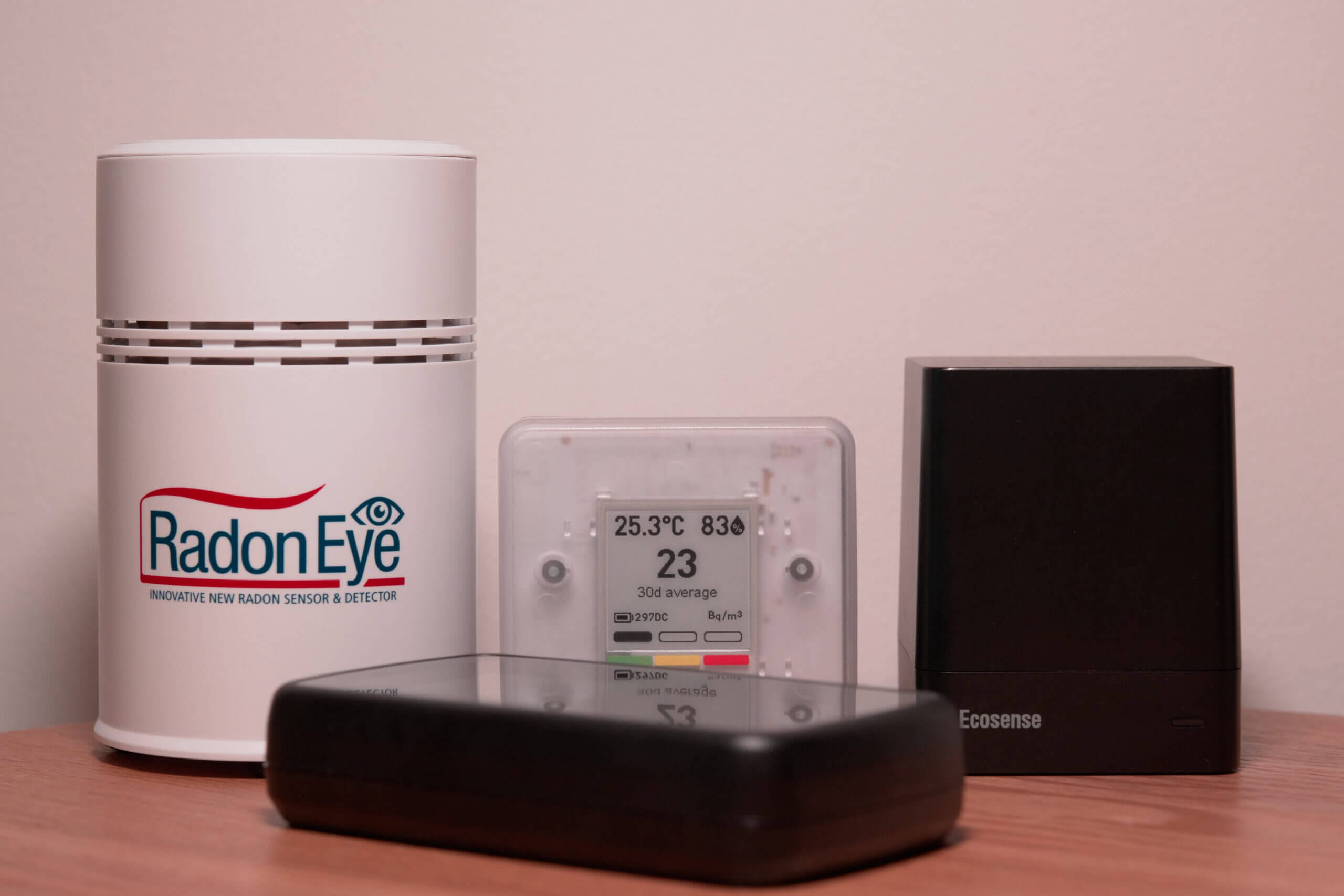
If you’re also considering radon monitors outside of Aranet’s lineup, there are a few other options worth mentioning. In my recent review of the Airthings Corentium Home 2, I said that I believe the Aranet Radon Plus and Corentium Home 2 are the two best radon monitors currently available. Both offer strong connectivity, proven accuracy, and a level of usability that many radon monitors still struggle to match.
With the release of the Radon One, I think that recommendation now needs to be expanded to include it as well. At around $179, the Corentium Home 2 sits in a similar price bracket, while the Radon One comes in slightly cheaper and the Radon Plus slightly more expensive – though the Plus frequently drops to around $170 during sales.
Given that all three devices offer broadly comparable accuracy, the decision largely comes down to brand preference and minor feature differences. The overall feature sets are very similar, and I genuinely don’t think you can go wrong with any of them. In fact, I would personally choose any of these three over most of the alternatives currently available in this category and price range.
Conclusion
To be completely honest, I’m still slightly questioning why exactly this device exists. I don’t mean that in a negative way – cheaper devices are always welcome, as long as they maintain accuracy and functionality, which the Aranet Radon One appears to. But given just how similar it is to the Radon Plus, it does leave a few questions unanswered.
That said, I’m still glad this device exists. It carries over the strongest aspects of the Radon Plus (particularly the excellent app support) and bundles them in a more affordable package. While it does drop some features, such as the additional environmental sensors, it also introduces some useful changes, like the three physical buttons, which I personally prefer over the scroll wheel on the Radon Plus.
At full price, it’s already a compelling option. When it goes on sale, it can drop as low as $120. At that price, there are very few alternatives that offer this combination of accuracy, connectivity, and battery life.
I hope this comparison has made it a bit easier for you to choose the right radon monitor for your needs. If you still have questions, or if you’ve used any of these devices yourself, feel free to share your thoughts in the comments. I’d love to hear your experiences. Thank you for reading!
- More affordable than the Radon Plus while retaining full connectivity
- Excellent battery life, comparable to other Aranet monitors
- Physical buttons make it easier to use as a standalone device
- Integrates seamlessly with the Aranet Home app
- No temperature, humidity, or air pressure sensors
- Slightly slower response time and marginally lower sensitivity than the Radon Plus
- Has not yet undergone independent third-party testing
- Larger form factor may not appeal to everyone
Aranet Radon One FAQ
What is the main difference between the Aranet Radon One and the Aranet Radon Plus?
The biggest difference is sensor coverage. The Radon Plus measures radon and temperature, humidity, and air pressure, while the Radon One focuses solely on radon. The Plus is slightly more sensitive and faster to respond, but the One offers very similar core radon performance at a lower price.
Is the Aranet Radon One accurate enough for real-world use?
Yes. While its stated accuracy (±10%) is marginally worse than the Radon Plus (±8%), both are easily accurate enough to provide meaningful, actionable insights. In practice, long-term averages matter far more than small percentage differences, and the Radon One performs well within the ranges that actually matter for health decisions.
Does the lack of temperature and humidity sensors affect radon readings?
Not directly. Temperature, humidity, and pressure can help interpret why radon levels change, but they are not required to measure radon itself. If you already track these parameters with another device – or don’t need that additional context – the Radon One works perfectly well as a dedicated radon monitor.
Has the Aranet Radon One been independently tested?
Not yet. The Radon One is still very new, which means it hasn’t undergone third-party testing by organizations like C-NRPP. The Radon Plus has already been independently tested and performed well. While Aranet has a strong track record, this is something to keep in mind if third-party validation is important to you.
Which radon monitor should I buy?
If you want the most complete feature set and value third-party testing, the Radon Plus is the safer choice. If you want a simpler, more affordable radon-only monitor with excellent battery life, strong app support, and very solid performance, the Radon One is an excellent option – especially if you can find it on sale.


