
For quite a few years now, I’ve wanted to try the AirVisual Outdoor air quality monitor from IQAir. Unfortunately, it has never been particularly easy to get my hands on, as between regional availability and pricing differences, the monitor has always been just out of reach for me. Because of that, it remained one of the few well-known outdoor monitors that I hadn’t been able to test myself.
That was always particularly frustrating because the AirVisual Outdoor has long felt like the third device in the unofficial “trifecta” of popular outdoor air quality monitors, alongside PurpleAir and AirGradient. These are the three brands that dominate most discussions around community monitoring networks and personal outdoor stations, and each of them has also built a strong reputation over the years.
Another reason I’ve always been curious about this device is the ecosystem around it. The AirVisual app is easily the most recognised air quality application in the world, and having a monitor that integrates directly into that platform is very appealing. While some other devices can appear on the AirVisual map through data sharing, IQAir monitors are the only ones that fully integrate into the system natively. This integration (and the reputation that IQAir carries) were just two of the reasons I’ve wanted to test this device for so long.
So, when I finally had the chance to test the AirVisual Outdoor, it’s fair to say that I was genuinely excited. I was also lucky enough to run some comparisons against a reference monitor, which made the experience even more interesting. I think you’ll also be interested to hear about my findings, so make sure you carry on reading!

I independently review air quality monitors with a focus on accuracy. I’ve tested well over 50 devices, compared some of them against reference instruments, and rely on peer-reviewed research and third-party studies wherever possible.
I don’t accept sponsored posts or paid reviews, and I don’t run ads on BreatheSafeAir. When I receive a free product, the company has no say in what I write. Affiliate links don’t influence my views and never increase the price you pay.
I’m constantly learning about how these sensors work – from opening them up, discussing with researchers in the field and examining the hardware inside. That ongoing learning process helps me write reviews that are grounded in how the technology actually behaves, not just what the spec sheet says.
You can read my full Disclaimers & Ethics page for complete details. And as with any review, even mine, I always encourage checking multiple independent sources before making a decision.
This post contains affiliate links. For more information, please refer to my affiliate disclaimer. I was NOT sent a product for review; I purchased this product myself. All opinions expressed in this post are my honest thoughts. I only recommend products that I believe in.
Informational Purposes: Information on this blog is for informational purposes only. Readers are encouraged to confirm the information herein with other sources. This website assumes no responsibility for the accuracy of the information, which is subject to change without notice. Products mentioned on this website are not medical devices and do not guarantee protection.
If you notice any errors or inconsistencies in this article, please contact me so I can update the information accordingly.
Accuracy & Sensors
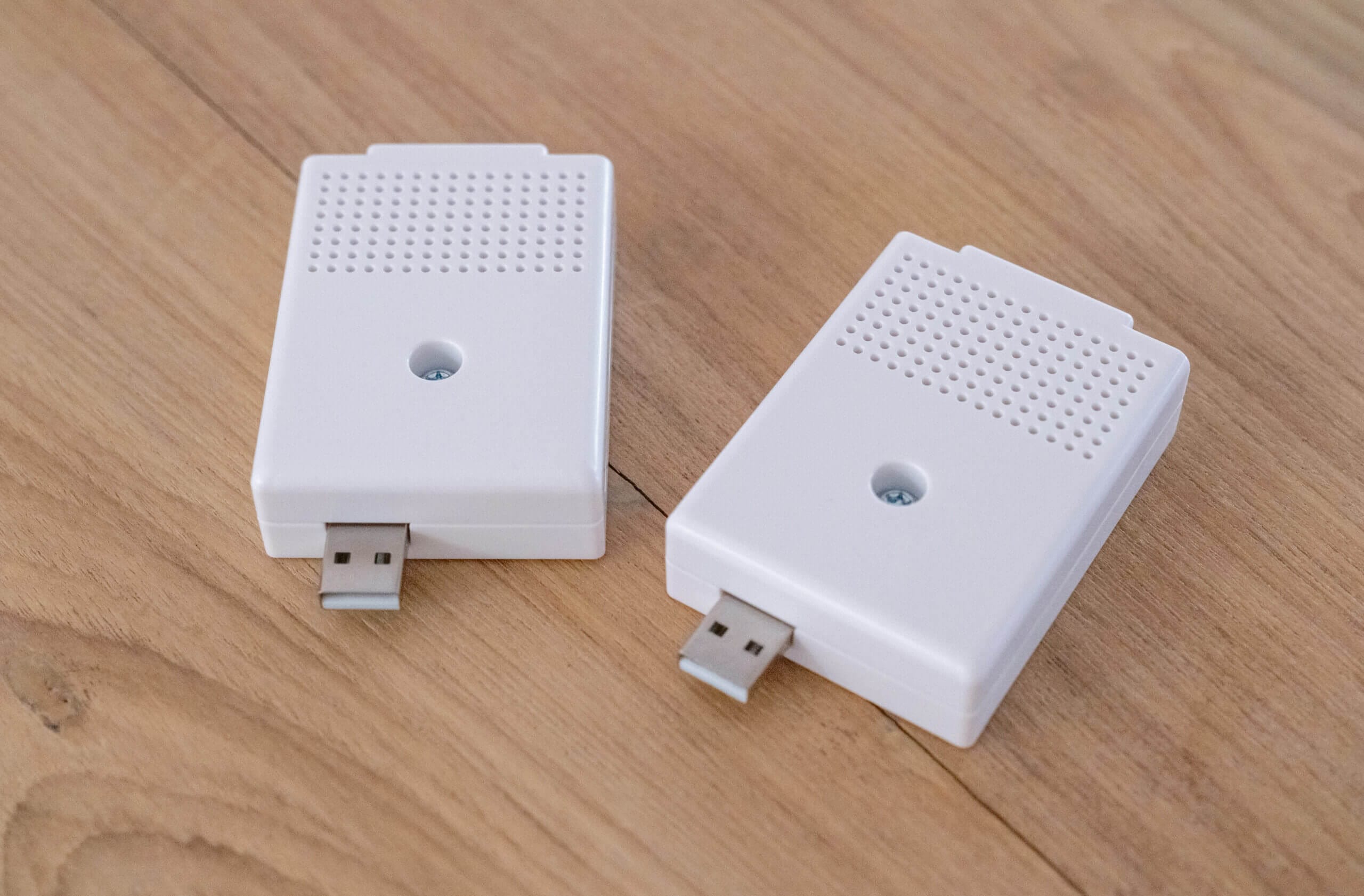
Two PM modules from the AirVisual Outdoor.
The AirVisual Outdoor takes a slightly different approach to sensing compared to most other consumer-grade outdoor air quality monitors. Instead of using ‘built in’ sensors, the device has four slots for sensor cartridges that connect internally through USB Type A ports. This design allows the monitor to be customised depending on the measurements you want. If new sensors become available in the future, you will also have room for expansion.
By default, the monitor measures PM1, PM2.5, PM10, temperature, relative humidity, and barometric pressure. AQI is also ‘measured’ but this is calculated based on PM concentration. Carbon dioxide measurements can also be added with an optional sensor module (which costs extra). IQAir has also mentioned plans to release additional electrochemical gas sensors, although these are not available yet. When I spoke with their team, they explained that the sensors are still in development because they want to ensure they meet the accuracy and reliability standards expected from the device. I hope this is the case and that the system can expand in the future, as the four slots feel wasted currently. On my device, I only ever used two of the slots – both for PM modules
On that note, one design choice I appreciate is that the AirVisual Outdoor ships with two particulate sensors installed by default. These measure the same PM values and act as a redundancy system. If one sensor begins to drift or fail over time, the second can help identify the issue and maintain confidence in the readings. By default, the readings produced by the device are average values from these two sensors.
| Parameter | Range | Accuracy |
|---|---|---|
| PM1 | 0-1,000 μg/m3 | ±10 μg/m3 or ±10% |
| PM2.5 | 0-1,000 μg/m3 | ±10 μg/m3 or ±10% |
| PM10 | 0-1,000 μg/m3 | Not stated |
| CO2 (Optional) | 400 – 10000 ppm | Not stated |
| Relative Humidity | 0 – 100% RH | ±1% RH |
| Temperature | -40 to 90 °C | ±2 degrees °C |
| Air Pressure | 300 – 1100 hPa | ±1 hPa |
Stated ranges and accuracy for each parameter as per IQAir.
For anyone familiar with air quality monitors, you’ll already know that most devices rely on off-the-shelf sensors from companies such as Plantower or Sensirion, and many well known monitors such as the AirGradient Open Air and PurpleAir Zen use these components . The AirVisual Outdoor takes a different route, as IQAir appears to use its own proprietary sensors rather than widely available modules. This fact alone immediately made me curious to test the device because custom hardware can offer advantages when the sensor, firmware, and calibration are designed together.
IQAir states that the AirVisual Outdoor has been validated by the Swiss Federal Institute of Metrology (METAS), but I haven’t been able to find this report and I don’t believe it’s publicly available. The company also highlights that it uses individually calibrated laser sensor modules, but there is again relatively little information on the exact process used. Regardless, as always, it’s important to look beyond manufacturer claims when evaluating a monitor, so let’s examine some third party testing and I’ll also share some of the results from testing I carried out myself.
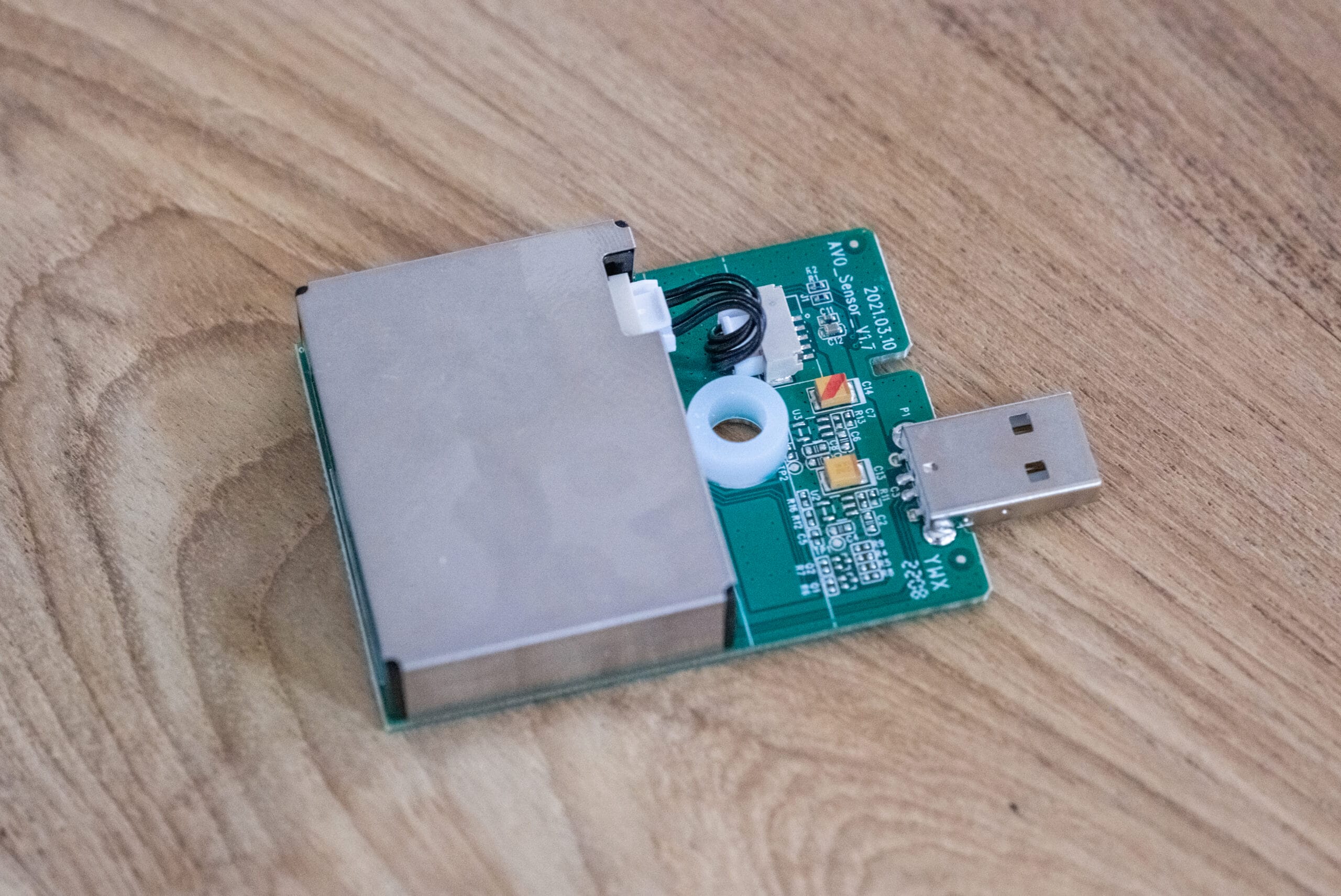
A look inside the PM cartridge.
One of the most widely referenced third party evaluations of low cost air quality sensors comes from the AQ-SPEC program run by the South Coast Air Quality Management District in California. The AirVisual Outdoor has been tested there, and the results are publicly available. AQ-SPEC reports focus heavily on correlation metrics such as the coefficient of determination, or R². While these numbers can be useful, they should not be interpreted in isolation. I’ve discussed the limitations of AQ-SPEC testing and the pitfalls of relying too heavily on R² in detail in another article, which I recommend reading before drawing conclusions from these results.
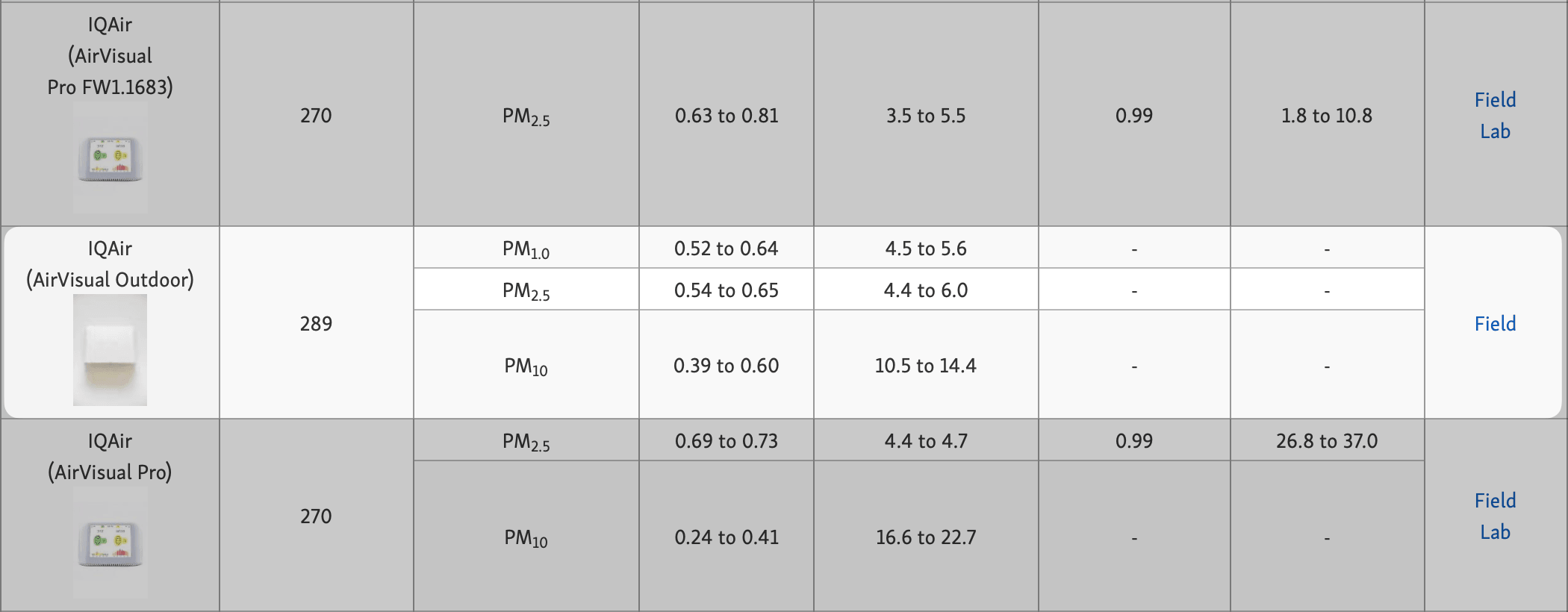
AQ-SPEC results. You can find the full field test results here.
Looking specifically at PM2.5, the AirVisual Outdoor achieved R² values between about 0.54 and 0.65 across the three tested units. These results are somewhat lower than what we see from some competing devices. However, it’s worth noting that the concentration range during this test was generally quite low, which can significantly influence correlation metrics. R² tends to drop when measurements occur within a narrow concentration band, even when absolute errors remain relatively small. Unfortunately, with the reputation that AQ-SPEC has, I think a lot of people will see these results and discount the AirVisual Outdoor – even though the results are far from the only third-party test results.
PM10 results were weaker, with R² values from 0.39 to 0.6 across the three units. This might also initially look concerning, but it’s consistent with what we see across almost all low cost optical sensors. PM10 is far more difficult to measure accurately, and I am unaware of any low cost sensor that can accurately measure these particles. For that reason, I generally recommend treating PM10 readings from consumer monitors with caution regardless of the manufacturer.
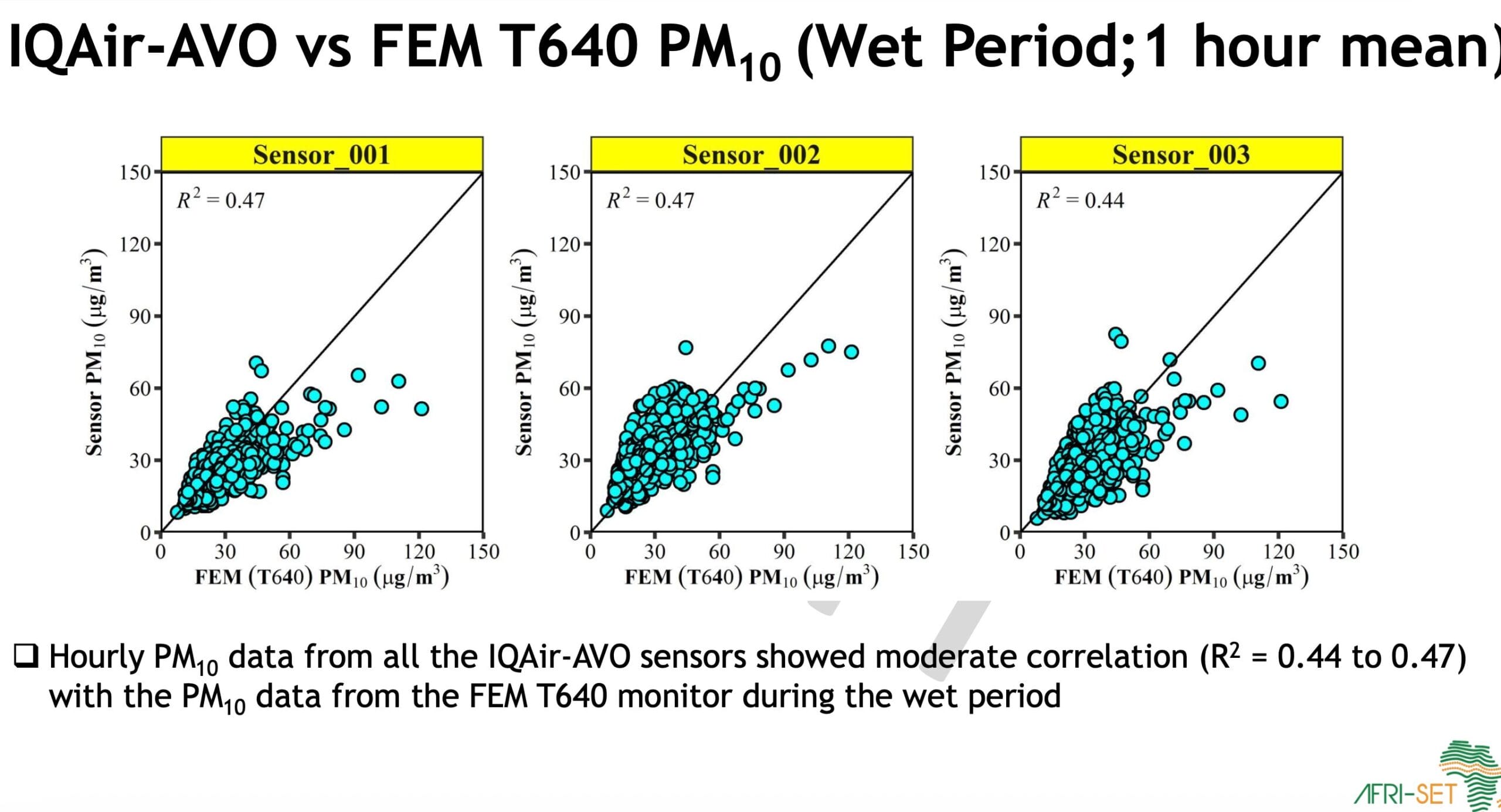
Image from Afri-SET evaluation results.
Another useful independent evaluation comes from the Afri-SET program in Ghana, where three AirVisual Outdoor sensors were colocated with a Teledyne T640 Federal Equivalent Method monitor for several months. The study covered both wet and dry seasons and found that the sensors tracked the reference instrument reasonably well overall. During the wet season, hourly PM10 correlations were moderate, with R² values around 0.44 to 0.47. During the dry season, when concentrations were higher due to dust events, the correlation increased substantially to between 0.84 and 0.92 – an impressive result for any low cost sensor when it comes to PM10.
The results for PM2.5 in the same evaluation were noticeably stronger. During the wet season, hourly PM2.5 measurements from the AirVisual Outdoor sensors showed a strong correlation with the reference monitor, with R² values between 0.72 and 0.76. During the dry season, when concentrations increased, the relationship became even stronger, reaching R² values between 0.88 and 0.92. The sensors tended to slightly overestimate concentrations in some cases, but they consistently tracked the diurnal variation observed by the reference monitor.
Another third party evaluation comes from AIRLAB, which also tested the AirVisual Outdoor across two deployment sites in France and Thailand. AIRLAB summarised their findings by stating that “the AirVisual Outdoor provided a good to very good performance for particulate matter measurements across the two deployment sites,” noting that the sensors performed particularly well in Bangkok.
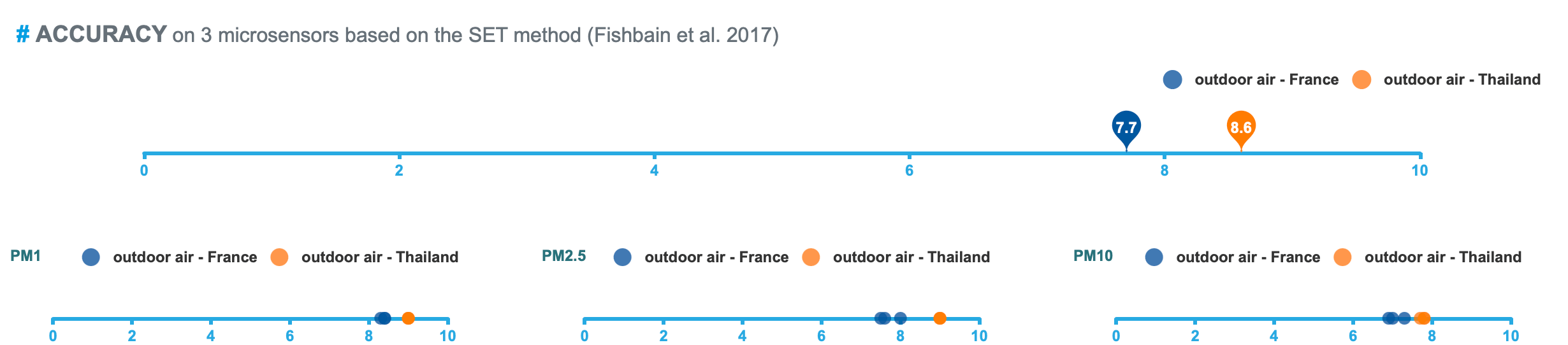
Results from AirLAB.
Looking at the reported results, the PM2.5 performance was generally strong. In France, the three tested units achieved R² values between 0.62 and 0.74 with mean absolute errors around 5 µg/m³. In Thailand, where concentrations were higher, the correlation improved noticeably, reaching R² values between 0.83 and 0.89 across the three sensors. The PM1 results followed a similar trend. In France, correlations ranged from 0.61 to 0.79, while in Thailand they increased to between 0.84 and 0.90. This indicates that the sensors were able to track changes in finer particle concentrations reasonably well across both environments. PM10 once again showed weaker correlations.
As you can see, performance can vary quite significantly depending on the environment and the type of particles present. That’s why it’s important to look at a range of third-party evaluations when trying to understand how accurate a monitor really is, as results from a single study rarely tell the full story. With that in mind, I was also able to carry out some testing of the AirVisual Outdoor myself while visiting the AirGradient headquarters in Chiang Mai, Thailand, where I compared it against a Palas Fidas 200S reference monitor over a full weekend of outdoor measurements.
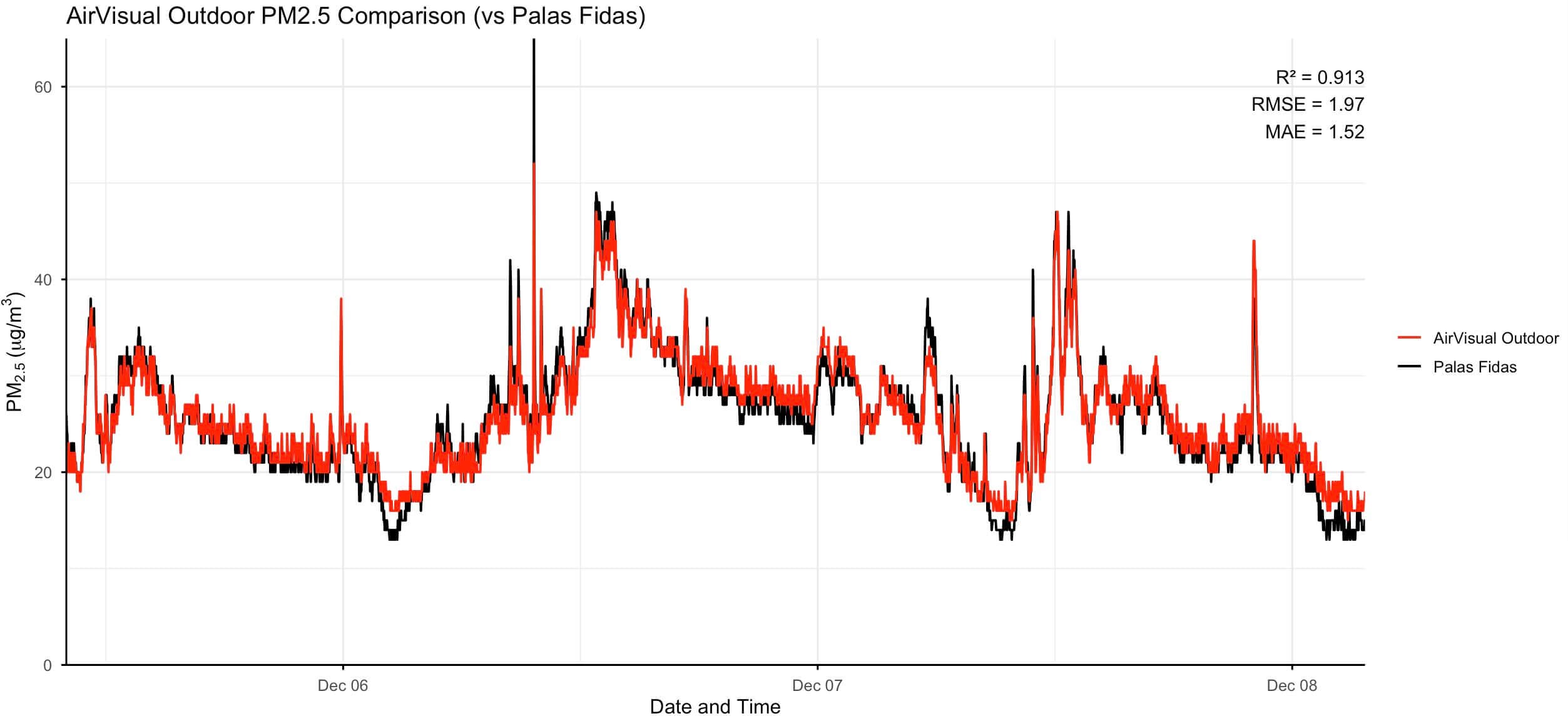
I was very impressed with these results!
For this comparison, the reference instrument was installed on the roof of the facility and the AirVisual Outdoor was run continuously alongside it. Chiang Mai had not yet entered the burning season, but PM2.5 concentrations were still elevated, averaging around 25 µg/m³ during the test period. Using 1-minute averages, the AirVisual Outdoor achieved an R² of 0.913 against the reference monitor, with an RMSE of 1.97 µg/m³. These are very strong results and actually slightly outperformed the PurpleAir Zen which I was testing at the same time.
Overall, the AirVisual Outdoor performs well when measuring PM2.5 and PM1, and in my own outdoor testing it correlated very strongly with a reference instrument. The variation between studies also highlights an important point about low cost sensors. Performance can change significantly depending on the environment, the particle mix, and the concentration range being measured. In the case of the AirVisual Outdoor, the available test results suggests it performs particularly well in warmer environments like those in areas near the equator. However, even outside of these regions, the device shows a good correlation with reference instruments.
One aspect that I would still like to see improved is transparency around how the measurements are processed. IQAir does not publicly document (at least not that I could find) whether the particulate readings are corrected or adjusted before being reported, or what calibration methods might be applied to the raw sensor data. This makes it harder to directly compare the results with other monitoring platforms that openly publish their correction formulas. For example, companies like PurpleAir make several correction approaches publicly available, including the widely used EPA correction. Having similar information from IQAir would make it easier to understand exactly how the reported values are produced and would allow for more meaningful comparisons between devices.
BreatheSafeAir is a one-person publication. Every share and every subscriber is important to me.
I don’t have a marketing budget or a team behind me. Just a lot of test equipment and a genuine interest in helping you make sense of your air quality. If you find this useful, subscribing to my newsletter is the best free way to support the work. You’ll get information on what I’m currently testing, findings that don’t make it into the full reviews, and the kind of detail you only get from someone who thoroughly tests these devices.
Design
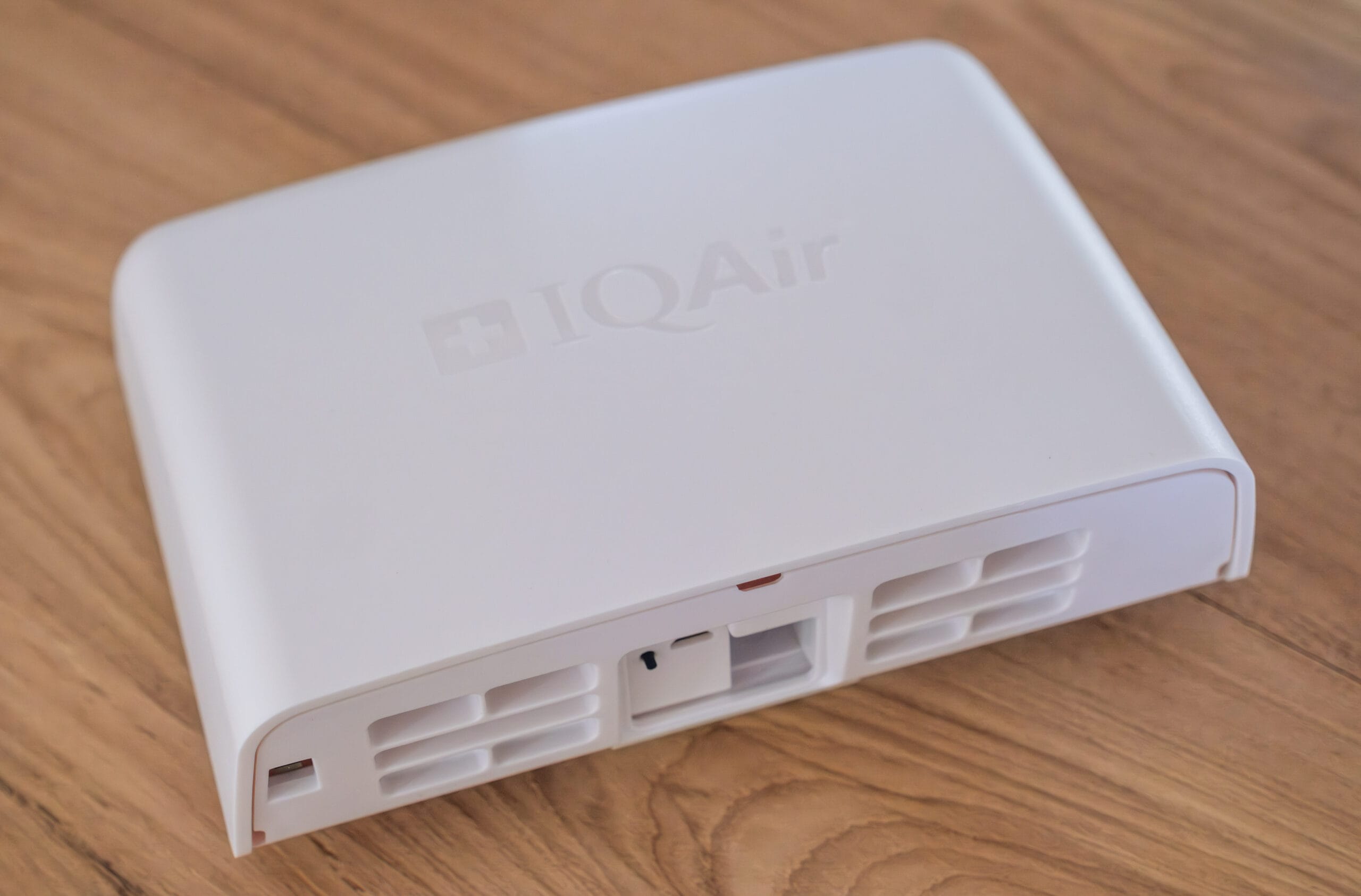
The design of the AirVisual Outdoor revolves around its modular sensor system. The device has four slots for sensor cartridges, which can be swapped out as needed. I like the approach of allowing the sensor modules to be readily swapped, but it is worth noting that you can’t remove the bottom plate without first removing the mounting bracket (more on that soon). With that said, I still really like this approach as it makes maintenance easier and gives the monitor some flexibility if new sensors are released in the future (I really hope they are!).
Visually and practically, this is actually my favourite outdoor monitor design that I’ve used so far. The housing is slightly larger than some competitors, but it’s also lower profile and flatter, which I personally prefer. The casing is made from UV resistant plastic and the entire unit is weatherproof. The plastic also feels quite solid (and thick), so I would be confident that this device will last (at least in terms of the enclosure).
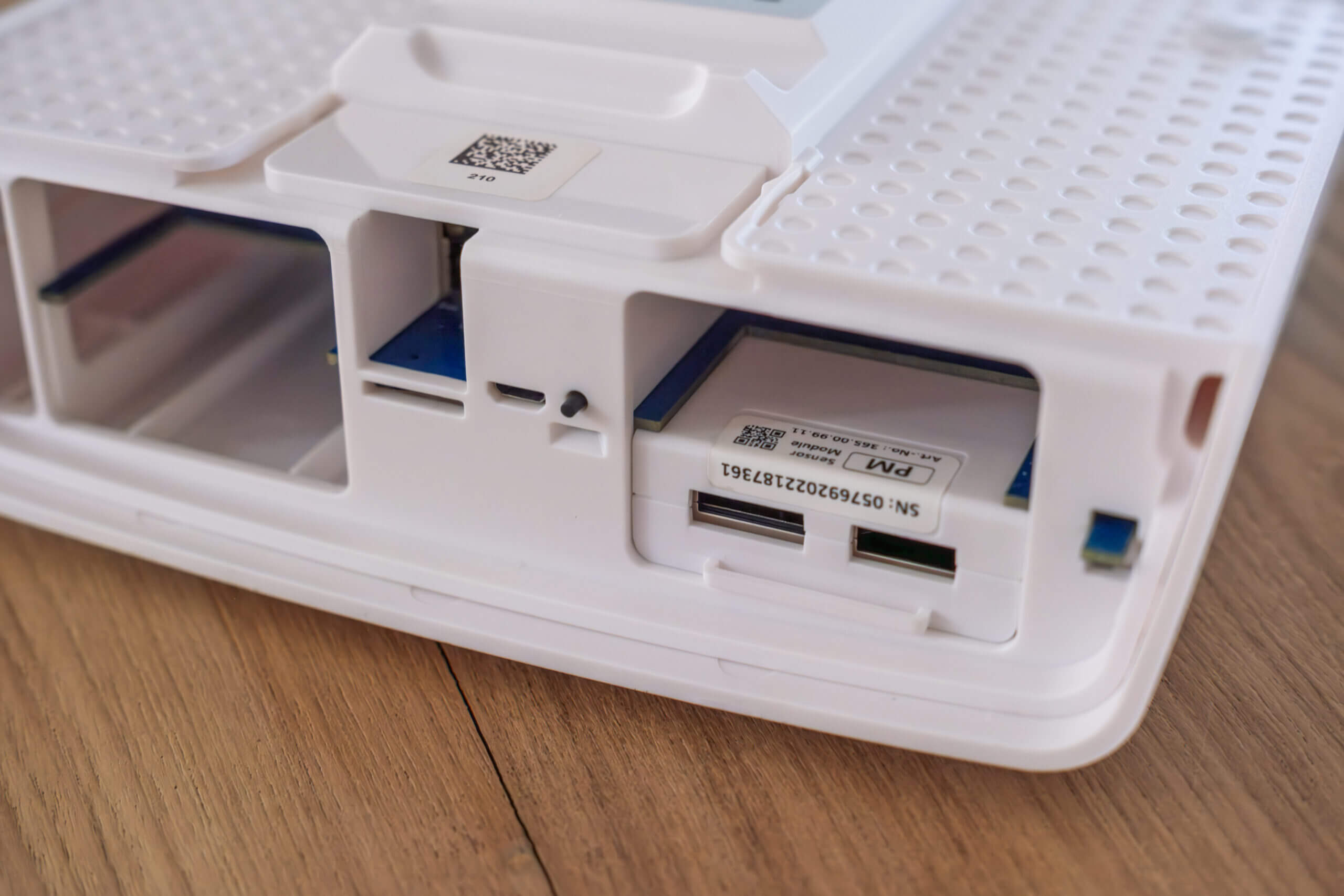
One design decision that did surprise me involves the power options. This device can be powered using Power over Ethernet, but if you don’t use PoE (which is a very nice option to have), the device needs to be powered through a micro USB cable. In 2026 that really feels outdated, especially for a product at this price point. USB C would have been a much better choice and I hope this changes in a future revision. To be fair to IQAir, PurpleAir also uses a micro-USB port, but I’ve also complained about that many times.
On the underside of the device you’ll find a status LED, a power switch, and a wire mesh designed to prevent insects and larger debris from entering the sensors. This might sound like a small detail, but it’s actually very useful. Insects getting into outdoor monitors is a surprisingly common issue, so it’s good to see that IQAir has clearly thought about this.
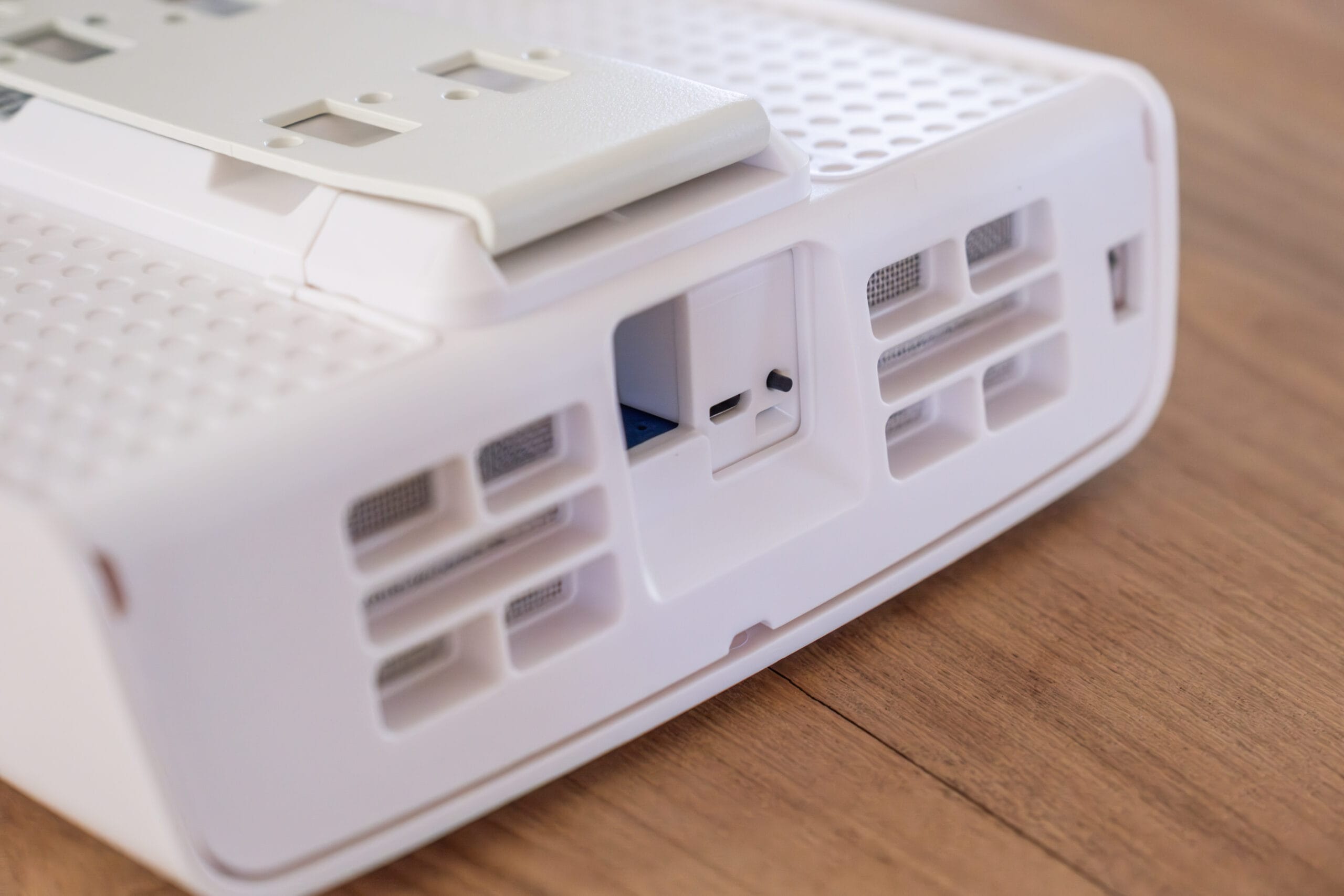
The monitor also ships with a very solid metal mounting plate that allows for flexible installation. It feels well built and makes it easy to attach the device to poles or other structures. The AirVisual Outdoor itself does not have a display, which is typical for outdoor monitors. However, if you also own the AirVisual Pro indoor monitor, you can view the outdoor station’s data directly on that device, which is a nice touch if you are already using the IQAir ecosystem.
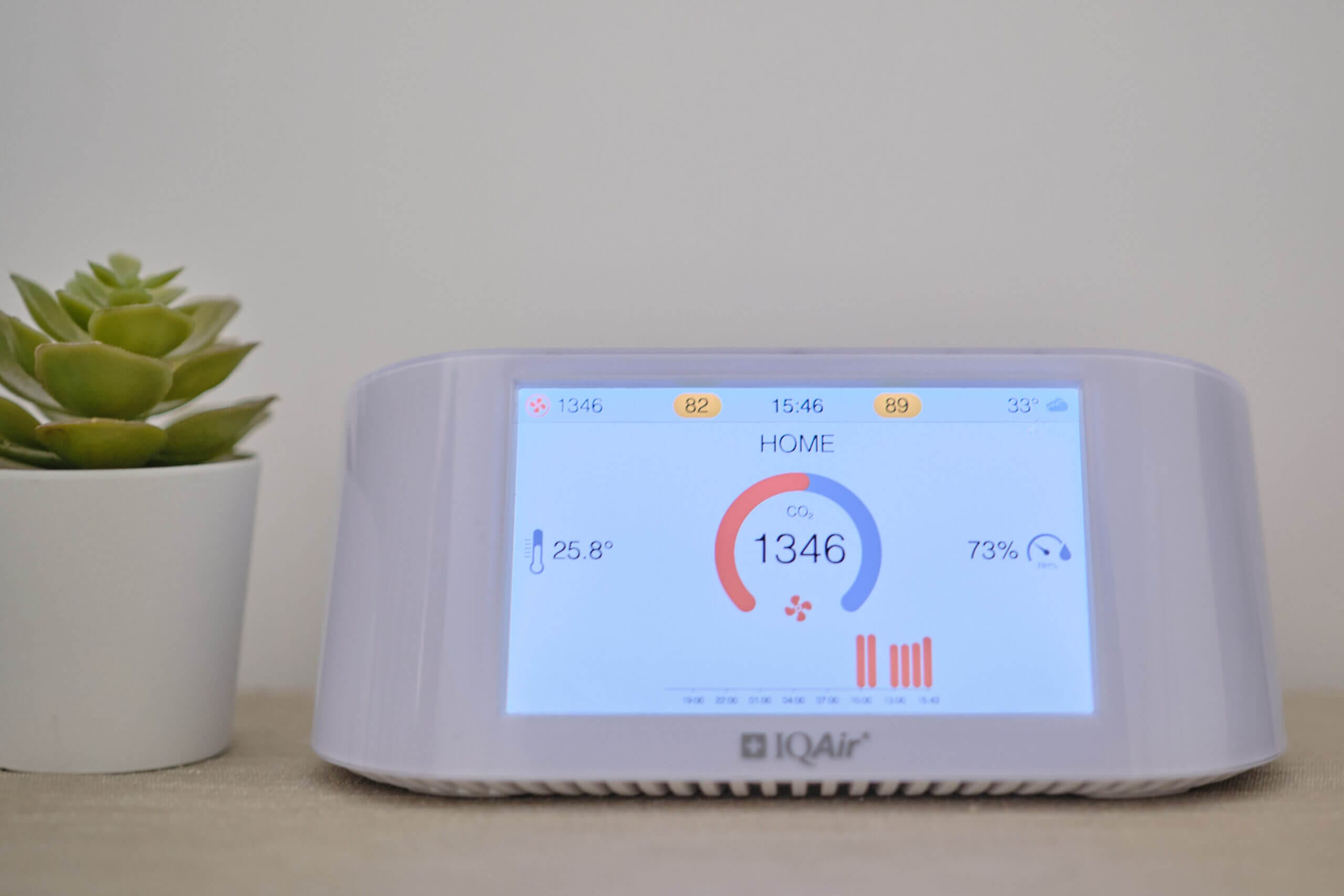
If you have the AirVisual Pro, you can view data from your AirVisual Outdoor there!
Overall, I really don’t have much to say about the simple but well thought out design of the AirVisual Outdoor. However, I mean that in the best possible way. Personally, this is my favourite design amongst the outdoor air quality monitors I’ve tried so far, and that’s largely because it’s lower-profile, less obtrusive, and feels very well built. I also appreciate the wire mesh on the bottom of the device, which means insects are far less likely to enter the monitor.
App & Connectivity
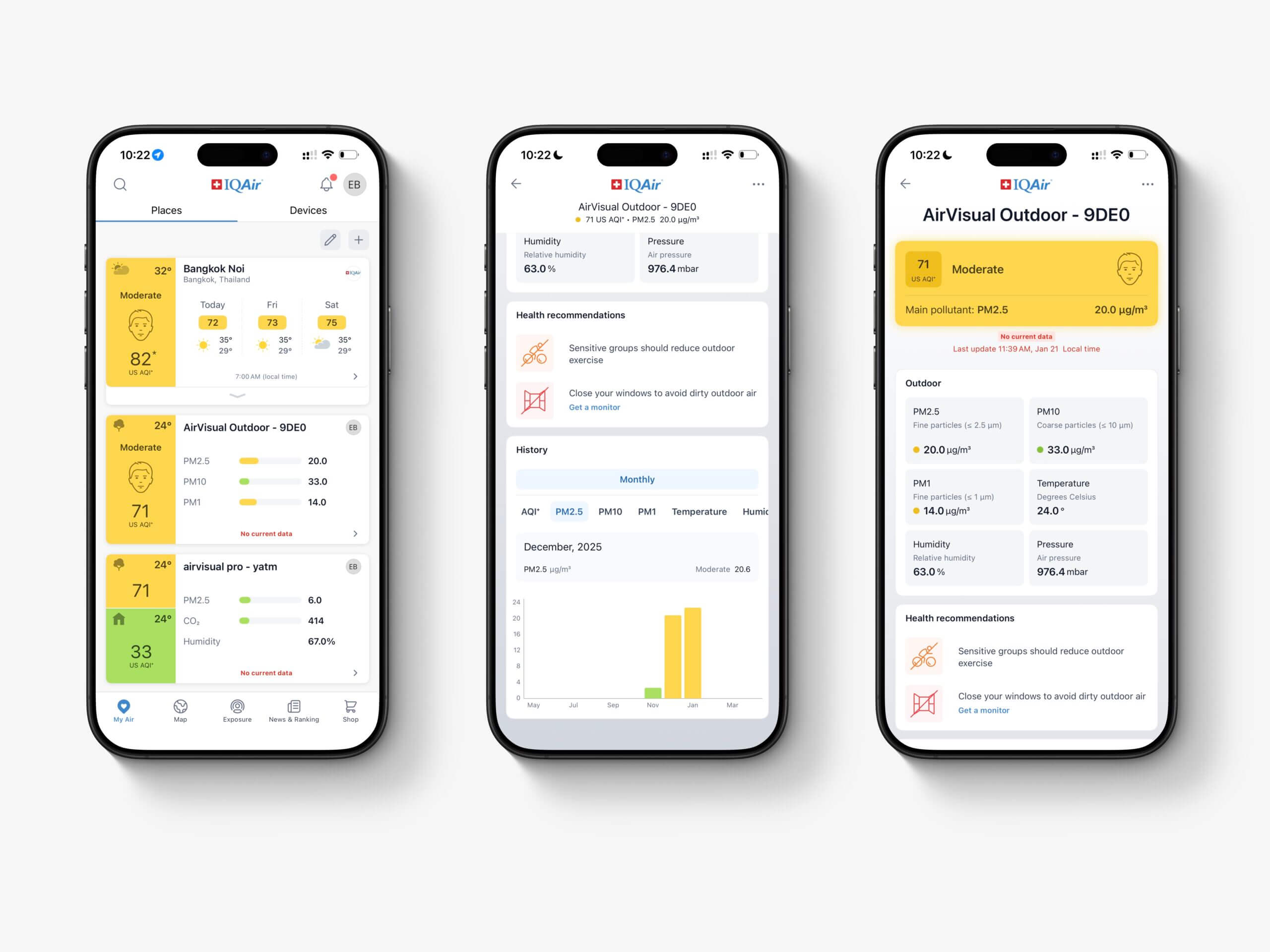
The AirVisual Outdoor can connect to the internet either through Ethernet or through a local WiFi network. While I used WiFi for my device, I would guess that ethernet will likely be the preferred option for many installations because the device also supports Power over Ethernet. This allows both power and data to be delivered through a single cable, which makes installation simpler and more reliable in areas with spotty WiFi. That said, it’s nice to also have WiFi for situations where running an ethernet cable is not practical (you will still need to power the device via a micro-USB cable).
Like all IQAir monitors, the AirVisual Outdoor is managed through the AirVisual application. Many people will likely already have this app installed since it is one of the most widely recognised air quality apps available today. In fact, the strong integration with the AirVisual platform is probably one of the biggest draws of this device.
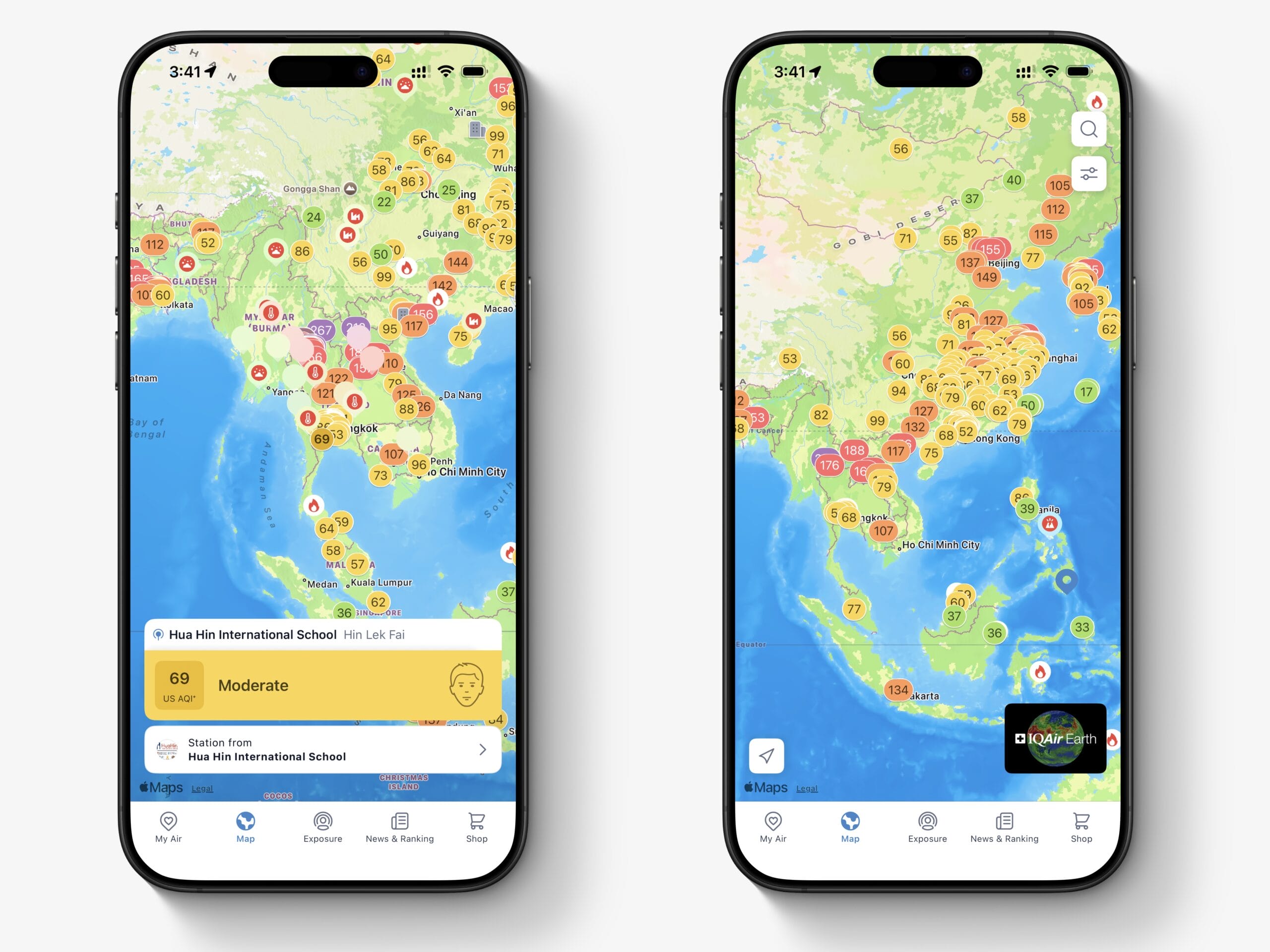
One aspect I appreciate about the AirVisual app is how it combines data from multiple sources in one place. You can easily see readings from your own devices, but you can also view data from other public monitors on the platform. This makes it a useful way to get a broader overview of local air quality without needing to switch between different apps for different sensor networks.
Setting up the monitor and adding it to the platform was very straightforward. The process begins by scanning a QR code located on the device. After scanning the code, the app walks you through a short setup process where you can configure the device and connect it to your network. In my experience (which was, admittedly, only once), the whole process was quick and easy.
Once a monitor is added to your account, it appears under either the “Places” tab or the “Devices” tab in the app. Selecting the device opens a page showing all of the recorded measurements along with an overall AQI value, health recommendations, and graphs that show recent trends. You can also configure daily notifications and threshold alerts for each monitor individually. At the moment, alerts can only be set based on AQI levels rather than specific pollutant concentrations.
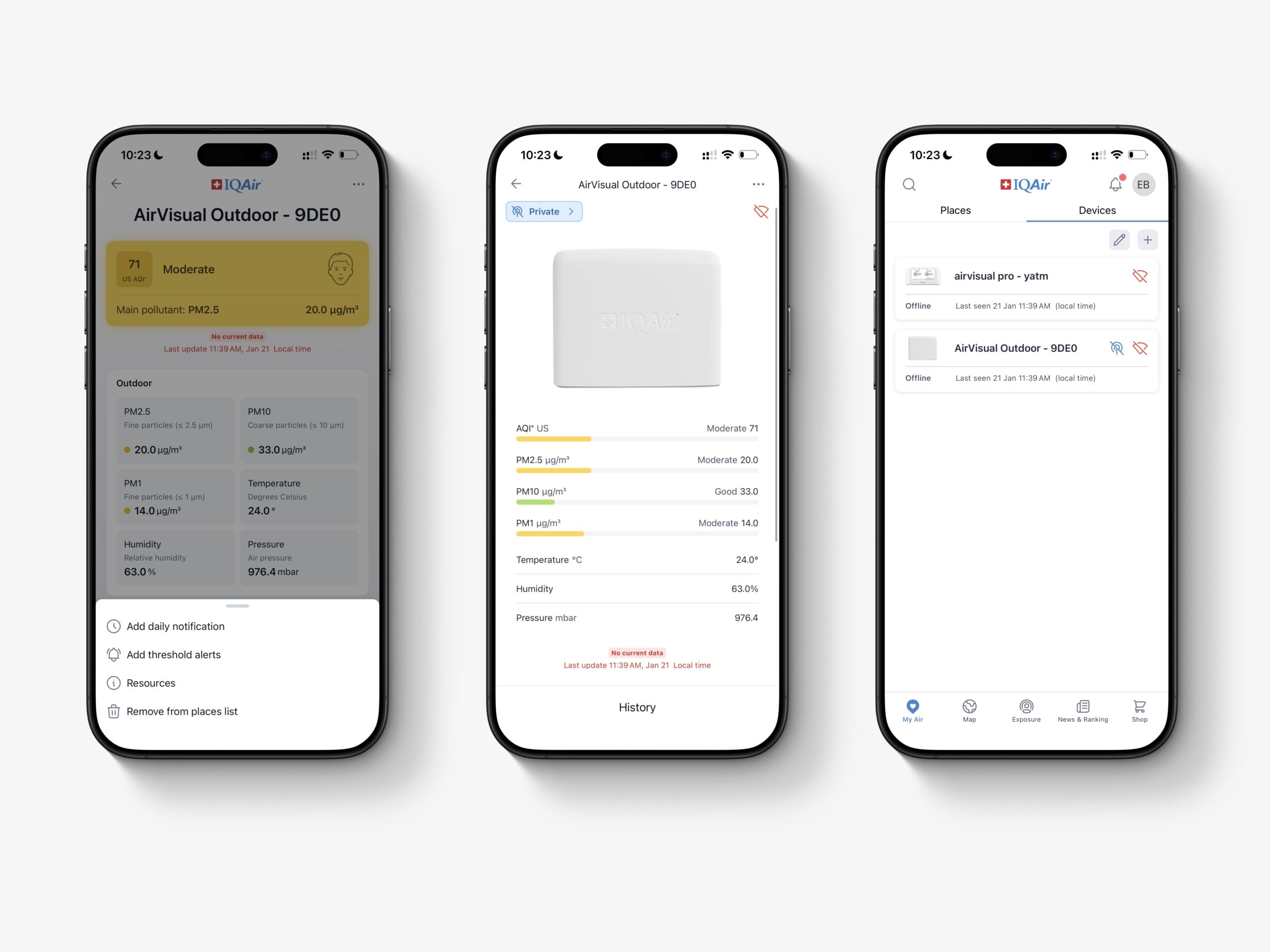
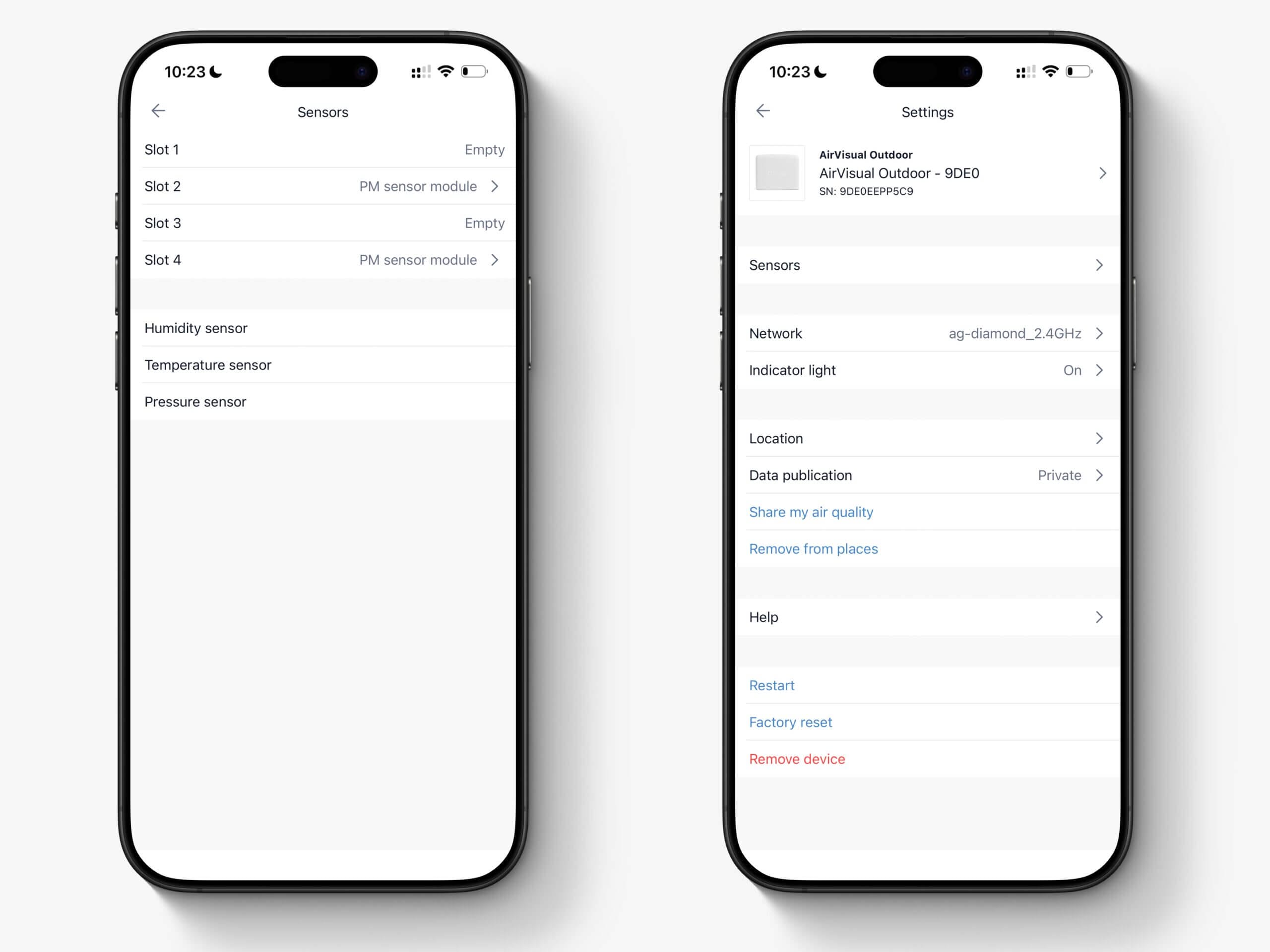
The device settings menu provides a few additional options. From here you can view details about the installed sensors, configure the WiFi connection, enable or disable the indicator light on the bottom of the monitor, and decide whether to make your station public. If you choose to share your data publicly, the station will appear on the AirVisual map where other users can view the readings and even follow your monitor. This can be particularly helpful in areas that currently have limited air quality monitoring.
You can also restart, reset, or remove the device from your account through the same settings menu. The number of configuration options is fairly limited, but that seems to be intentional. The AirVisual app is designed to be simple and accessible rather than packed with advanced controls.
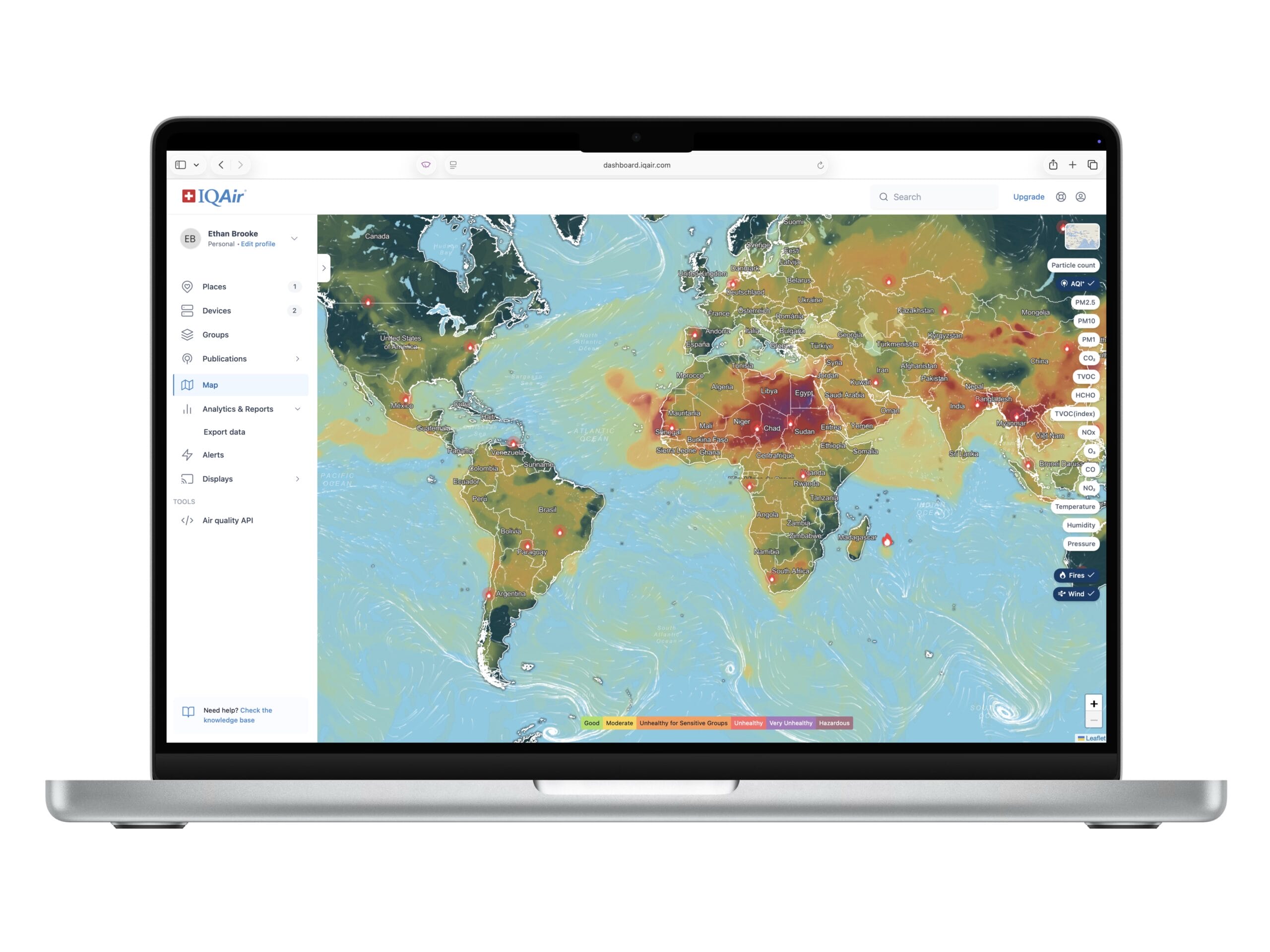
One reason the platform works well is that it acts as a central hub for air quality information. The AirVisual map includes data not only from IQAir devices but also from other monitoring networks such as OpenAQ. This means that the map provides a broader view of air quality conditions rather than only showing readings from AirVisual monitors.
For more advanced features, you’ll need to use the IQAir web dashboard. The dashboard allows you to export data, although the export process can take quite a while depending on the dataset. It also provides additional tools for managing multiple devices, such as organising monitors into groups or creating data widgets. Personally, I would like to see some of these capabilities integrated into the mobile app, but I can also understand why IQAir keeps the application relatively simple.
Overall, I quite like the AirVisual app. It is easy to use, integrates well with the hardware, and serves as a convenient place to view both personal and public air quality data. It would be nice to have a few more advanced settings here (and I would love the ability to set alert thresholds based on PM2.5 concentration as opposed to AQI), but using the app is generally a good experience.
Pricing & Competition
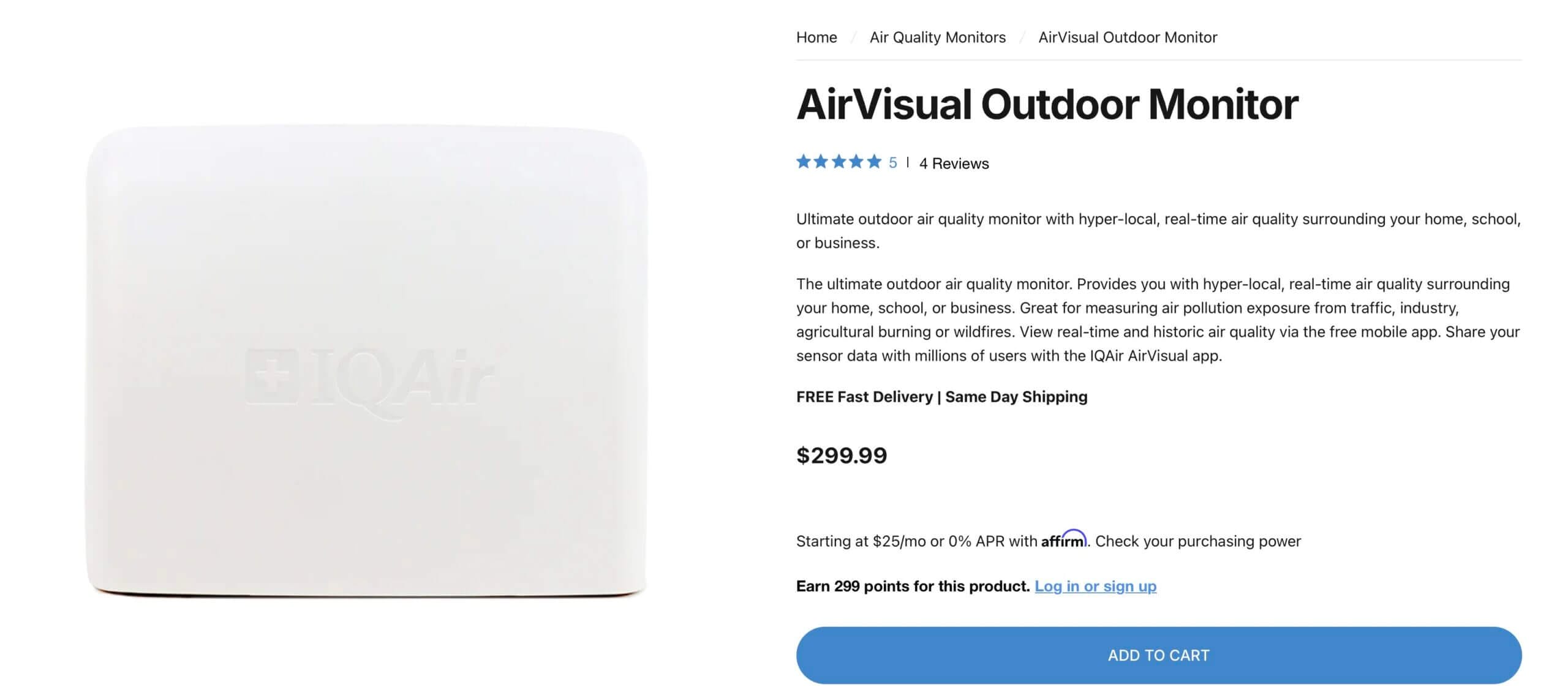
The AirVisual Outdoor sits at the higher end of the price range for consumer-grade outdoor air quality monitors. In the United States, the device is listed at $299 USD. However, pricing can vary depending on the region. In my case, the base purchase price works out to around $400 (24,000 Philippine Pesos), which is a noticeable jump – and this is before shipping. That kind of price tag will immediately deter some buyers, especially when there are cheaper but similarly featured alternatives available. At the same time, I don’t think the pricing is outrageous and I also don’t think the device should be dismissed purely because of the price, as it does offer a few features that set it apart from most monitors in this category.
For comparison, the PurpleAir Zen also costs $299 and the AirGradient Open Air is around $225. The Zen has a similar dual PM sensor configuration, while the Open Air uses a single particulate sensor paired with a CO2 sensor. Both of those devices also include VOC measurements, which the AirVisual Outdoor currently lacks unless additional sensors become available in the future. That said, I don’t think a VOC sensor adds much to an outdoor monitor, so I don’t believe the lack of VOC sensor is a big loss.
| Monitor Name | Price |
|---|---|
| AirGradient Open Air | $225 |
| AirGradient Open Air Max | $380 |
| PurpleAir Zen | $299 |
| VisiblAir Model X2 | $180 (approx – price in CAD) |
| AirVisual Outdoor | $299 |
One unique feature of the AirVisual Outdoor is Ethernet connectivity with Power over Ethernet support. This is surprisingly rare in this price range and makes installation much easier in locations where reliable WiFi is not available. The device also supports an optional cellular modem for remote deployments. In the box you also get a 12 metre LAN cable and the necessary adapter, which is a small detail but something many competing monitors do not include.
There are also additional accessories available, including a solar panel and battery setup for fully off grid installations. These are optional and come at an additional cost, and the pricing for them is not listed directly on the website. Replacement sensor cartridges are also not priced publicly, although I would expect them to be more expensive than common replacement modules such as Plantower sensors used in many other devices.
So yes, this is a relatively expensive monitor. However, it also feels like a more premium device in several ways, from the connectivity options to the app experience. Not everyone will be able to justify the cost, especially when cheaper monitors can provide similar measurements, but the AirVisual Outdoor doesn’t feel overpriced either.
One final note: as I’ve already mentioned, the AirVisual Outdoor integrates natively with the AirVisual application. If this is the air quality application that you prefer to use, it makes sense to purchase an outdoor monitor that supports the platform. In this case, the AirVisual Outdoor is undoubtedly the best choice. If you already have the AirVisual Pro indoor air quality monitor, this is also the logical pairing for it!
Conclusion
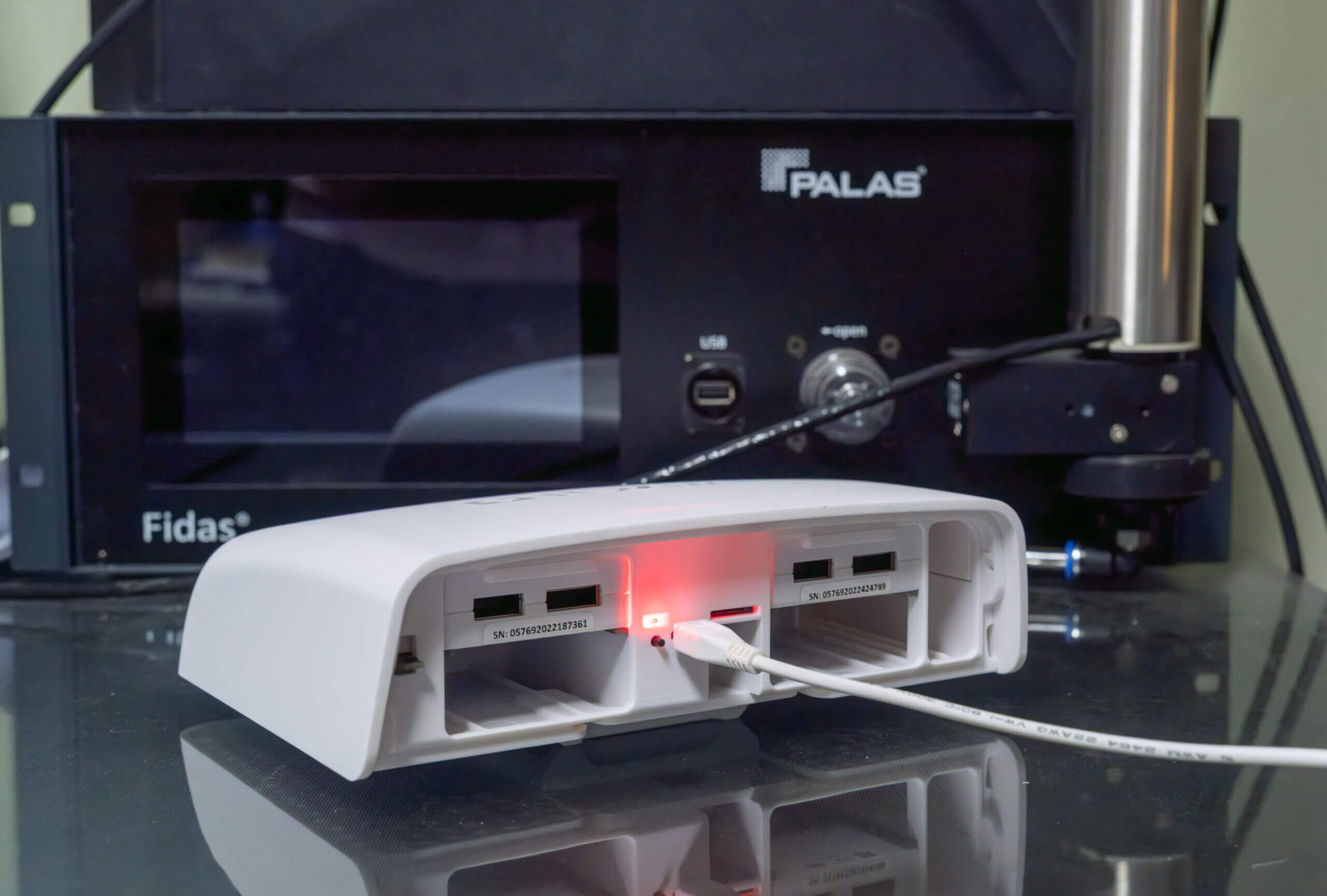
AirVisual Outdoor with a Palas Fidas reference monitor.
It’s encouraging to see how many capable outdoor air quality monitors are now available at relatively accessible prices. Not long ago, monitoring outdoor air quality at home meant relying on government stations that might be kilometres away, or on the occasional community monitor that probably wasn’t much closer. Today, it’s possible for individuals to install their own station and see what’s happening right outside their door. That’s very valuable because air pollution can vary dramatically even within the same neighbourhood.
The AirVisual Outdoor sits comfortably among the growing group of well known outdoor monitors alongside devices from PurpleAir and AirGradient. Each of these monitors has its own strengths and approach, which is great for users because it means there is real choice depending on what you value most. In many ways, IQAir’s approach reminds me a little of Apple. The device is slightly more expensive and the ecosystem is more closed than some alternatives, particularly when it comes to transparency around sensors and data processing. At the same time, the overall build quality, design, and user experience are clearly very well thought out.
One group of people who will likely find the AirVisual Outdoor particularly appealing are those who already use the AirVisual app and want to stay within that ecosystem. The AirVisual platform remains one of the most widely recognised air quality apps in the world, and having a monitor that integrates directly and natively into it is a big advantage for some. While other monitors can appear on the map through data sharing, the experience is simply more seamless with IQAir’s own hardware.
Another strength of the AirVisual Outdoor is that it largely feels like a “set and forget” device once installed. The hardware is well designed, the connectivity options are strong, and once it’s mounted and powered it generally just runs without much user intervention. Some competing monitors can require a bit more setup or tweaking depending on how you want the data to appear, whereas the AirVisual Outdoor is clearly designed to be straightforward for the average user
Finally, the monitor also makes a lot of sense if you already own the AirVisual Pro indoor monitor. In that case, your outdoor station’s data can appear directly on the indoor display, which is a surprisingly convenient feature. Being able to glance at both indoor and outdoor conditions from a single screen makes the ecosystem feel much more cohesive.
That said, the device isn’t perfect. The price is on the higher side, and it can climb quickly once you add optional modules such as the CO2 sensor, cellular connectivity, or a solar power setup. I would also like to see more transparency around the sensors themselves and the calibration methods used to produce the final measurements. With that said, the AirVisual Outdoor is still a good monitor overall. It performs well where it matters most, particularly for PM2.5 and PM1, and it offers a polished experience for users who value the AirVisual ecosystem.
Overall, the AirVisual Outdoor is a well built and capable outdoor monitor. It isn’t the cheapest option available, but for those who value the AirVisual ecosystem, want a polished device that is easy to deploy, or simply prefer a more premium and integrated experience, the AirVisual Outdoor remains a strong option in today’s growing outdoor monitoring landscape. If you live in a climate similar to Thailand or the dry season in Ghana, you will also be hard-pressed to find a more accurate device in this price range!
- Strong PM2.5 and PM1 performance in real-world outdoor testing
- Excellent build quality with weatherproof, modular design
- Seamless integration with the popular AirVisual app ecosystem
- Ethernet and Power over Ethernet support for reliable installation
- Relatively expensive, especially with optional modules
- Limited transparency around sensors and calibration methods
- Uses micro USB for power when not using PoE
- Fewer pollutant measurements than some competing monitors
AirVisual Outdoor FAQ
Is the IQAir AirVisual Outdoor accurate?
Based on available third-party studies and my own testing, the AirVisual Outdoor performs well when measuring PM2.5 and PM1. In my comparison against a Palas Fidas 200S reference monitor in Thailand, the device showed a strong correlation with the reference instrument. Independent evaluations such as AIRLAB and Afri-SET have also reported solid PM2.5 performance, although results can vary depending on the environment and particle types present.
Does the AirVisual Outdoor measure gases such as CO2 or NO2?
By default, the monitor measures particulate matter (PM1, PM2.5, and PM10) along with temperature, humidity, and barometric pressure. A CO2 module is available as an optional sensor cartridge. IQAir has also discussed additional electrochemical gas sensors in the past, although these modules are not widely available at the time of writing.
Does the AirVisual Outdoor work with the AirVisual app?
Yes. One of the main advantages of this monitor is that it integrates directly into the AirVisual ecosystem. Your outdoor station appears in the AirVisual app automatically and can contribute data to the global air quality map. While other monitors can sometimes share data with the map, IQAir devices are the only ones that integrate natively.
How is the AirVisual Outdoor powered?
The device supports Power over Ethernet (PoE), which is the most convenient option for many installations because it provides both power and data through a single cable. If PoE is not used, the monitor can also be powered through a micro USB connection. Optional accessories such as a solar panel and battery are available for off-grid deployments.
How does the AirVisual Outdoor compare to PurpleAir or AirGradient monitors?
The AirVisual Outdoor sits in a similar category to devices such as the PurpleAir Zen and AirGradient Open Air. PurpleAir and AirGradient monitors tend to be slightly more transparent about their sensors and data processing, and they are often a bit cheaper. The AirVisual Outdoor, however, offers tighter integration with the AirVisual app, strong connectivity options like Ethernet and PoE, and a polished, modular design that some users may prefer.


