

IKEA has now released three air quality monitors. The Vindriktning came first, then the Vindstyrka, and most recently the Alpstuga, which you could call IKEA’s second-generation monitor. I reviewed the Vindstyrka in 2023 and the Alpstuga this year, and while both are small, affordable monitors built around a Sensirion sensor, they are very different devices once you look closer.
The interesting twist here is that the newer device is the cheaper one. The Alpstuga costs $34.99 against $49.99 for the Vindstyrka, and it adds a CO2 sensor that the Vindstyrka never had. However, it also drops the Vindstyrka’s VOC sensor and asks you to deal with a very different kind of smart home connectivity, so the IKEA Alpstuga vs Vindstyrka choice isn’t as simple as picking the newer device.
If you want the full detail on either device, you can find my IKEA Alpstuga review and my IKEA Vindstyrka review here. In this article, I will compare the two on their sensors and specs, what my testing found, their displays, connectivity and pricing, before giving my recommendation on which one to buy.

I independently review air quality monitors with a focus on accuracy. I’ve tested well over 50 devices, compared some of them against reference instruments, and rely on peer-reviewed research and third-party studies wherever possible.
I don’t accept sponsored posts or paid reviews, and I don’t run ads on BreatheSafeAir. When I receive a free product, the company has no say in what I write. Affiliate links don’t influence my views and never increase the price you pay.
I’m constantly learning about how these sensors work – from opening them up, discussing with researchers in the field and examining the hardware inside. That ongoing learning process helps me write reviews that are grounded in how the technology actually behaves, not just what the spec sheet says.
You can read my full Disclaimers & Ethics page for complete details. And as with any review, even mine, I always encourage checking multiple independent sources before making a decision.
This post contains affiliate links. For more information, please refer to my affiliate disclaimer.
Informational Disclaimer: Information on this blog is for informational purposes only. Readers are encouraged to confirm the information herein with other sources. This website assumes no responsibility for the accuracy of the information, which is subject to change without notice.
If you notice any errors or inconsistencies in this article, please contact me so I can update the information accordingly.
Contents
Sensors & Specs

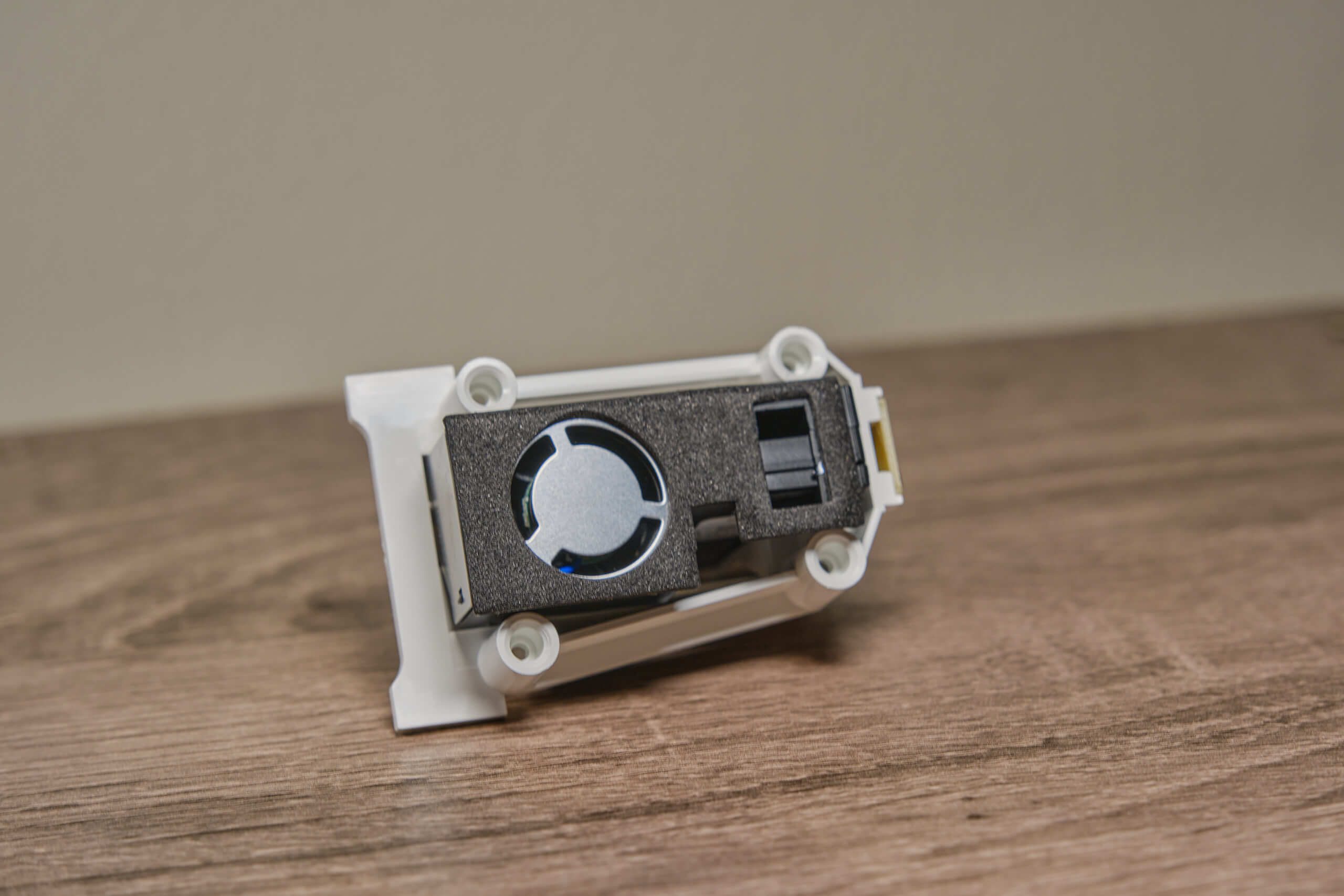
Since the sensor is what decides how useful any air quality monitor is, that’s where I want to start. Both devices use one of Sensirion’s all-in-one sensor modules, which handle several measurements in a single component. The Vindstyrka uses the SEN54, which measures PM2.5, tVOC (total volatile organic compounds, the gases released by things like paint, cleaning products and cooking), temperature and humidity. The Alpstuga uses the newer SEN63C, which keeps PM2.5, temperature and humidity but swaps the VOC sensor for CO2.
The way the Alpstuga measures CO2 is worth understanding, because it’s quite different from most CO2 monitors. Rather than the NDIR sensors that most decent CO2 monitors use (these measure how much infrared light the CO2 in the air absorbs), the SEN63C uses a thermal-conductivity sensor. This measures how well the surrounding air carries heat, since CO2 carries heat differently from the nitrogen and oxygen that make up most of the air. It’s cheaper and smaller, but it’s also less precise, and Sensirion specifies it at around ±100 ppm (parts per million).
The Vindstyrka’s VOC readings come with a big caveat of their own. You never see a number, only one of three arrows showing whether VOC levels are rising, stable or falling, and the VOC data isn’t sent to your smart home system at all. Both sensors can also measure PM1, PM4 and PM10, but each device only shows PM2.5.
Below, I’ve put together a table comparing the main specs of the two monitors.
| IKEA Alpstuga | IKEA Vindstyrka | |
|---|---|---|
| Price (US) | $34.99 | $49.99 |
| Measures | PM2.5, CO2, temperature, humidity | PM2.5, tVOC (trend arrows only), temperature, humidity |
| Sensor | Sensirion SEN63C | Sensirion SEN54 |
| CO2 sensor | Thermal conductivity (±100 ppm) | None |
| Display | LED display, one reading at a time (plus a clock) | Screen showing every reading at once |
| Air quality warning | Orange light above 1,000 ppm CO2 or 15 µg/m³ PM2.5 | Green, yellow or red squares (green up to 35 µg/m³) |
| Connectivity | Matter over Thread (needs a Thread border router) | Zigbee (needs IKEA’s DIRIGERA hub) |
| Power | USB-C (cable and adapter sold separately) | USB-C (adapter sold separately) |
| Size | 40 x 40 x 90 mm | 52 x 59 x 87 mm |
| My testing | 3 units, around three months (2026) | 1 unit, around one month (2023) |
On paper, the Vindstyrka’s particle sensor is the more proven of the two. The SEN54 is specified at ±10% for particulate matter and has been around long enough to build a track record, while the SEN63C’s particle sensor is a brand new design, and Sensirion specifies its precision at ±5 µg/m³ below 100 µg/m³ and ±10% above that.
BreatheSafeAir is a one-person publication. Every share and every subscriber is important to me.
I don’t have a marketing budget or a team behind me. Just a lot of test equipment and a genuine interest in helping you make sense of your air quality. If you find this useful, subscribing to my newsletter is the best free way to support the work. You’ll get information on what I’m currently testing, findings that don’t make it into the full reviews, and the kind of detail you only get from someone who thoroughly tests these devices.
What My Testing Showed
Before getting into my results, it’s important to note that I never tested these two monitors side by side. I tested the Vindstyrka in 2023 while I was travelling, and the Alpstuga this year at home, in different conditions and with different comparison devices. Neither was tested against a reference instrument either, so please read the results below as two separate sets of findings rather than a head-to-head accuracy test. If you’d rather watch than read, my Alpstuga video above goes through these findings in more detail.
For the Alpstuga, I ran three units next to two factory-calibrated AirGradient ONE monitors for particles, and against a lab-calibrated hygrometer for temperature and humidity. All three Alpstugas followed PM2.5 trends well, rising and falling with every cooking event at the same moments as the AirGradients. However, the three identical units disagreed a lot on the actual figure, reading anywhere between about 280 and 440 µg/m³ at one morning peak. That’s a spread of over 150 µg/m³, well outside Sensirion’s precision specification, so I would trust the trend rather than any single reading.

Temperature surprised me in a good way. The three Alpstugas read slightly below the hygrometer, by around half a degree overnight and up to a degree and a half at the afternoon peak, although I only tested between roughly 25 and 31°C. Humidity read two to five percentage points low, which is a normal offset for monitors like this.
The CO2 sensor is where the Alpstuga needs the most patience. IKEA says to allow twelve hours for the reading to settle, but in my testing it took closer to a week, and the readings on the screen jump around a lot from second to second. More importantly, the accuracy depends on the room temperature. At around 25-26°C, my Alpstugas read almost identically to my NDIR sensors, but the further the temperature moved from that point, the further the readings drifted. You also can’t calibrate the sensor yourself or turn off its weekly automatic calibration. It’s good enough to tell you when to open a window, but not to give you a precise CO2 number.

My Vindstyrka testing was far more limited. As I was travelling at the time, I had no reference monitor with me, so I took the device apart to identify the sensor instead (damaging the screen’s adhesive in the process). Its temperature and humidity readings mostly lined up with my Aranet4 Home monitors, with some variation of about 1°C and 9% relative humidity. For PM2.5, my conclusion relied on an independent study showing the SEN54 stays within Sensirion’s specifications rather than on my own measurements.
Display & Design

Moving on to design, the two monitors take very different approaches to their screens. The Alpstuga is tiny, measuring just 40 x 40 x 90 mm, and when I first took it out of the box it reminded me of a small alarm clock (some of my visitors even thought it was one). Its LED display shows one reading at a time, and you press the large button on top to cycle through CO2, PM2.5, temperature, humidity and the time. The display adjusts its own brightness and reads clearly from across a room.
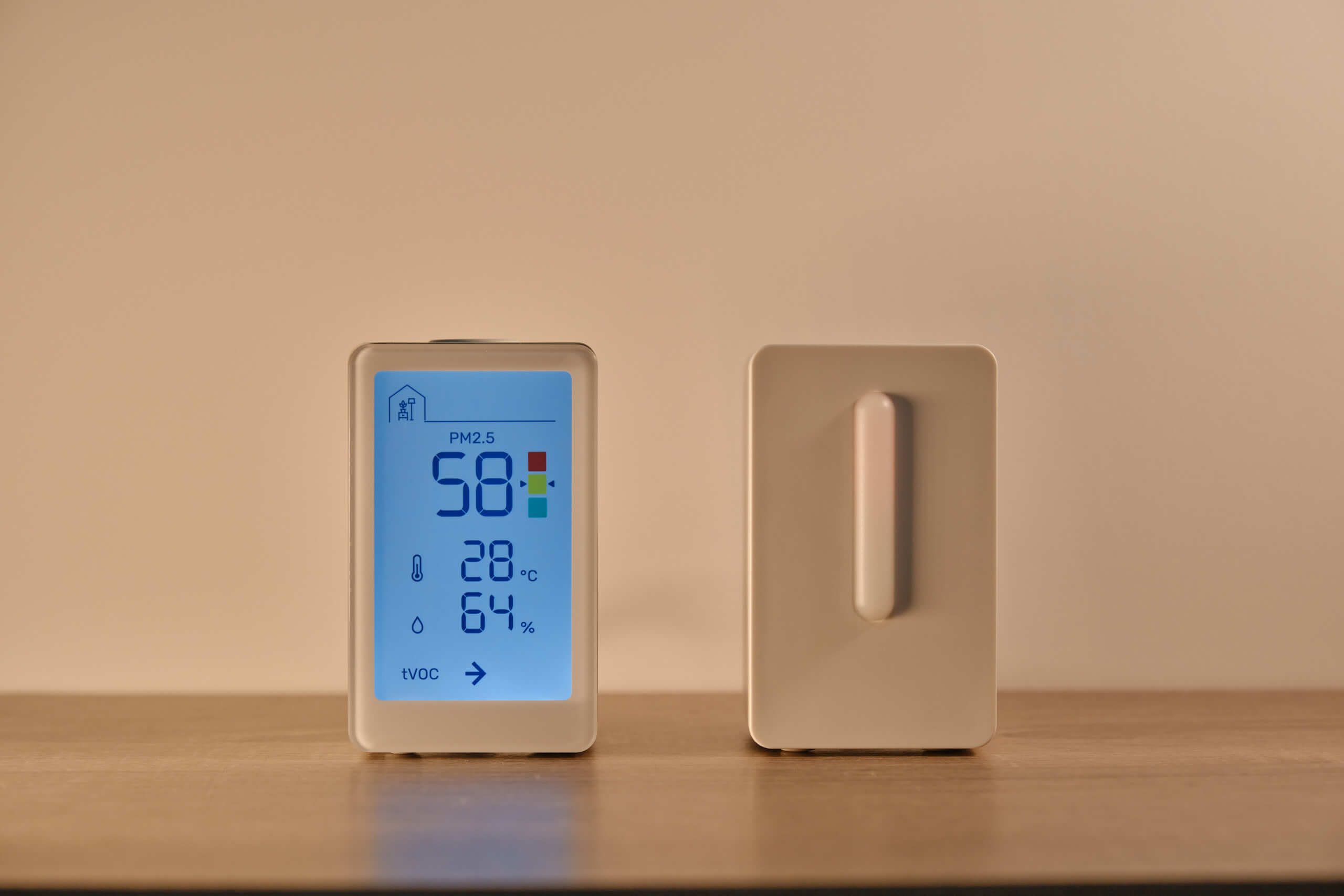
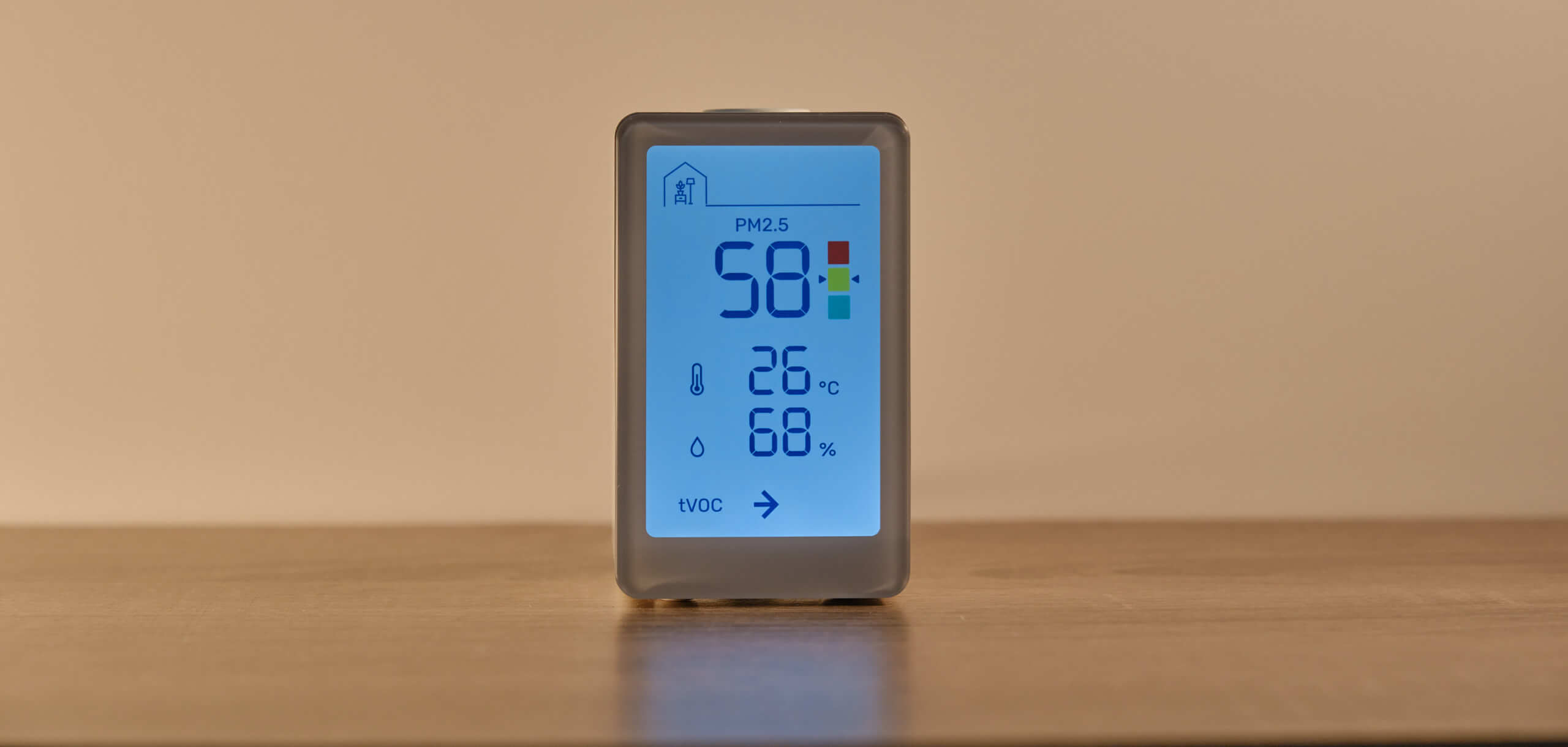
The Vindstyrka shows everything at once, with the PM2.5 concentration at the top, temperature and humidity below it, and the VOC arrow at the bottom. The catch is that the screen stays dim until you press the button on top, after which it’s easy to read from metres away. I also like that its USB-C port sits underneath the device, which makes it easy to hide the cable.
Both devices give you a quick air quality signal, but they set their thresholds very differently. The Alpstuga’s single orange warning light turns on when CO2 goes above 1,000 ppm or PM2.5 goes above 15 µg/m³, which matches the WHO’s 24-hour PM2.5 guideline of 15 µg/m³. Unfortunately, it only shows while the relevant reading (or the clock) is on screen. The Vindstyrka’s coloured squares, on the other hand, stay green all the way up to 35 µg/m³, so I would always go by the number rather than the colour.
Connectivity & Smart Home

Connectivity is where the Alpstuga pulls clearly ahead, although it doesn’t make setup easy. The Alpstuga uses Matter over Thread. Matter is a shared smart home standard that works across Apple, Google, Amazon, Homey and others, while Thread is the low-power wireless network it runs on. To use it, you need a Thread border router, a device that links Thread to the rest of your home network. Many people already own one without realising it, such as an Apple TV, a HomePod or certain Google Nest devices, and IKEA’s DIRIGERA hub can do the job too.
Pairing my Alpstugas was painful. I had to reset each one several times, and I spent around 30 minutes sitting next to my Apple TV before they connected, to the point where I nearly gave up. Once connected, though, they’ve been flawless, staying online for two months and even rejoining by themselves after a power cut. Because the Alpstuga runs off mains power, it also acts as a Thread router, which strengthens the network for any other Thread devices nearby.
The Vindstyrka only connects over Zigbee, so you need IKEA’s DIRIGERA hub to use its smart features through the IKEA Home smart app. I never tested this myself, as the Vindstyrka was the only Zigbee product from IKEA I owned and I didn’t want to buy a hub just for it. There are some workarounds for more technical users, but if you aren’t comfortable experimenting, you’re tied to IKEA’s hub.
Both monitors also work perfectly well without any connection at all, simply showing their readings on the screen. However, I would treat connectivity as nearly essential for the Alpstuga, because its CO2 readings only become useful once they’re logged and averaged.
Pricing
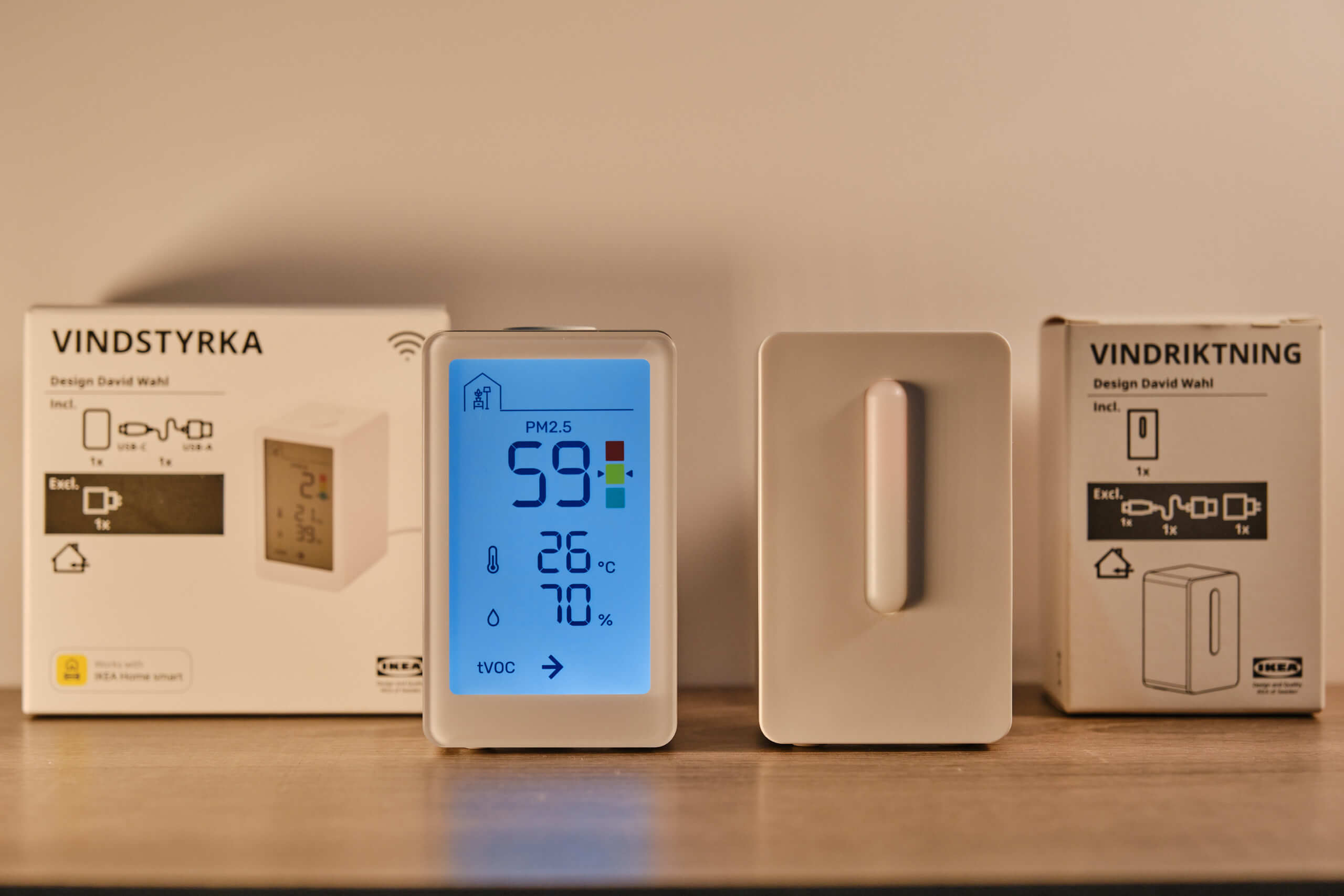
Price is the easiest part of this comparison. At $34.99, the Alpstuga is $15 cheaper than the Vindstyrka’s $49.99, and it gives you CO2 sensing and broader smart home support for that lower price. Neither comes with a USB power adapter, and the Alpstuga doesn’t come with a USB-C cable either, so budget a few extra dollars (IKEA sells a power supply kit for $7.99). If you need IKEA’s DIRIGERA hub, that adds around $109 to either device.
It’s also worth checking whether the Vindstyrka is still sold where you live. At the time of writing, IKEA’s US website no longer has a product page for it, and IKEA in some other regions lists it as “last chance to buy”, so the Alpstuga looks set to replace it.
Conclusion – Is the Alpstuga or Vindstyrka Better?

For most people, the Alpstuga is the better monitor. It’s cheaper, it adds CO2, and Matter means it works with almost any smart home system rather than only IKEA’s. As long as you treat its CO2 readings as a guide to trends rather than a precise number, it’s the cheapest way I know of to put PM2.5 and CO2 monitoring in every room of your home.
However, the Vindstyrka still makes sense in a couple of situations. If you already own a DIRIGERA hub and other IKEA Zigbee products, it slots straight in. It’s also the better choice if you only care about particles and want a screen that shows every reading at once, and its SEN54 sensor has a longer track record than the Alpstuga’s brand new particle sensor.
If an accurate CO2 number is what you care about most, neither of these is the right device, and you’ll want a monitor with an NDIR sensor instead (you can find my recommendations in my CO2 monitor guide).
I bought my three Alpstugas myself, while the Vindstyrka was sent to me for review, and neither review is sponsored. Whichever one you choose, place it where air can reach the vents on its back rather than pushed up against a wall, as IKEA recommends at least 10 cm of clearance behind the Alpstuga.
IKEA Alpstuga vs Vindstyrka FAQ
Is the IKEA Alpstuga better than the Vindstyrka?
For most people, yes. It’s $15 cheaper, adds CO2 and works with almost any smart home system through Matter. The Vindstyrka’s advantages are its VOC trend arrows, a screen that shows every reading at once and a more proven particle sensor.
Does the IKEA Vindstyrka measure CO2?
No. The Vindstyrka measures PM2.5, tVOC (shown only as trend arrows), temperature and humidity. The Alpstuga is the first IKEA monitor with a CO2 sensor.
Do I need the DIRIGERA hub for the Alpstuga or Vindstyrka?
For the Vindstyrka’s smart features, yes, since it only connects over Zigbee. The Alpstuga works with any Thread border router, such as an Apple TV, a HomePod or certain Google Nest devices, as well as DIRIGERA.
Which IKEA air quality monitor is more accurate?
I haven’t tested them side by side, so I can’t say for certain. The Vindstyrka’s SEN54 sensor has a strong track record for PM2.5, while my three Alpstugas tracked trends well but disagreed with each other by over 150 µg/m³ at one peak.
Do the Alpstuga and Vindstyrka come with a power adapter?
No. IKEA sells the USB power adapter separately for both, so you’ll need to supply your own or buy IKEA’s.


